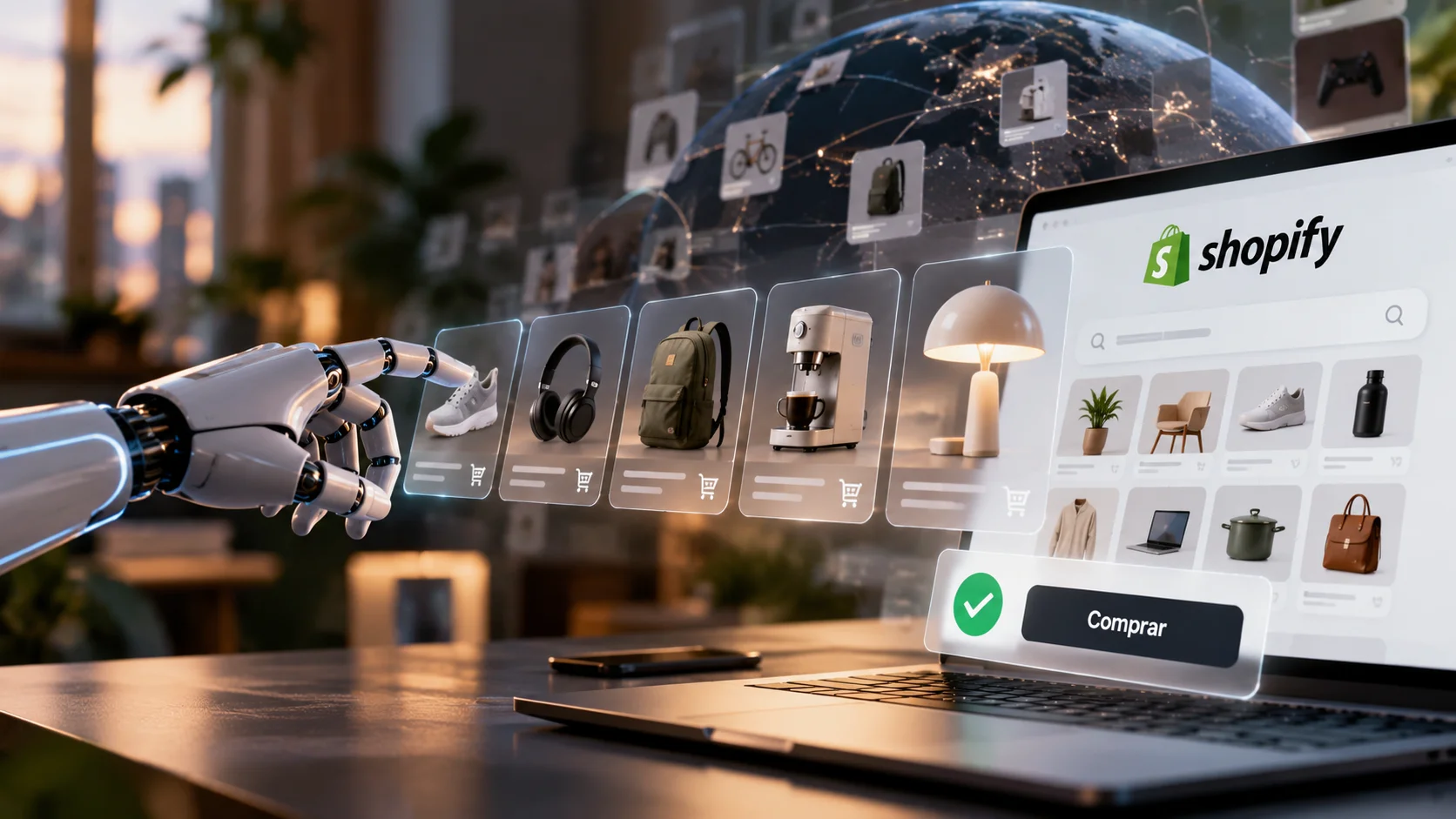
Shopify president Harley Finkelstein said on the August 5 earnings call that 75% of purchases attributed to artificial intelligence (AI) on the platform occurred outside the 100 largest product categories. The executive also said that traffic and orders originating from AI recommendations tripled year over year.
Finkelstein cited as examples from the quarter a car seat for installing three seats side by side in a sedan and a reef-safe sunscreen with no white residue. In a keyword search, both would be overshadowed by higher-volume competitors; an AI system can find them from a specific description.
Retail advertising model under pressure
AI-mediated discovery pressures the retail advertising model, historically built around human attention. Sponsorships, search positioning and visual promotions were designed to persuade a person browsing a page.
Chris Selland, founder of Differential Factor and professor at Northeastern University's D'Amore-McKim School of Business, said that "AEO is the new battleground for digital shelf space," using the term for optimization for AI engines. He sees a future in which product selection happens via API calls instead of human browsing.
The reduction in browsing time compromises metrics such as impressions, clicks and conversions. With AI agents, structured product data, delivery information, trust signals and availability come to define whether a product or retailer enters the recommendation.
Consumers open to AI agents
PYMNTS Intelligence research, the report "The Intelligent Spend Shift," showed that 48% of consumers have at least some interest in using AI agents to buy groceries or plan meals. The same percentage applies to subscription management; 44% want to delegate gift purchases.
This affects retailers with extensive catalogs: long-tail products never justified a banner on the homepage or paid search budget, because there was no efficient connection with the right shopper. AI allows finding and describing a niche product directly to someone searching for exactly that.
Promotions based on visual merchandising and urgency should not disappear, but the more agents mediate discovery, the more they will need to shape preferences and rules considered by the agent, rather than just capturing consumer attention in the moment.