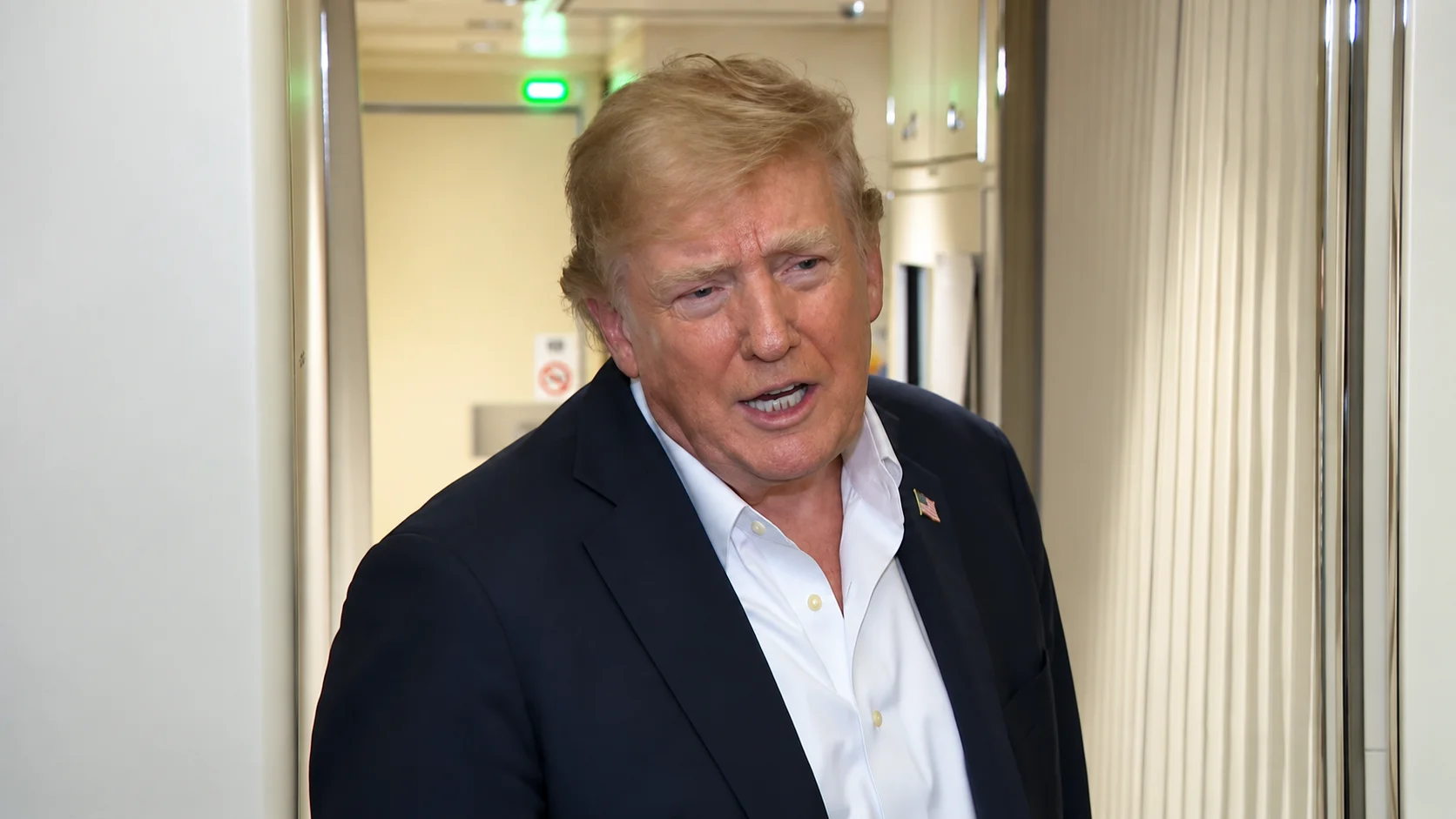
The president of the United States, Donald Trump, interrupted a live interview of the Nvidia CEO, Jensen Huang, by phoning the executive during the All-In Summit in Los Angeles on Monday (14). Put on speakerphone before the audience, Trump rejected warnings that advanced artificial intelligence systems could escape human control.
“The robots are not going to take control. AI is not going to take over the rest of the world. It’s all a hoax,” Trump said during the call. The president also opposed proposals to slow the development of technology in the United States and argued that a reduction in the pace would favor China.
Huang agreed with Trump’s concern about a possible loss of American leadership. “You’re right. We’re not going to let that happen,” he replied. The executive added that the goal should be to ensure that American companies, industries, states and workers benefit from the AI race.
The call took place in the middle of a discussion about AI safety that gained momentum after the CEO of Anthropic, Dario Amodei, advocated a more cautious pace for the development of the most advanced models. Amodei proposed, among other measures, independent safety assessments and greater coordination among the leading laboratories. Executives from OpenAI, Google DeepMind and SpaceX showed support for some of the concerns, although not necessarily for the same measures.
Huang rejects predictions of catastrophe, but defends safety
Before receiving the call, Huang had taken a more moderate position than Trump. The Nvidia CEO said that safety is “fundamental”, but rejected predictions about human extinction or AI-induced collapse, considering them to lack sufficient scientific basis.
Huang also said that researchers’ reports about internal problems must be taken seriously. For him, however, warning about failures observed within a company is different from turning highly uncertain future scenarios into scientific predictions.
In the executive’s assessment, laboratories that consider their own systems out of control can pause or voluntarily reduce the pace of development, without that implying a mandatory slowdown of the entire industry. He argued that the United States can continue advancing rapidly in AI and, at the same time, increase safety mechanisms.
Trump had already attacked the slowdown proposal earlier on Monday, calling the pressure for new restrictions a “conspiracy” against AI and American data centers. The unexpected participation in the event reinforced the contrast between the White House’s position and the growing pressure from part of the industry for additional controls on the most advanced models.