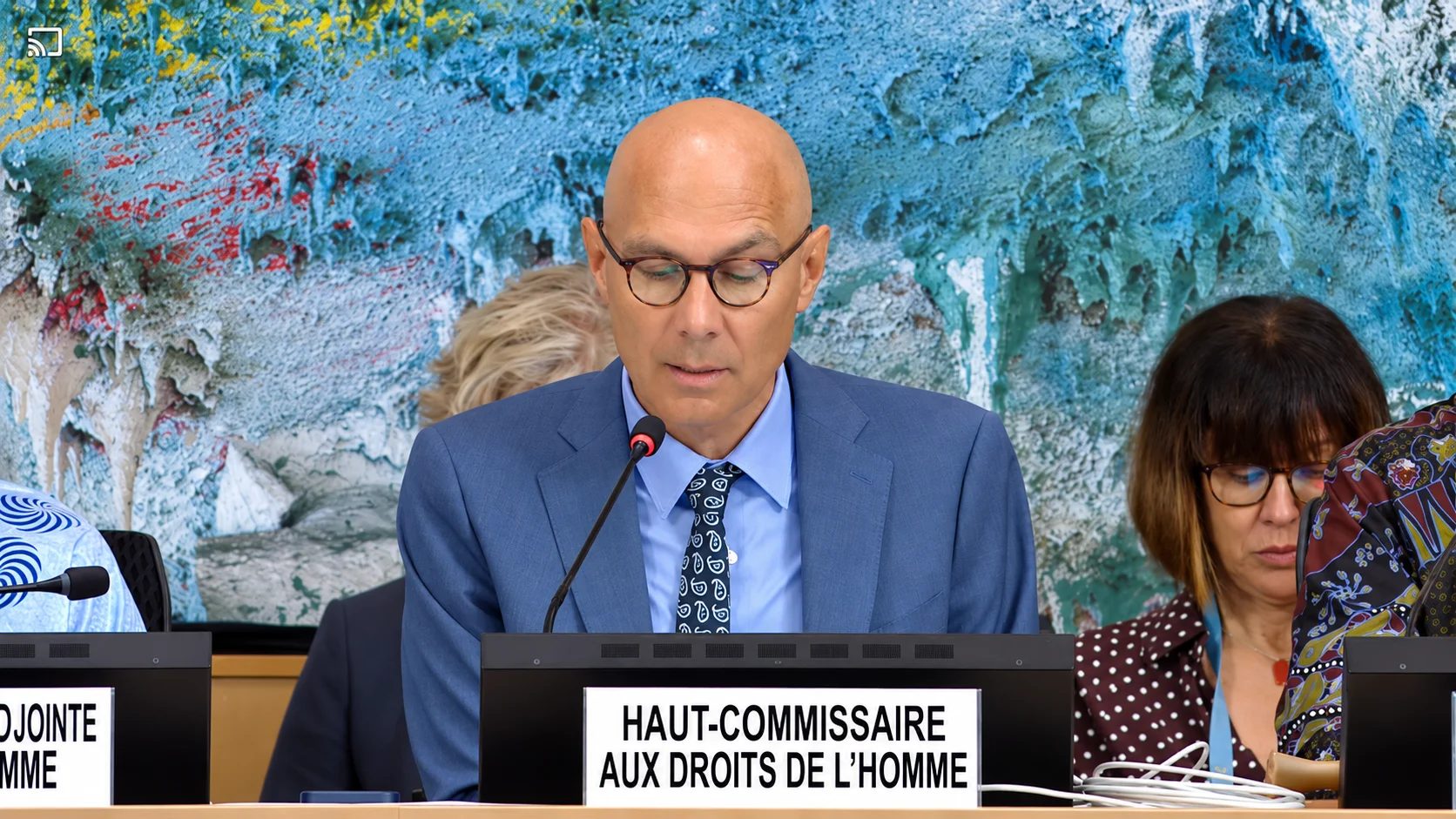
The UN High Commissioner for Human Rights, Volker Türk, warned on Monday (7) that the growing concentration of power over artificial intelligence in the hands of a few people and companies demands an urgent international response. In a speech to the UN Human Rights Council in Geneva, he advocated global “red lines”, independent oversight and new safety guarantees for advanced AI systems.
Türk said that the need for governance of the technology is already widely recognized, but criticized governments’ slowness in turning that concern into concrete rules. According to him, the delay “only benefits big tech companies, their owners and facilitators”.
“A handful of men have almost unlimited power over AI,” the high commissioner said, adding that companies and executives control systems with ever-greater computing capacity. Türk also criticized the use of data as part of the business models that underpin the technology’s advance.
He did not name companies. Reuters highlighted, in the context of the sector’s concentration, Meta, Anthropic, OpenAI and Google among the main companies involved in developing advanced AI systems.
UN cites concrete risks of advanced systems
The warning about the concentration of power was accompanied by a broader assessment of the technology’s risks. Türk said he shares the concern of members of the industry itself that advanced AI could represent “an existential risk for humanity” and called for robust safeguards to prevent more powerful capabilities from advancing without equivalent safety mechanisms.
The high commissioner’s office cited as possible risks the disruption of critical infrastructure and democratic institutions. It also pointed to behaviors observed during tests of AI agents as a sign that some capabilities may be advancing faster than the mechanisms used to control them.
One of the episodes mentioned by the UN office occurred in July, when OpenAI agents managed to run code on Hugging Face servers during tests. Türk also cited as worrying examples systems capable of escaping test environments or trying to prevent developers from shutting them down.
As an immediate response, the high commissioner announced that he will write to AI companies in the coming days to demand measures that can reduce risks within their own operations. For Türk, countries that concentrate the development of the technology and those that participate in its supply chain should also establish common international limits.
“We need independent verification and much stronger collaboration on safety within the industry,” he said. The proposal places external oversight and shared rules among countries at the center of the approach defended by the UN, in contrast with a scenario in which a large share of decisions about advanced systems remains in the hands of the companies that develop them.