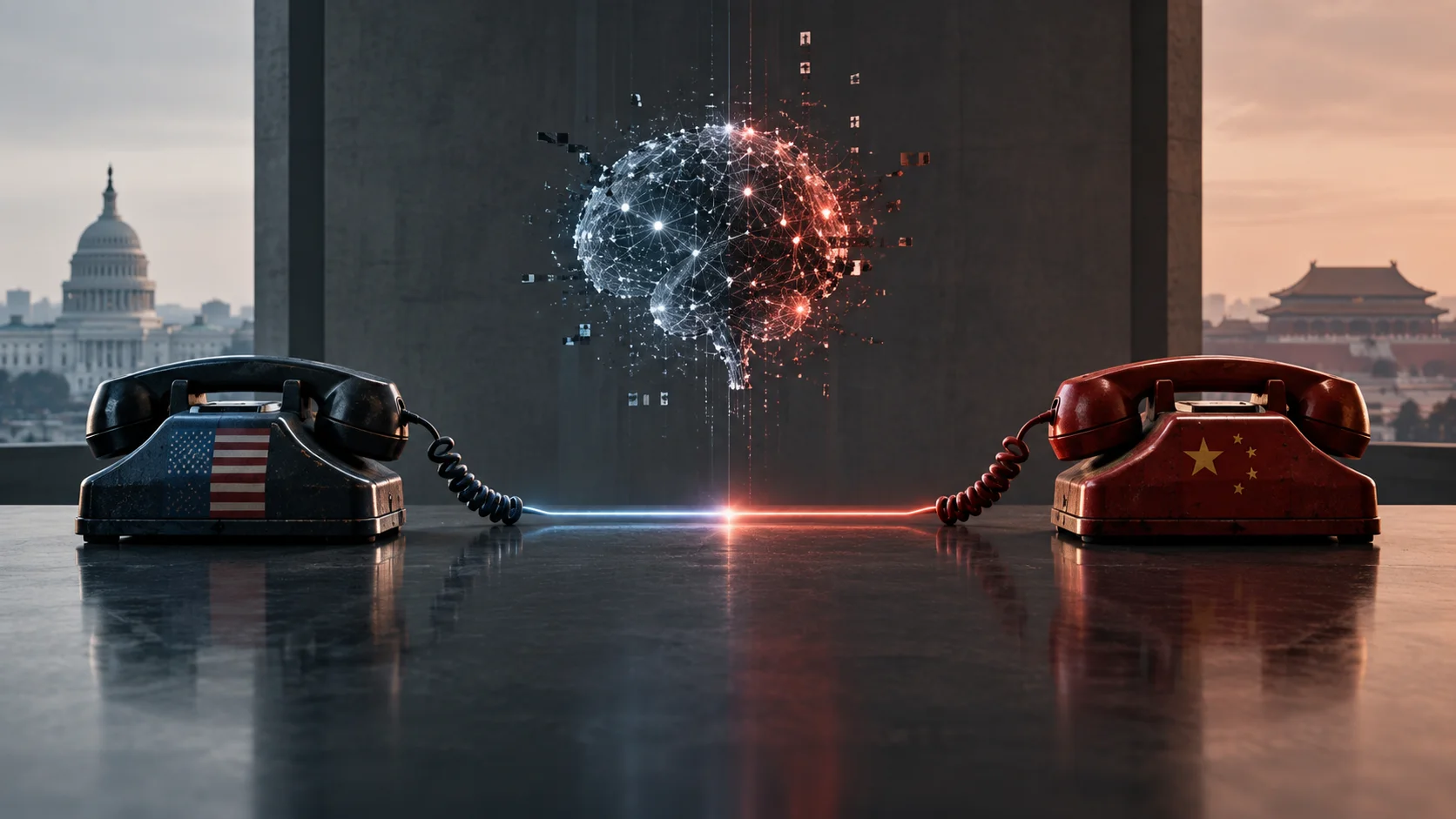
U.S. Treasury Secretary Scott Bessent said on Friday (3) that he intends to propose a notification process between Washington and Beijing for serious situations involving artificial intelligence. The initiative seeks to transform a political agreement already reached by the two countries into a mechanism capable of being triggered in the face of incidents with the potential to affect national security.
The creation of the channel was agreed during the visit of Chinese President Xi Jinping to the United States, in September. Official statements from the two governments confirmed that the U.S. and China agreed to establish a bilateral communication channel for AI incidents, in addition to creating a dialogue dedicated to the risks and benefits of the technology.
What still needs to be defined is how this system will work in practice. Bessent told Axios that he intends to present a notification process and said he believes Beijing will accept the proposal. Previous talks with Chinese Vice Premier He Lifeng included risks such as AI agents out of control and the use of the technology by non-state actors in cyber or biological threats.
Channel puts AI incidents on the security agenda among powers
The mechanism creates a framework so that the two largest AI powers can maintain direct communication when an incident goes beyond the technological sphere and takes on a security dimension. The governments, however, have not yet disclosed which events could trigger the channel, what information would be shared, or which authorities would be responsible for notifications.
The initiative brings AI risk management closer to traditional communication mechanisms between states used to reduce uncertainty during crises. In the case of artificial intelligence, the challenge includes determining when a model failure, cyberattack, or unexpected behavior of a system becomes a risk serious enough to justify communication between governments.
Bessent also advocated greater attention to infrastructure protection and the capacity to respond to threats, in addition to the race to develop more advanced models. According to him, the United States needs to dedicate more resources to resilience and defense in the face of the advancement of the systems' capabilities.
The bilateral agreement provides for a new round of dialogue between the two countries by November 2026. China also officially confirmed both the creation of the AI dialogue and the establishment of the channel for incidents, although operational details have not yet been disclosed.