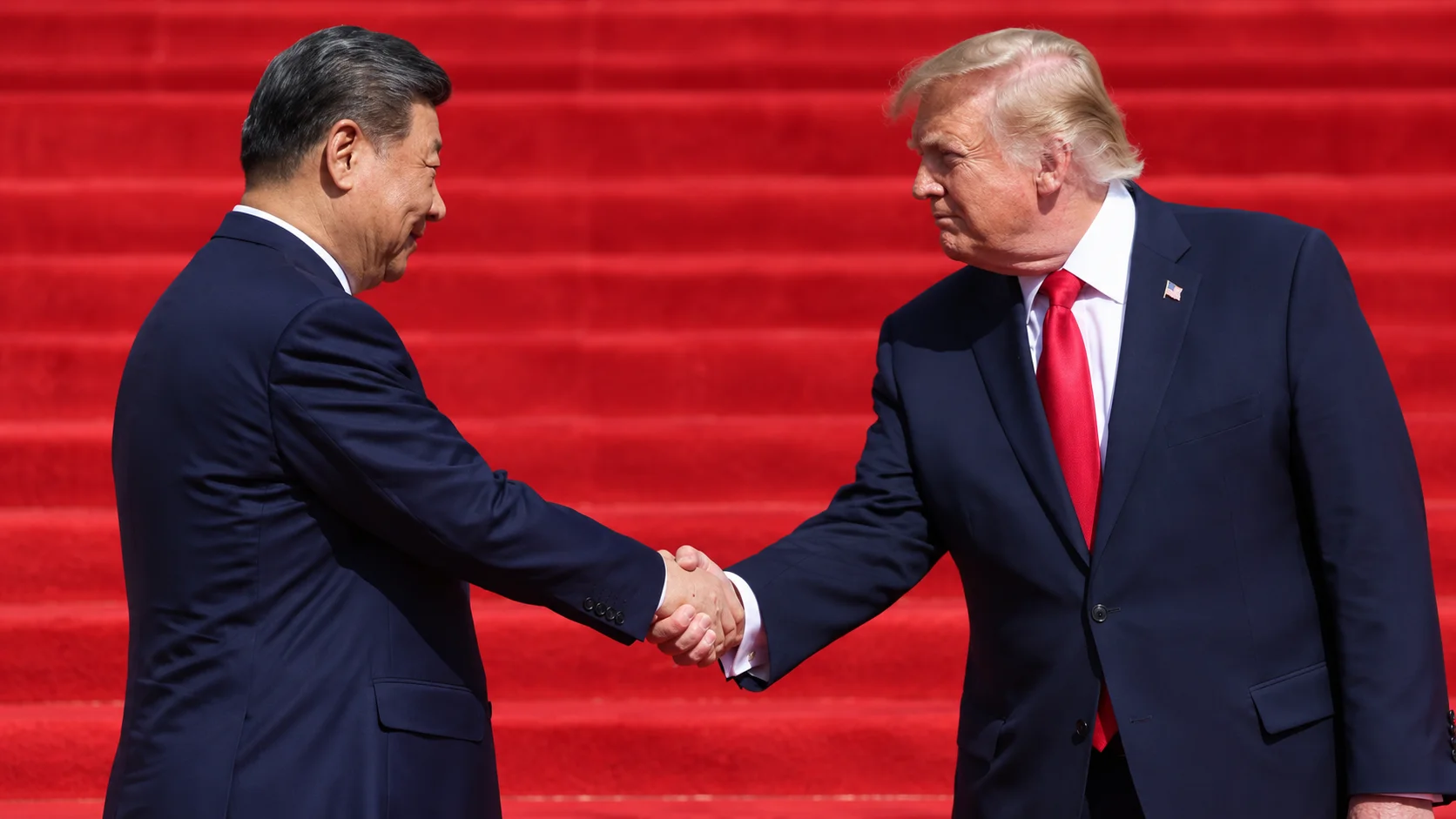
The United States and China agreed to create a bilateral communication channel for incidents involving artificial intelligence, one of the results of Chinese President Xi Jinping's three-day visit to Washington. The agreement was confirmed by both governments on Saturday (26) and will be accompanied by a regular dialogue on the risks and benefits of the technology.
The mechanism establishes a direct line between the two largest AI powers for situations that may require communication between governments. The next meeting of the bilateral dialogue is scheduled for November 2026, according to official statements.
The operational scope, however, has not yet been detailed. The governments did not publicly disclose which events will be classified as incidents, which authorities may activate the channel, what level of information will have to be shared, or what procedures will be adopted after a notification.
Before the summit, U.S. Treasury Secretary Scott Bessent had advocated a mechanism capable of covering AI occurrences with implications for national security. Among the risks discussed were systems out of control and the use of AI by non-state actors in cyberattacks or in the creation of biological threats.
Two governments use different terminologies
The documents released after the visit show a difference in nomenclature. Beijing calls the initiative China U.S. AI Dialogue and states that the channel will be used for AI incidents. The White House adopted the term Super Intelligence Dialogue and described the mechanism as a channel for incidents related to that category of technology.
China said on Friday (26) that the two presidents discussed AI in depth and that it will continue exchanging positions with Washington on the terminology used for the technology.
The agreement comes as Washington and Beijing maintain a direct dispute over advanced models, semiconductors and computing infrastructure. At the same time, the two governments had already been discussing mechanisms to manage risks that could affect both sides. China had previously confirmed that it maintained communication with the U.S. on artificial intelligence.
The creation of the channel does not establish common rules for AI development nor resolve divergences between the countries over technology. The next concrete step will be the bilateral round scheduled for November, when the operation of the mechanism may begin to gain more specific definitions.