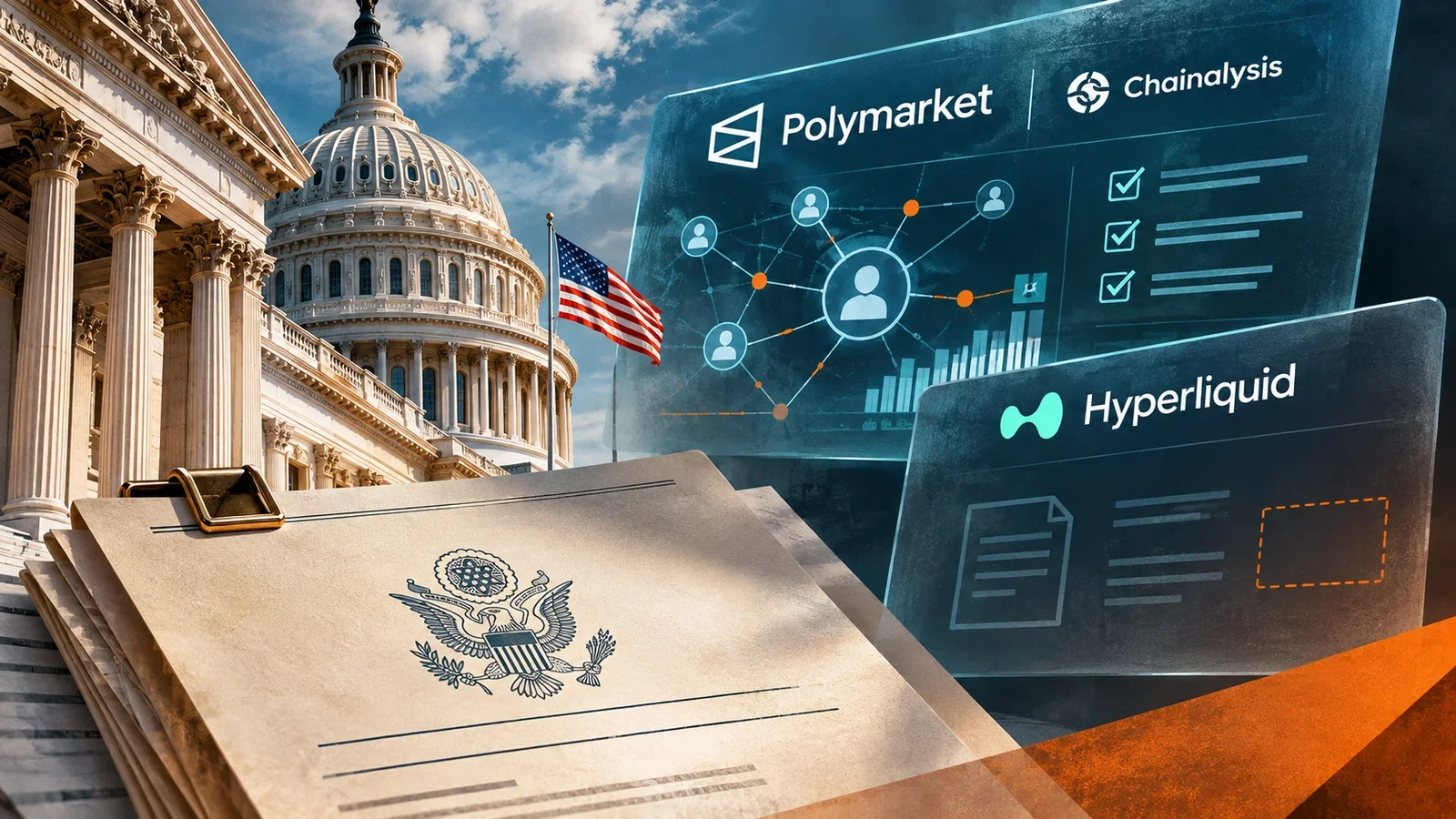
An investigation by the US House of Representatives identified differences in the documentation and oversight mechanisms used by prediction market platforms, including Polymarket, Kalshi and Hyperliquid. The results were released on Friday (13), in a memorandum from the Committee on Oversight and Government Reform that also recommends new restrictions to prevent the use of inside information by public officials.
The investigation began in May 2026, initially focused on Polymarket and Kalshi, and was expanded in September to include Hyperliquid, Crypto.com and PredictIt. Over the course of the process, the committee received nearly 1,700 pages of documents and communications and held five briefings with representatives of the platforms.
The document concludes that the operators themselves play an important role in identifying suspicious trading. According to the committee, most reported episodes of possible use of inside information were initially detected and reported to the authorities by the platforms.
Hyperliquid did not possess requested records; Polymarket presented surveillance system
One of the main differences appears on page 4 of the memorandum. Four of the five platforms provided substantial documentation or explanations about their internal controls and suspicious trading detection technologies.
Hyperliquid, on the other hand, told the committee that it did not possess the types of records and information requested about its identity verification and Know Your Customer (KYC) policies and procedures.
The statement does not necessarily mean that the platform operates without any identification mechanism. The document specifically records the absence of the requested materials, without presenting a complete assessment of the controls used by the company.
In contrast, the memorandum details the PolyGraph, a surveillance system implemented by Polymarket in partnership with blockchain analysis firm Chainalysis.
The tool combines social media information, reports, public investigations, internal records, blockchain analysis and artificial intelligence resources to identify potentially suspicious activity. The system also tracks financial movements, examines trading histories and produces real-time alerts, forwarding certain cases for human review.
Polymarket also hired a former law enforcement specialist to oversee its team for preventing and detecting trades made with inside information.
The memorandum presents concrete examples of this oversight. In July 2026, the Commodity Futures Trading Commission (CFTC) ordered former congressman George Santos to pay US$ 35 thousand for manipulating an event contract on Kalshi. According to the document, the platform identified the suspicious trades, froze the account and reported the case to the regulator.
US legislation already establishes prohibitions on the use of nonpublic information in certain derivatives transactions. The STOCK Act, for example, provides specific restrictions for members of Congress, federal employees and members of the Judiciary who use information obtained by reason of their positions.
The memorandum also distinguishes platforms registered with the CFTC from decentralized operations abroad. In Polymarket's case, its US operation is subject to regulatory identification and anti-money laundering requirements, while the international platform has a different legal structure.
Despite existing rules, the committee recommends that Congress consider additional restrictions on trading carried out by public officials, including the possibility of prohibiting their participation in contracts related to government decisions or political outcomes.
“Congress needs to consider additional reforms to prevent public corruption,” said James Comer, chairman of the committee.
The recommendations still depend on eventual legislative action. The release of the memorandum does not, by itself, establish new general prohibitions for prediction market participants.