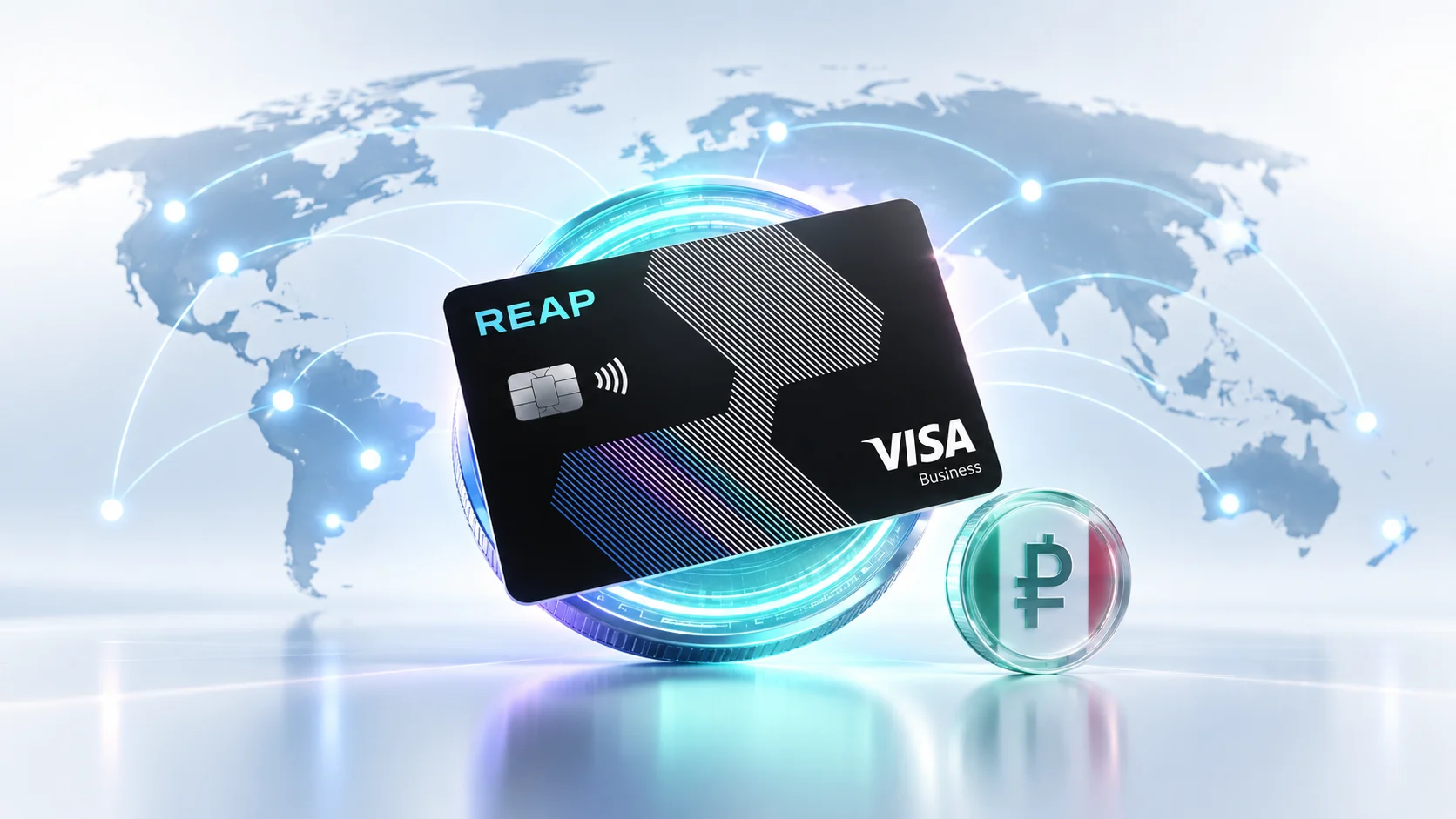
A Visa and Reap announced this Wednesday (23) an expansion of the partnership to bring stablecoin-linked card programs to Europe, the Middle East, Africa and other markets. The initiative expands an operation already present in Asia and Latin America and remains subject to the regulatory requirements of each country.
The model allows fintechs, companies and platforms to offer cards funded or guaranteed by stablecoins. Customers can use these assets as collateral, pay invoices with digital currencies and finance international corporate expenses within the Visa network.
Visa says that stablecoin settlement volume on its network has already reached an annualized rate of US$ 20 billion, about 15 times the level recorded a year earlier. The company also counts more than 160 stablecoin-linked card programs in operation globally.
Reap already participates in Visa's stablecoin settlement infrastructure in the Asia-Pacific region. The system allows issuers to settle obligations via blockchain outside traditional banking hours, reducing dependence on pre-funded balances for card operations.
Reap prepares a stablecoin tied to the Mexican peso
In addition to the card expansion, Reap is working on a stablecoin pegged to the Mexican peso to integrate its payments, cards and treasury management products, according to information provided by founder Daren Guo to CoinDesk.
The company has not yet revealed a launch date or said who will be responsible for issuing the asset. It is also evaluating stablecoins denominated in euro, yen, South Korean won and Hong Kong dollar, with a focus on foreign exchange and international movement of funds 24 hours a day.
Mexico gained ground in this strategy after Reap became, in May, a principal issuing member for Visa in the country, allowing the company to operate card programs with its own infrastructure.
The initiative expands the attempt to take stablecoins beyond tokens pegged to the dollar. For companies with international operations, digital currencies denominated in local currencies can reduce currency conversion steps and enable settlements even outside the hours of traditional banking systems.