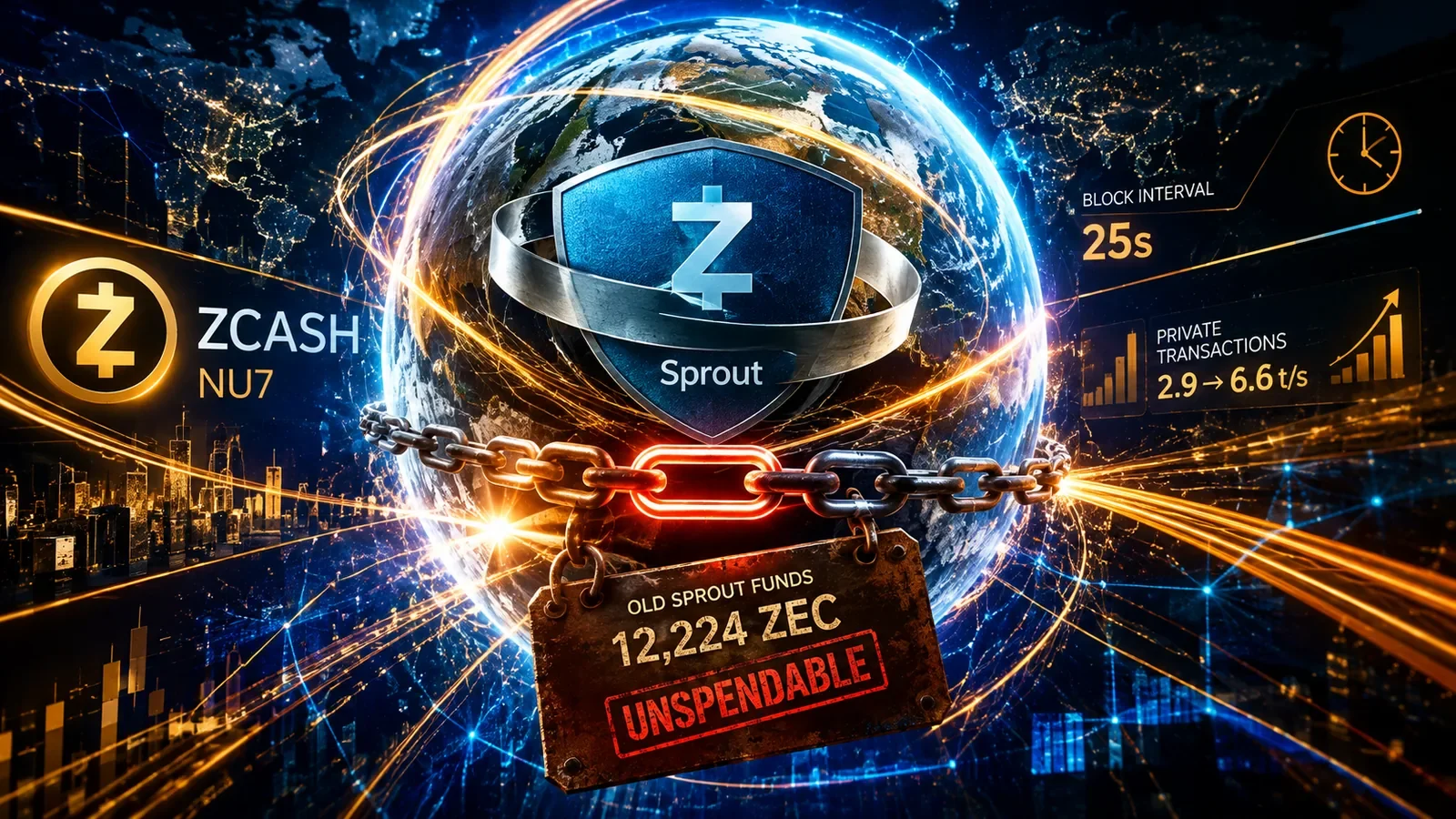
The blockchain Zcash activated the NU7 upgrade this Friday (6), reducing the target interval between blocks from 75 to 25 seconds. The change also ended the possibility of moving funds through the old Sprout private transaction system, leaving approximately 12,224 ZEC inaccessible for transfers under the network's new rules.
The upgrade took effect at 02:34 UTC, at block 3,543,405, according to records from the ZecStats monitor. By 04:59 UTC, the network had produced another 225 blocks, with an average interval of approximately 39 seconds. The difference from the new target reflects the mining difficulty adjustment period.
The 25-second interval is a statistical reference, not a guarantee that each block will be produced within that timeframe. The time required to make a transfer available also depends on the number of confirmations required by wallets, exchanges and other services.
The ZIP 218 technical specification also provides for an increase in the theoretical processing capacity of private transactions in the Orchard protocol, from approximately 2.9 to 6.6 transactions per second. New limits for private activity per block seek to reduce the amount of data that wallets need to analyze, lowering the estimated daily downloads in the worst-case scenario from 271 MB to 169 MB.
Despite the higher block frequency, the scheduled daily issuance of ZEC remains unchanged. The base reward per block was reduced proportionally, preserving the supply limit of 21 million units.
Why the upgrade left 12,224 ZEC from the old Sprout untransferable
The most significant consequence for owners of old funds is the disabling of version 4 transactions, the only format capable of moving funds in Sprout, the privacy structure used since Zcash's launch in 2016.
The more recent formats, versions 5 and 6, do not offer compatibility with that system. With NU7 taking effect, the 12,224.21 ZEC remaining in Sprout can no longer be spent or transferred under the protocol's current rules.
This does not mean, however, that the coins were destroyed. The ZIP 2003 specification distinguishes the prohibition on moving funds from the definitive elimination of the funds and allows for the technical possibility of restoring access through a future consensus change.
The retirement of Sprout also addresses security and maintenance concerns. In September, developer Sean Bowe explained that the old architecture accumulated technical complexity and risks associated with its cryptographic implementation. He advocated replacing the existing mechanism with a specific recovery protocol, capable of allowing funds to be withdrawn without fully restoring Sprout's operation.
No recovery mechanism had been approved as of NU7's activation. The proposal presented by Bowe on September 4 does not amount to an implementation decision, and there is no guarantee that the funds will become movable again.
The upgrade also changes the distribution of transaction fees. Miners now receive 40% of these amounts, while the other 60% are directed to the Network Sustainability Mechanism (NSM), a reserve intended to supplement future mining rewards, with redistribution scheduled to begin in approximately February 2031.
The reserved amounts are not permanently burned. The mechanism keeps issuance within the protocol's monetary limit and operates separately from the old balances that remained in Sprout.