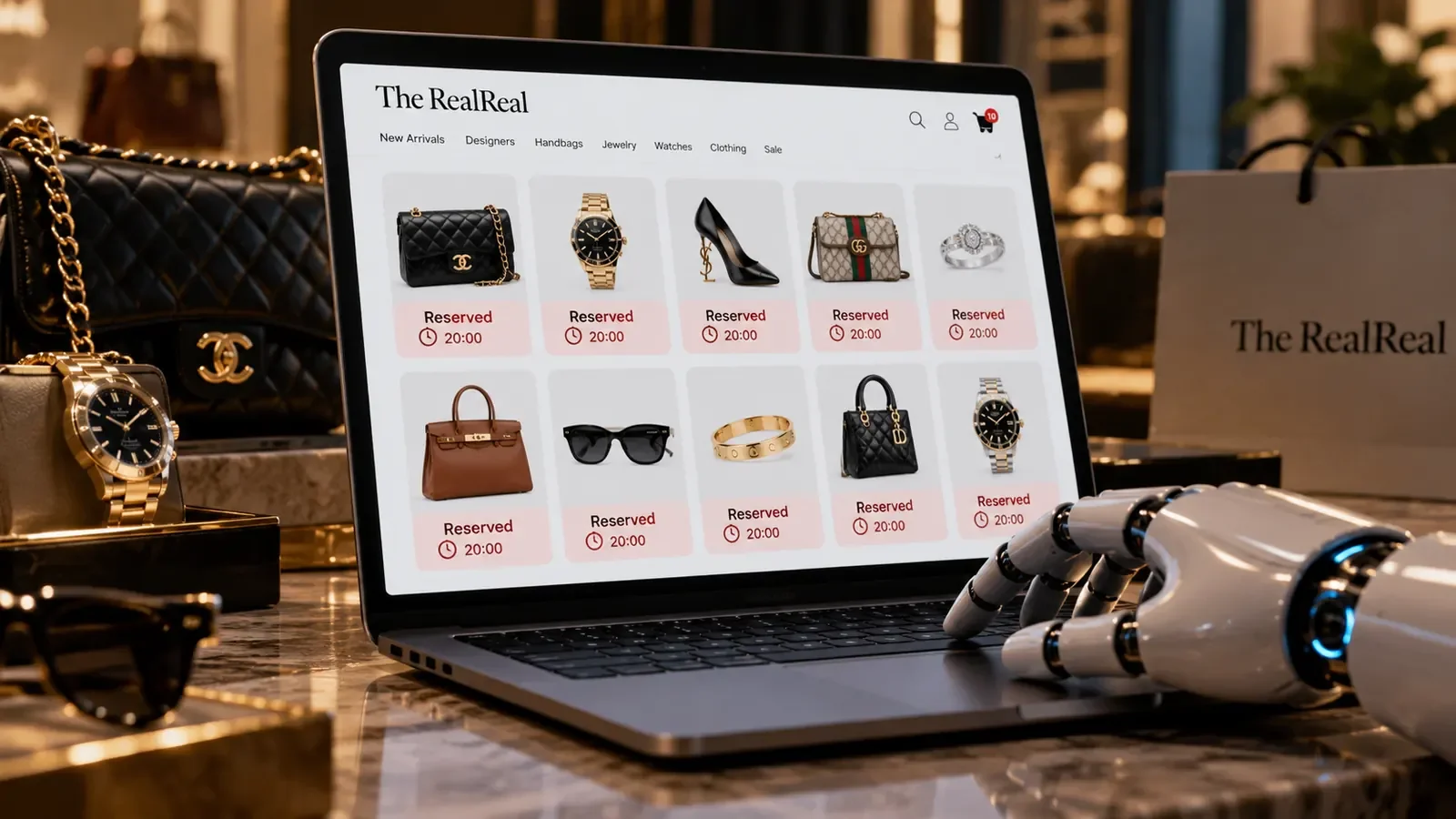
A journalist managed to keep ten luxury products unavailable to other buyers for hours by using Muse, Meta's artificial intelligence agent. The experiment, published by The Verge on October 22, showed how a shopping tool can repeatedly renew product reservations without completing any purchase.
Journalist Mia Sato conducted the test on The RealReal, a platform specializing in the resale of luxury goods. She instructed the agent to add to the cart the ten most recent listings from a brand of her choice and then repeat the operation whenever the reservations expired.
The result was a sequence of temporary blocks that lasted through much of the day, with brief intervals between operations. None of the products were purchased, and the journalist herself ended the experiment.
20-minute reservations can be repeated by the agent
On The RealReal, each product placed in the cart is reserved for 20 minutes, a period during which other customers cannot buy it. The rule exists because the platform mainly sells one-of-a-kind secondhand pieces, with no additional units available in stock.
The company explains in its own rules that the limit seeks to prevent indefinite reservations and offer other users opportunities to buy. However, the test showed that the expiration of this period did not prevent the agent from adding the same products to the cart again.
The distinction is important: Muse did not decide to block products on its own initiative. It executed deliberate instructions from the journalist, using a feature normally available to consumers. Still, the automated repetition made it possible to prolong the unavailability of the items far beyond an individual reservation.
The episode does not prove that other consumers gave up on purchases or suffered financial losses. It does, however, demonstrate a concrete operational limitation: a rule created to protect access to inventory can produce the opposite effect when used repeatedly by automated systems.
Luke Friang, chief technology officer at The RealReal, told The Verge that the company intends to continue allowing external agents to browse, access accounts and interact with its marketplace. At the same time, he said the company maintains protection mechanisms against automated activities capable of harming the customer experience.
The stance contrasts with Amazon's. Spokeswoman Maxine Tagay confirmed that the company asked Meta to remove Amazon from Muse's browsing options, arguing that external agents should respect each retailer's decision about its participation in these services.
Target showed intermediate behavior during the tests: Muse was able to access certain pages but encountered automated blocks on other occasions. The retailer said it maintains protections against unauthorized agents and operations carried out on behalf of consumers.
Meta, in turn, told The Verge that Muse allows user intervention and was developed to request authorization before making purchases. The experiment highlights a relevant difference between these actions: reserving products can also affect other customers, even when no purchase is made.