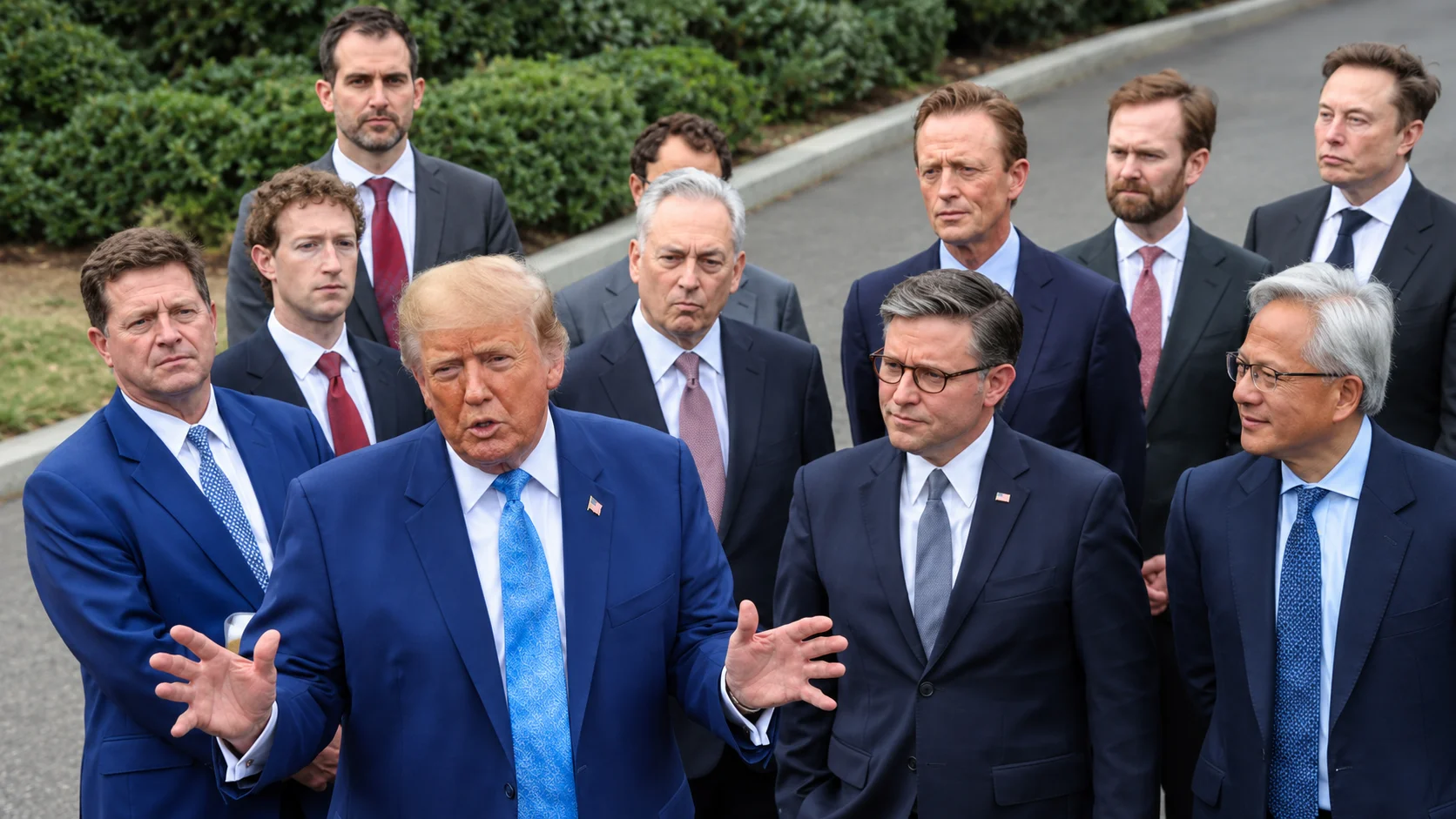
OpenAI, Anthropic, Google, Meta, Nvidia and other technology companies signed, on Tuesday (29), a voluntary agreement with the United States government to establish safety controls and external audits of advanced artificial intelligence systems. The commitment was announced after a meeting between Donald Trump and industry executives at the White House.
The document, titled White House Accord on Super Intelligence, establishes four levels of oversight for the development and use of AI models. The initiative provides for independent verifications, but does not create legal obligations or government enforcement mechanisms.
Agreement provides for internal controls and independent audits
The companies committed to monitoring the capabilities and behavior of their models, including cybersecurity risks and biological and chemical threats.
The agreement also provides for internal teams to verify safety controls, independent external audits to evaluate their effectiveness and committees on boards of directors responsible for overseeing the results and monitoring the correction of failures.
The companies also agreed to hold regular meetings to share practices and develop common safety standards.
Commitment does not provide for sanctions for noncompliance
Despite the participation of independent auditors, the agreement does not require public disclosure of the results, does not establish a mandatory schedule of assessments and does not provide for specific penalties.
Implementation remains the responsibility of the companies. Trump said he is considering creating a council of approximately ten members to monitor the safety of the technology, but its composition and its duties have not yet been defined.
The approach contrasts with the one adopted by the European Union, whose AI Act establishes legal obligations for providers of AI models considered to pose systemic risk, including safety assessments and reporting of serious incidents.
The American agreement allows for the possibility of turning its guidelines into regulation in the future, but does not establish a deadline for that change.