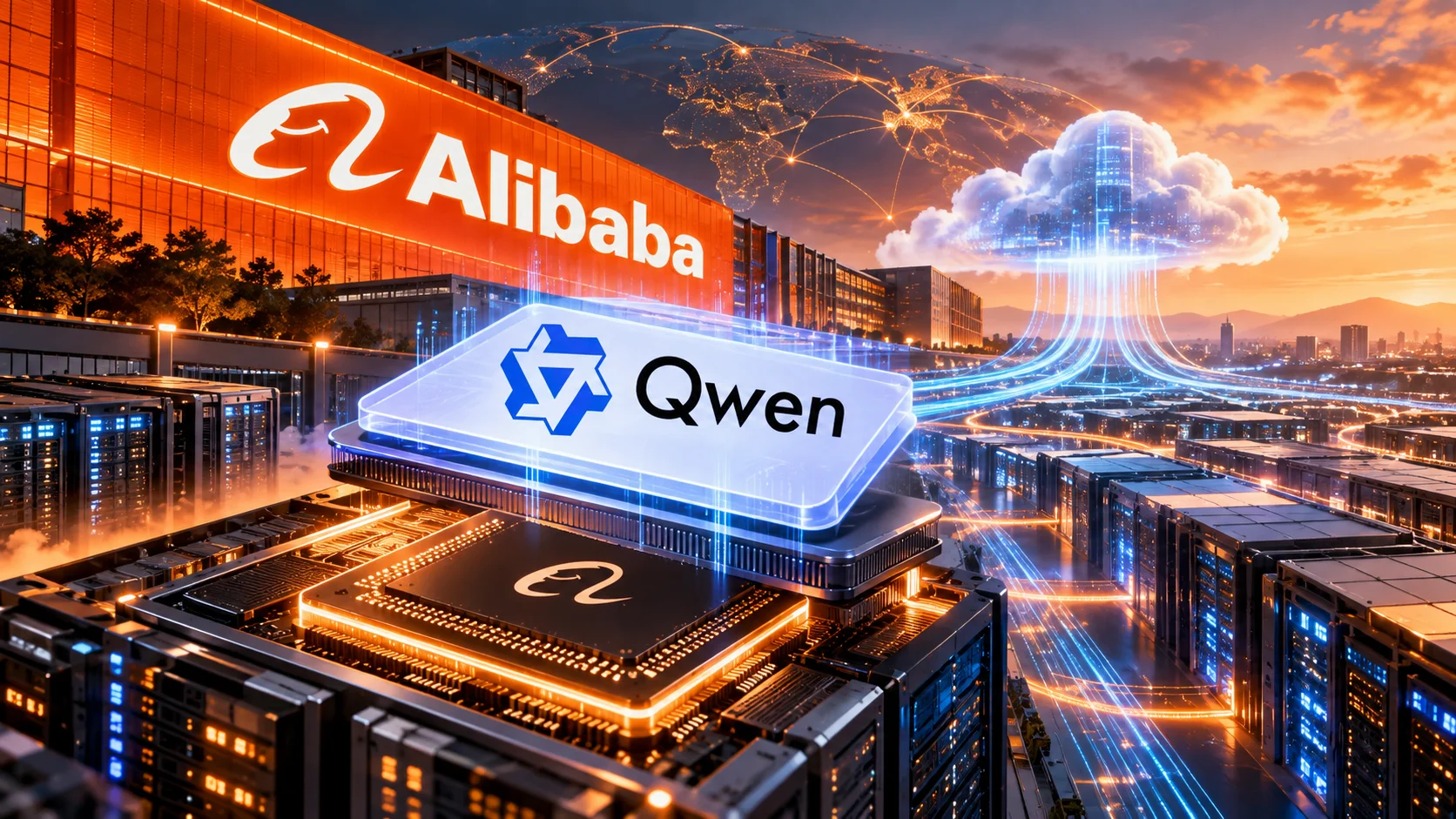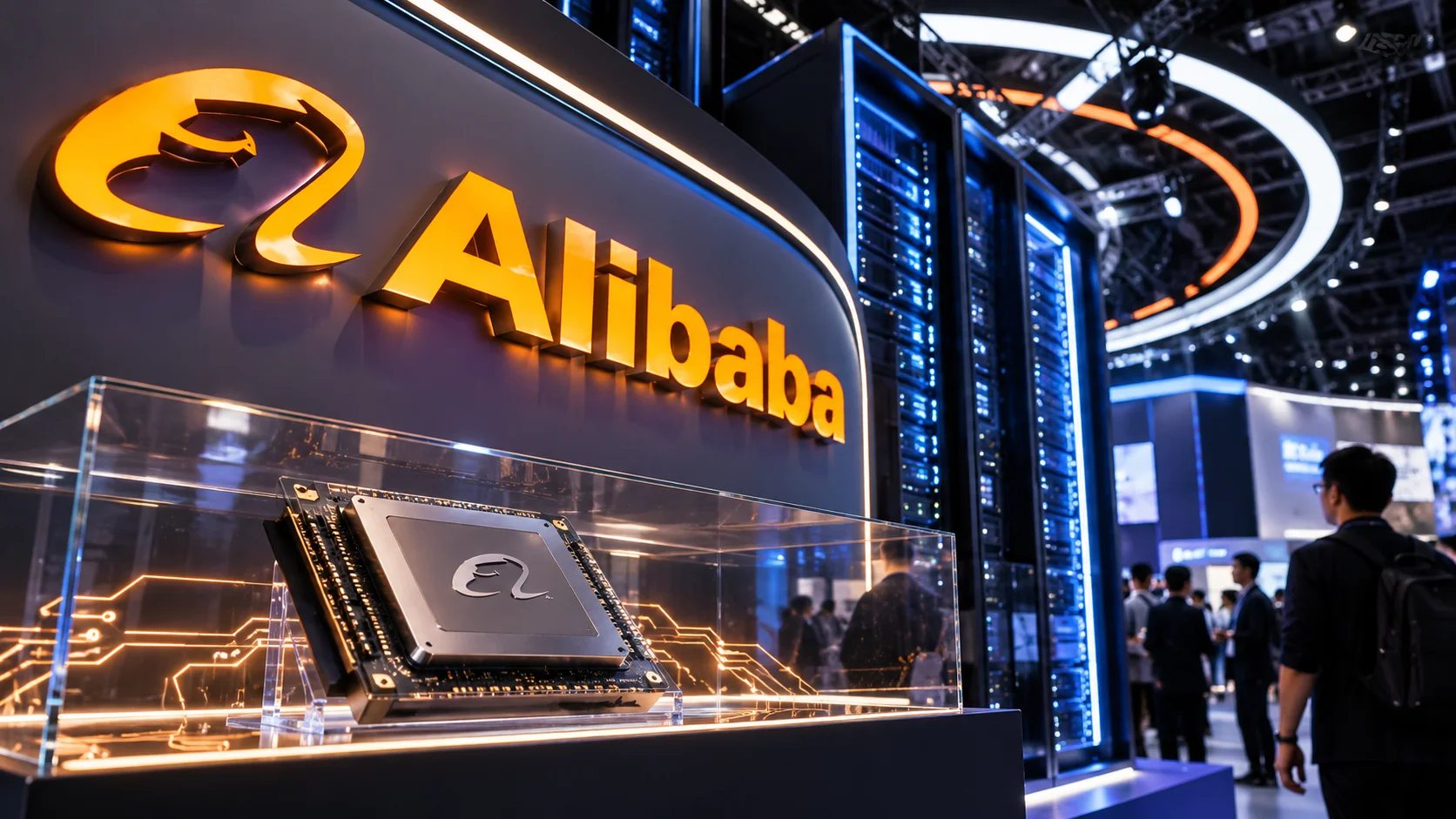
The Alibaba unveiled the Zhenwu V900 on Tuesday (22), a new processor developed by its semiconductor division T-Head, while detailing an expansion of its infrastructure and its artificial intelligence models. The plan includes raising Alibaba Cloud's global data center capacity to more than 20 GW by 2032.
The announcements were made during the annual Apsara conference in Hangzhou. The company's shares traded in Hong Kong rose 5.1% after the presentation, reaching their highest level in about a month.
Zhenwu V900 will enter mass production in 2027
Alibaba described the Zhenwu V900 as the most powerful AI chip developed in China. According to the company, the processor delivers three times the performance of its predecessor, the M890, and was designed for training and running large artificial intelligence models.
The chip can be used in clusters made up of up to 500,000 processors. Mass production and commercial launch are scheduled for the first quarter of 2027.
The development expands Alibaba's strategy to reduce dependence on foreign hardware at a time when Chinese companies are accelerating the creation of domestic alternatives to Nvidia's advanced processors.
Next Qwen models could reach 10 trillion parameters
On the software side, CEO Eddie Wu said that the team responsible for Qwen intends to train models with 5 trillion to 10 trillion parameters, aimed at more complex tasks and capable of operating for longer periods.
The company said that Qwen 4 is already in training. Future generations, such as Qwen 4.5 and Qwen 5, are expected to advance to the announced range.
The company's current flagship model, Qwen 3.8 Max, has 2.4 trillion parameters. The number of parameters helps indicate the scale of a model, although it does not by itself determine its performance.
The expansion of the models will be accompanied by an increase in physical infrastructure. Alibaba intends to raise the global capacity of Alibaba Cloud's data centers to more than 20 gigawatts by 2032.
Wu said that customer demand for AI computing capacity remains high, while supply chain constraints still limit the pace of expansion.
Alibaba also plans to begin making its AI supernodes commercially available this quarter, connecting large volumes of computing capacity to support the training and operation of increasingly larger models.