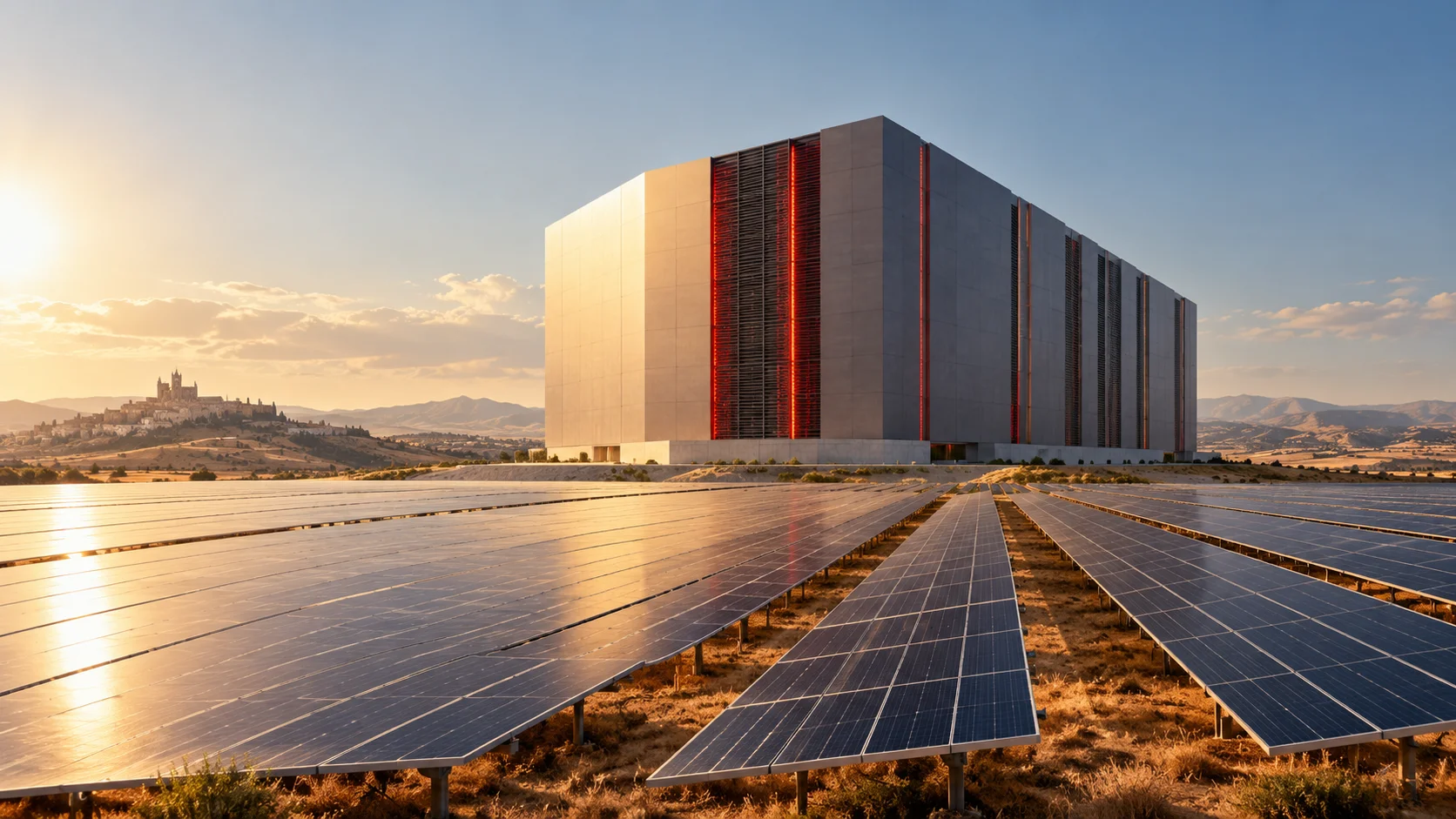
The Alibaba has held preliminary talks with Spanish Solaria about the supply of renewable energy for a possible data center in Puertollano, in central Spain. The negotiations were revealed by Bloomberg and do not yet represent an investment decision or confirmation of a new facility in the country.
The Solaria infrastructure considered in the talks is about 240 kilometers south of Madrid. Alibaba also sought other potential electricity suppliers, while representatives of the two companies declined to comment on the negotiations.
The early stage distinguishes the possible Spanish operation from the projects Alibaba has already officially announced in Europe. In September, Alibaba Cloud said it will open its first cloud regions in Finland and the Netherlands in the next 12 months and will expand its data center presence in Germany and France, as well as other markets.
Energy begins to define data center expansion
The choice of a renewable energy supplier gains additional weight in Spain. The Spanish government has put a proposed regulation out for public consultation that provides for specific sustainability requirements for new data centers.
Under the proposal, as long as the share of renewable sources in the power system remains below 90%, new projects must cover at least 80% of their consumption with renewable generation, with hourly matching. The text also provides that each new megawatt consumed be backed by new renewable capacity installed recently.
For Alibaba, the discussion comes amid a much larger expansion of its artificial intelligence infrastructure. The company has set a goal of surpassing 20 GW of global data center capacity by 2032, as it expands its cloud network to meet growing demand for AI processing.
The company also maintains a program of at least 380 billion yuan, about US$ 53 billion, for investments in AI infrastructure and cloud computing over three years.
The talks with Solaria may still not result in a project. But they show that, as Alibaba takes its AI infrastructure to new European markets, renewable electricity availability, grid capacity and local rules become directly part of decisions about where to install the next generation of computing capacity.