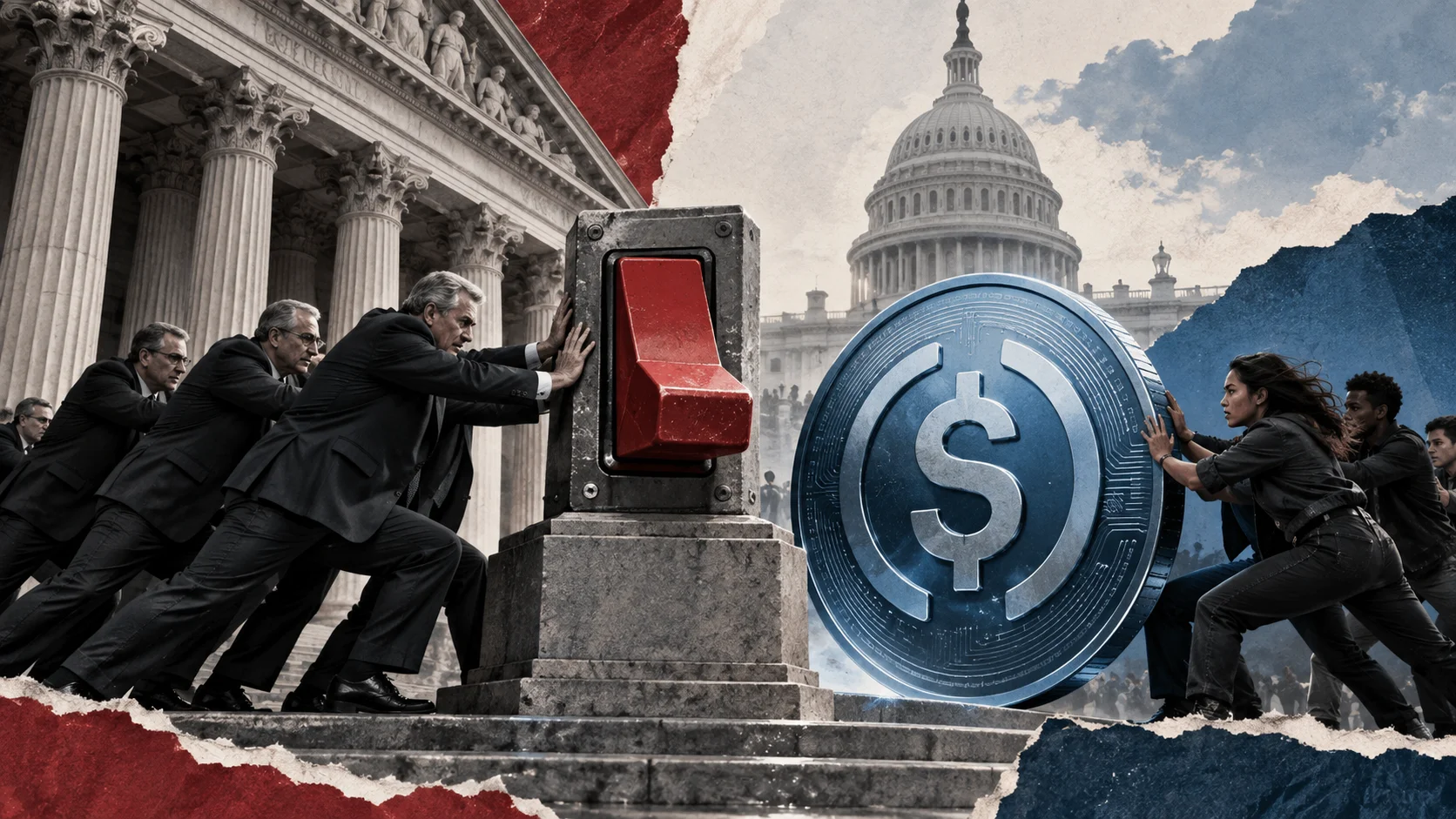
Eight entities in the United States banking sector pressed the Senate on Monday (14) for changes to the CLARITY Act, stating that the new protection against deposit flight caused by stablecoins would only allow regulatory intervention after banks had already suffered a material impact. The dispute comes ahead of a procedural vote scheduled for this Tuesday (15), which needs 60 votes for the bill to advance.
The revised text creates an emergency mechanism, described by its authors as a “circuit breaker,” to protect community banks if customers move deposits into stablecoins in search of interest-like rewards.
Under the proposal, the Treasury secretary would have up to 18 months after the approval of the law to assess whether the rewards structure caused a “substantial harmful impact” on deposits at community banks with less than US$ 10 billion in assets. If that condition is found, bank regulators would have to create rules to close the loophole.
The associations argue that the protection comes too late. For the sector, allowing intervention only after a significant deposit flight does not prevent the problem and could reduce the resources available for mortgages, small business credit and agricultural financing.
The push involves groups such as the American Bankers Association (ABA), the Independent Community Bankers of America (ICBA) and the Bank Policy Institute. The entities want Congress to directly prohibit rewards on stablecoins that function economically like interest on bank deposits.
Banks want to close the loophole on rewards
US law already restricts stablecoin issuers from paying yield directly to holders. The conflict is now concentrated in programs offered by exchanges and other intermediaries, which can grant rewards tied to the balance held or the time the tokens remain on the platform.
The banking associations specifically call for the removal of a provision that would allow rewards to be calculated based on the balance, duration or holding period of the stablecoins. For the banks, this model turns payment tokens into direct competitors to deposit accounts.
The crypto industry disputes this interpretation and says that broad restrictions on rewards could limit competition and the development of new financial services. The divergence between banks and digital asset companies has become one of the main obstacles to the CLARITY Act in the Senate.
The bill establishes a broader federal framework for the cryptocurrency market and splits regulatory responsibilities among agencies such as the SEC and the CFTC. The final version presented by Republicans also incorporates 126 substantial changes requested by Democrats, including new ethics rules for public officials.
Tuesday's vote does not represent definitive approval of the law. It decides whether the Senate can move forward to debate the text, and its outcome should indicate whether Republicans managed to gather enough bipartisan support to overcome a parliamentary obstruction.