The drop in shares of artificial intelligence infrastructure companies on October 14 exposed a concern that goes beyond market valuations: data center expansion depends on very different financial conditions among the companies taking part in it. While operators such as CoreWeave need to raise billions of dollars to acquire equipment and expand capacity, manufacturers such as TSMC continue generating enough cash to sustain high investments.
The pressure gained strength after U.S. inflation reached 3.7% in September, rekindling expectations of further interest rate hikes by the Federal Reserve. CoreWeave, Nebius, Oracle and Dell posted significant stock losses, but the movement alone does not demonstrate a pullback in demand for artificial intelligence.
Balance sheets and debt security prices point to a more specific conclusion: financing already shows concrete signs of becoming more expensive for certain operators, without sufficient evidence that the entire sector is facing a capital crisis.
CoreWeave shows how financial risk can grow before demand weakens
The most evident signal appeared in CoreWeave's debt market. The company's bonds maturing in 2032, issued in June with annual interest of 9.625%, began offering yields near 15% in the secondary market during the October turmoil.
The difference does not mean that all of the company's existing debt began costing 15%. The yield reflects the price investors demanded at that moment to buy those bonds. Even so, it works as a warning about the conditions the company may encounter when seeking new financing.
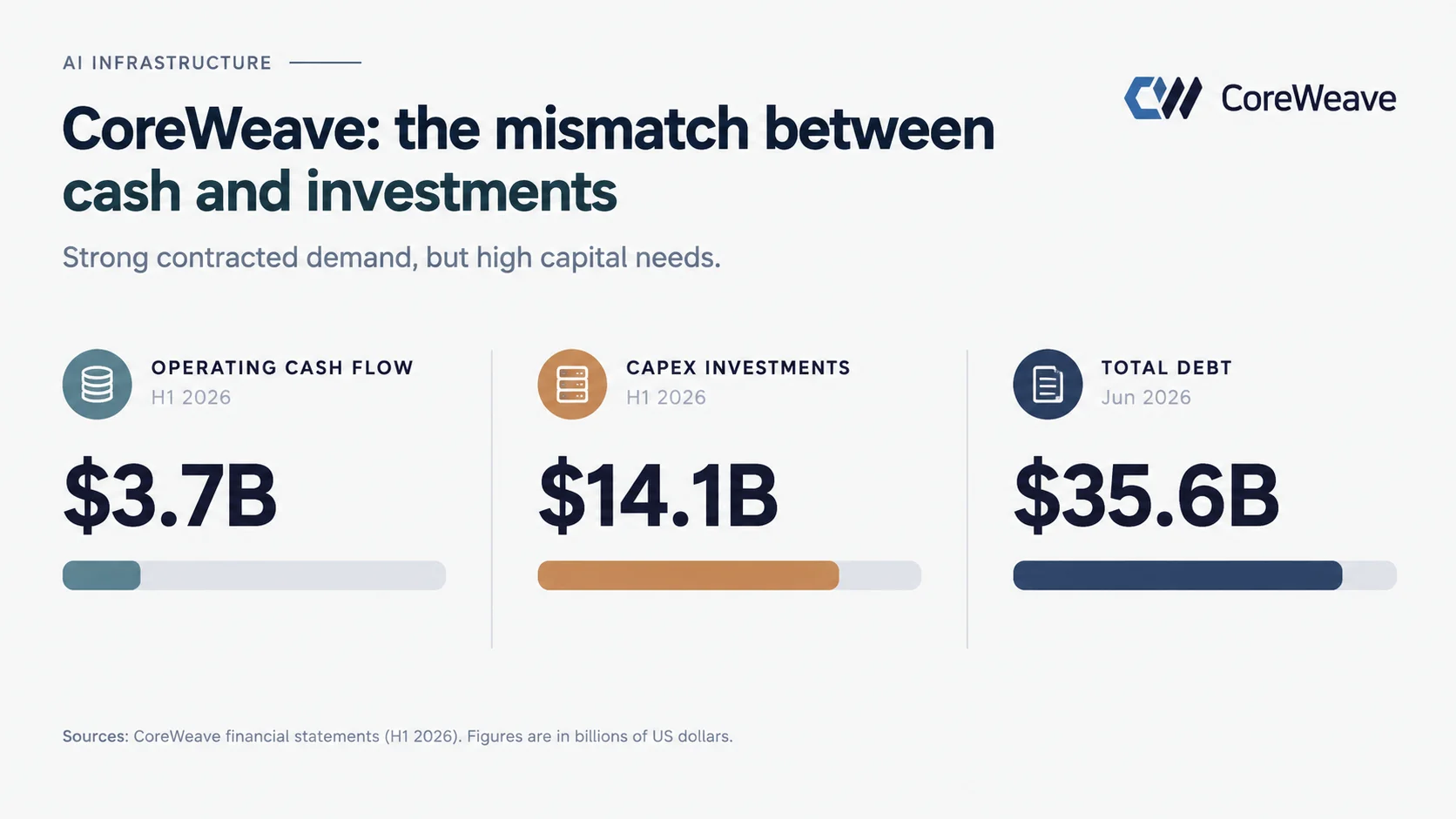
In its balance sheet for June 2026, CoreWeave reported US$ 35.6 billion in debt, with approximately US$ 6.2 billion in principal payments scheduled for 2027.
In the first half, the company generated US$ 3.7 billion in operating cash flow, while its purchases of property and equipment consumed US$ 14.1 billion. The difference helps explain its reliance on debt issuance, equity and other financial instruments.
The problem is not necessarily the absence of customers. The company recorded US$ 103.7 billion in performance obligations not yet fulfilled, an amount associated mainly with future revenue contracts.
Billion-dollar contracts, however, do not equal immediately available money. Payments are received over the course of fulfilling the obligations, while the acquisition of servers, GPUs and equipment may require upfront funds.
This timing mismatch creates a vulnerability: even with contracted demand, the company must finance the gap between building its infrastructure and receiving the corresponding payments.
If the cost of this financing rises continuously, projects that offered attractive returns may lose part of their profitability.
Not all operators are paying the same price
Nebius offers an important counterpoint.
In July, the company announced a secured financing deal of approximately US$ 775 million, maturing in October 2030 and paying SOFR plus 2.5 points.
The deal was structured with collateral tied to GPU infrastructure and the cash flows from a contract with an investment-grade customer.
This structure reduces certain risks for the lender, since it ties the loan to assets and contracted revenues.
Directly comparing that rate with the yield on CoreWeave's bonds would be inadequate. A loan secured by assets and contracts has different risk characteristics from those of a corporate bond without the same collateral.
Even so, the contrast reveals that capital availability depends on factors such as contract quality, collateral, debt structure and the ability to bring revenues forward.
Nebius itself reported, in its second-quarter results, that agreements with advance customer payments covered between 50% and 60% of the investments related to certain contracts.
These mechanisms reduce the need for external financing, although they do not eliminate operational obligations or guarantee profitability.
The scenario also helps explain why companies operating in the same segment can face very different credit conditions.
Oracle shows that profitability does not eliminate the need for financing
Oracle occupies an intermediate position in this comparison.
The company has consolidated, profitable businesses, but its expansion in AI infrastructure requires investments that temporarily exceed its operating cash generation.
In the first quarter of its fiscal year 2027, the company reported US$ 28.5 billion in capital expenditures, against US$ 23.1 billion in cash generated by operations.
Free cash flow was negative at approximately US$ 5.4 billion.
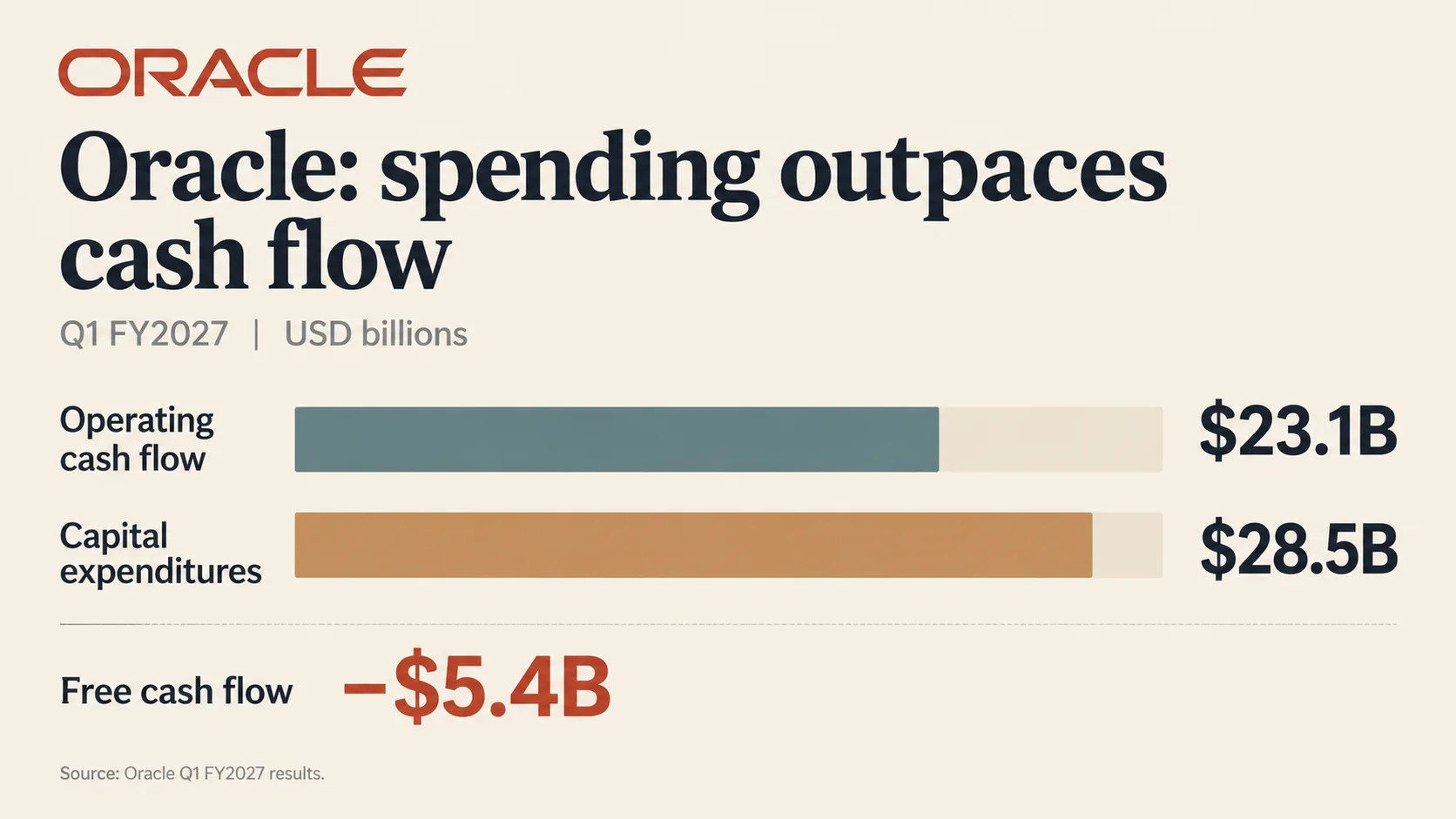
There is an important particularity: the operating cash for that quarter included US$ 11.4 billion in customer prepayments with significant financing components. These funds help sustain infrastructure construction, but they also correspond to future obligations.
Oracle also raised about US$ 19.9 billion net through equity issuance during the quarter.
Therefore, it is not enough to classify companies as profitable or loss-making. It is necessary to observe whether the cash generated covers planned investments and how much depends on prepayments, equity issuance or new debt.
Microsoft represents a different financial structure. In the fiscal year ended in June 2026, it reported US$ 182.9 billion in operating cash flow, in addition to holding US$ 76.8 billion in cash and short-term investments.
That does not make its investments immune to high interest rates. The cost of capital remains relevant in project evaluation, even when there is enough cash to finance them.
The difference is that companies with greater internal cash generation have more alternatives to adjust timelines and negotiate terms without immediately depending on new loans.
TSMC's results contradict a widespread pullback in demand
The numbers presented by TSMC on October 15 make it even more important to separate financing from demand.
The Taiwanese manufacturer reported revenue of NT$ 1.49 trillion in the third quarter, annual growth of 50.9%, while net income rose 68.7%, to NT$ 763.1 billion.
The high-performance computing platform accounted for 68% of quarterly revenue. This category includes artificial intelligence applications, but does not correspond exclusively to them.
The result demonstrates continued demand for advanced semiconductor manufacturing technologies, although it does not allow measuring final demand for AI capacity in isolation.
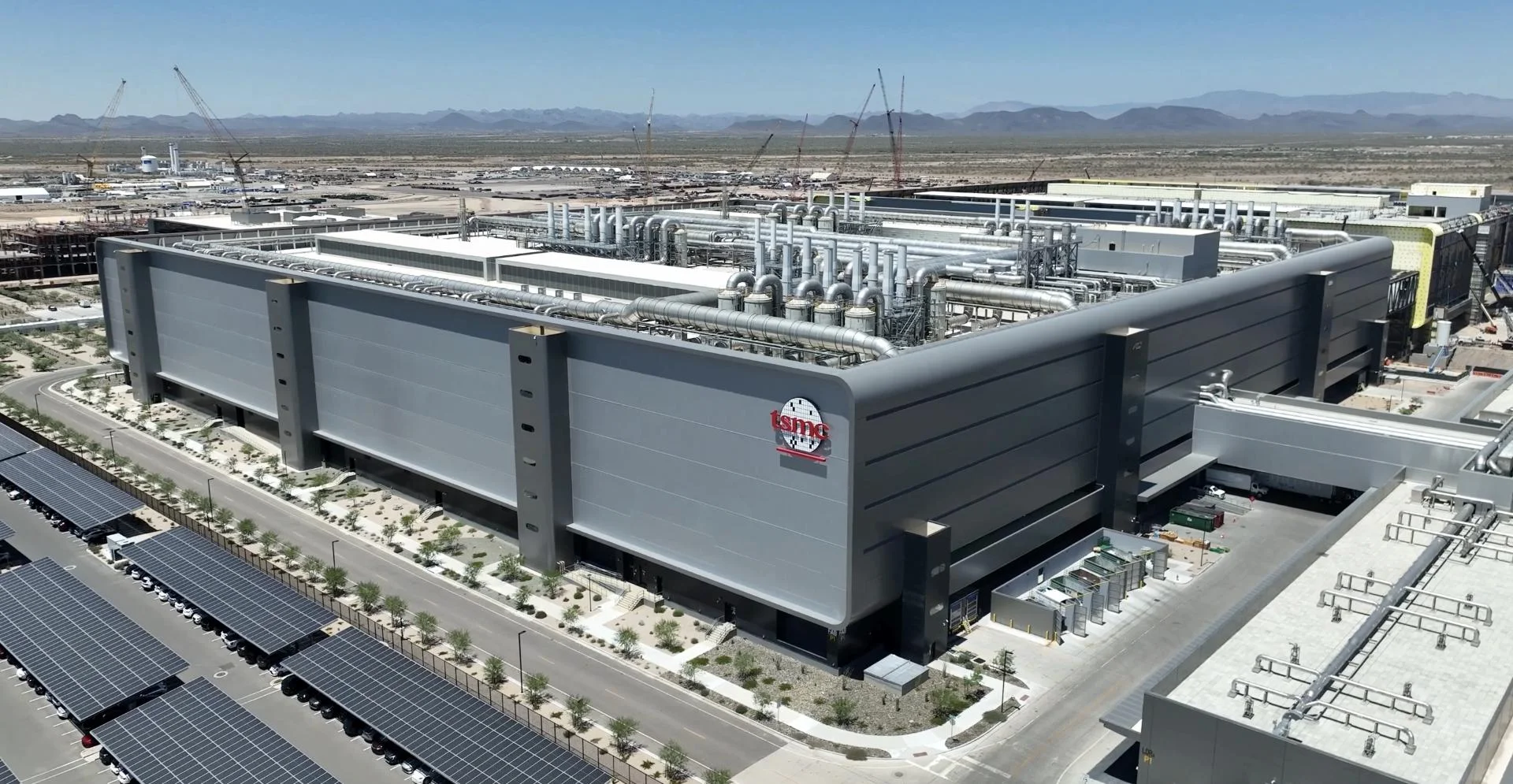
The financial contrast is also significant. During the quarter, TSMC generated NT$ 919.8 billion in operating cash and made NT$ 443.2 billion in capital expenditures, ending the period with positive free cash flow of NT$ 476.6 billion.
For the fourth quarter, the company projected revenue between US$ 52.3 billion and US$ 54.3 billion.
The chip market continues to show significant operational growth precisely when investors are questioning the financial sustainability of part of the infrastructure that uses these components.
There is no necessary contradiction between the two events. Manufacturers can continue receiving large orders while certain buyers face lower margins, more expensive financing or greater pressure on investment returns.
Moreover, the stock declines did not have a single cause. In Dell's case, for example, the movement also occurred after a negative rating revision by Barclays, related to market valuations and growth expectations.
Grouping all these companies together as evidence of a financing crisis would ignore important differences among their business models.
The decisive test will be in new financings and cash
The available evidence supports a distinction: the rise in interest rates and risk premiums already affects the valuation of certain debts tied to AI infrastructure. They do not yet demonstrate a widespread halt in investments or a structural decline in demand.
The most immediate risk lies in project profitability. When interest rates, construction costs and operating expenses rise, the infrastructure needs to produce higher revenues to deliver the originally expected return.
This mechanism tends to be especially relevant for companies with large external financing needs, near-term maturities and revenues that will be realized over several years.
The next balance sheets from CoreWeave, Nebius and Oracle will allow verifying three concrete aspects: whether investments continue growing, what share is being financed by external capital and how much it costs to obtain new funds.
It will also be necessary to monitor the evolution of bond yields, credit spreads, customer prepayments and maturity schedules. A persistent deterioration in these conditions, accompanied by project delays or reductions in contracted capacity, would offer stronger evidence of financial constraints.
For now, the main observable difference is not between companies exposed or not exposed to artificial intelligence, but between those capable of sustaining expansion with their own resources and those that need to continuously refinance their growth.
The next step will be to determine whether the financial pressure remains concentrated among more indebted operators or begins to effectively change the pace of data center construction.