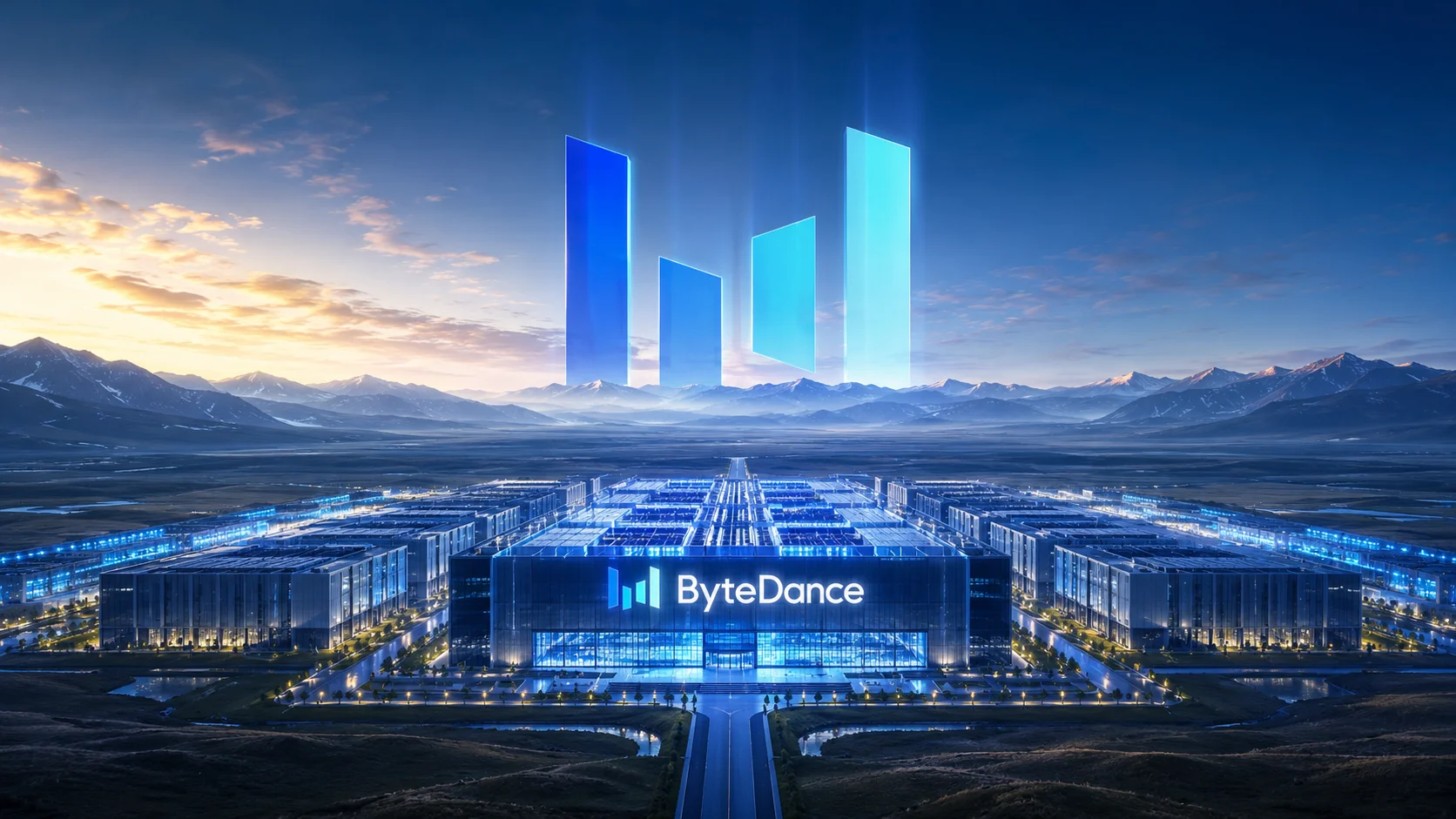
ByteDance is negotiating a large-scale expansion of its artificial intelligence infrastructure in China, with plans to add between 5 and 6 gigawatts of capacity in a new data center cluster in Ulanqab, Inner Mongolia.
The talks are still preliminary and involve local suppliers, according to a person familiar with the plans heard by South China Morning Post. The company intends to receive the facilities in the Jining district by early 2028, but has not publicly confirmed the project.
The scale draws attention. An estimate by Soochow Securities cited by the newspaper calculates at about 160 billion yuan, or US$ 23.8 billion, the initial investment necessary for a 1 GW AI data center. Applied directly to the project, that reference would place the theoretical cost between US$ 119 billion and US$ 143 billion — although that amount does not represent an announced budget by ByteDance.
Ulanqab has already become an AI computing hub
The location is not new for the company. Data published by the local government show that Ulanqab already provides computing capacity for companies such as ByteDance, Huawei, and Alibaba.
The city brings together more than 100 data center projects, with around 650,000 racks built and 430,000 in operation. More than 95% of its computing capacity is classified as focused on intelligent computing.
The climate also helps explain the concentration of investments. According to local authorities, data centers can use the outside cold for cooling for nearly ten months of the year, while new projects operate with a renewable energy share above 86%. The region also has low-latency connections to Beijing.
Nearly US$ 30 billion raised as the race accelerates
The expansion comes precisely as ByteDance increases its financial capacity to compete in AI.
The company secured a US$ 29.6 billion loan from nearly 30 banks, according to sources heard by Reuters. The financing, initially planned at US$ 20 billion, grew after strong demand from creditors and does not require ByteDance assets as collateral.
Although formally intended for general corporate purposes, sources said that most of the funds should support the company's artificial intelligence plans. ByteDance also already acts as a contracted buyer of capacity from several data centers under construction in Southeast Asia.
There is no indication, however, that this loan will directly finance the new cluster in Inner Mongolia.
Chips also enter the equation
The advance in data centers occurs in parallel with an attempt to expand ByteDance's access to AI chips produced within China.
In June, Reuters revealed that the company was negotiating the purchase of at least 50,000 accelerators from Chinese company Iluvatar CoreX, mainly intended for inference tasks. ByteDance also evaluated Kunlunxin chips from Baidu, while Huawei and Cambricon already appeared among its main domestic suppliers.
That move is particularly important for products such as Doubao, ByteDance's main AI platform in China, because inference is precisely the capability needed to respond to requests from millions of users.
The set of investments shows a ByteDance increasingly less dependent solely on TikTok and Douyin as growth engines. The company is simultaneously building models, products, chips, and physical infrastructure to directly compete for one of the most expensive parts of the artificial intelligence race: who can put more computing capacity into operation.