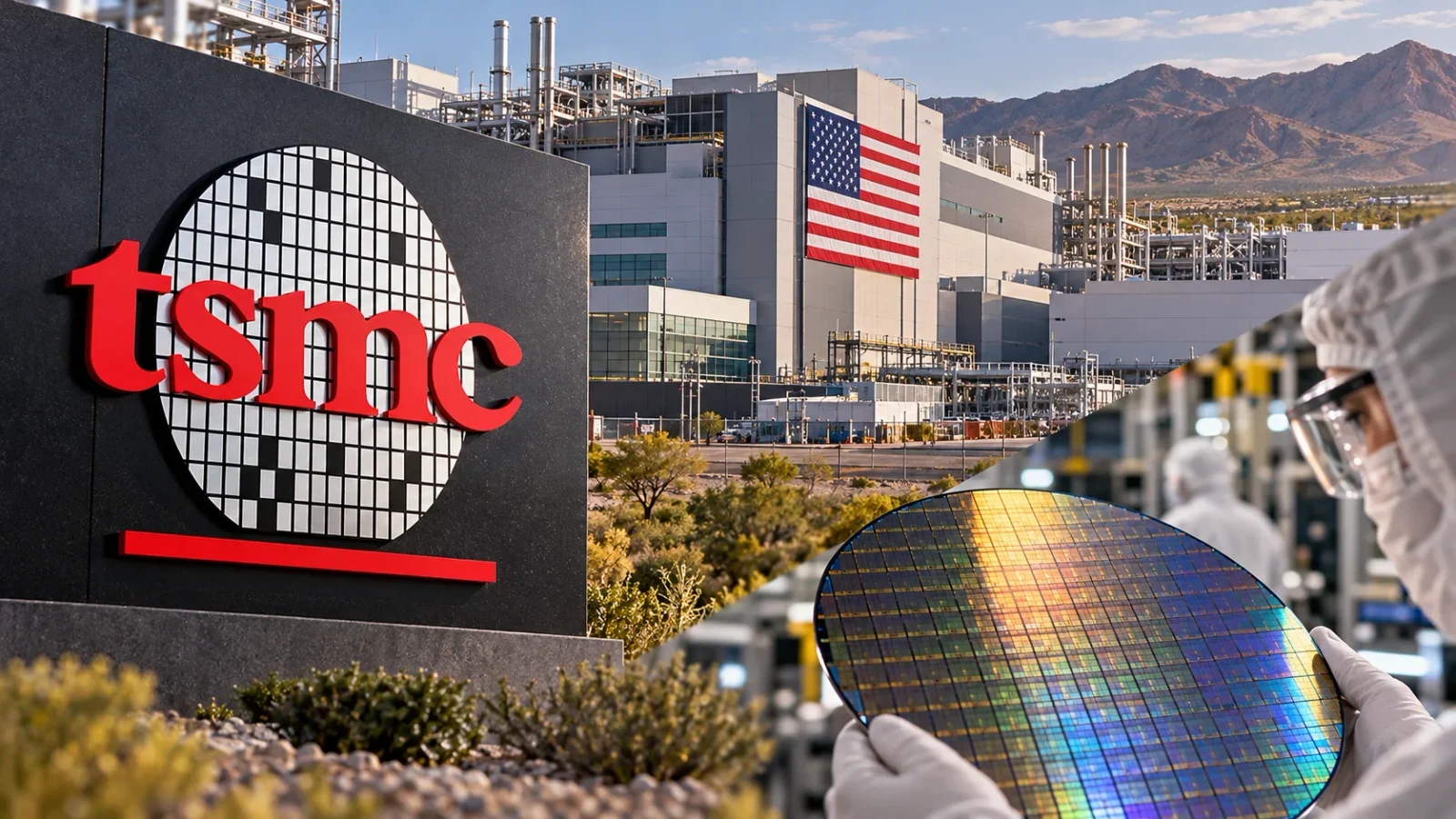
GlobalFoundries announced a US$ 2 billion deal with TSMC to manufacture in the United States a component used in the assembly of advanced artificial intelligence chips. The partnership, announced this Thursday (8), provides for the expansion of the company's plant in Malta, in the state of New York, but production at scale is scheduled only for the first half of 2028.
The contract has an initial term of five years and will allow TSMC to count on an American supplier of silicon interposers, components responsible for connecting processors and memory modules within advanced systems. According to GlobalFoundries, the facility should become the first manufacturing source of these components in the United States for advanced packaging technologies.
Interposers are part of the CoWoS (Chip-on-Wafer-on-Substrate) ecosystem, a packaging technology used by TSMC to integrate different components into a single assembly. These structures enable high-speed connections between processors and memories, an important requirement for AI accelerators.
The distinction is relevant: GlobalFoundries will not start manufacturing the artificial intelligence processors produced by TSMC. Its role will be to supply one of the structures needed to integrate these chips with other components, especially high-bandwidth memories.
Five-year contract provides for production at scale only in 2028
Although the deal has already been announced, GlobalFoundries expects to begin expanding production at scale at the Malta facility only in the first half of 2028, approximately 20 months after signing.
The company also reported that the new capacity will include technologies with capacitors integrated into silicon, used in advanced packaging solutions. The contract sets conditions for future expansions, as customer demand evolves.
The US$ 2 billion figure corresponds to the multi-year commercial agreement, not to an investment of the same amount already executed at the plant or to funds fully received by GlobalFoundries. The statement does not detail how much will be allocated specifically to the industrial expansion.
The initiative comes at a time of restrictions in global advanced packaging capacity. According to Reuters, demand for these technologies has outpaced the available manufacturing infrastructure, creating additional difficulties for expanding the production of chips destined for artificial intelligence.
With the partnership, TSMC will have a new supply source located in the United States for a specific stage of its production chain. The announced expansion, however, still depends on the implementation of the industrial capacity planned for 2028.