The Huawei placed artificial intelligence at the center of its growth strategy and forecasts that by 900 billion AI agents could be active worldwide by 2035. Guo Ping, chairman of the company's supervisory board, described the technology as the company's biggest growth opportunity.
The projection accompanies the report Intelligent World 2035, released this Wednesday (16). According to Huawei, autonomous agents could account for more than 90% of global AI token traffic within nine years.
The company also estimates that annual token consumption — units processed by AI models — will grow 100,000 times over the period. This advance is expected to primarily increase demand for chips, networks, data centers and computing services.
To address this scenario, Huawei proposes to increase the scale of computing clusters 100-fold and reduce the cost of executing tasks by agents a thousand-fold. Security and data protection are also among the technology priorities for the next decade.
Huawei focuses its bet on AI infrastructure
The strategy is directly linked to the company's businesses. Guo said Huawei intends to concentrate its investments in connectivity and computing and is seeking to occupy a position in AI infrastructure similar to the one Nvidia currently holds in the market.
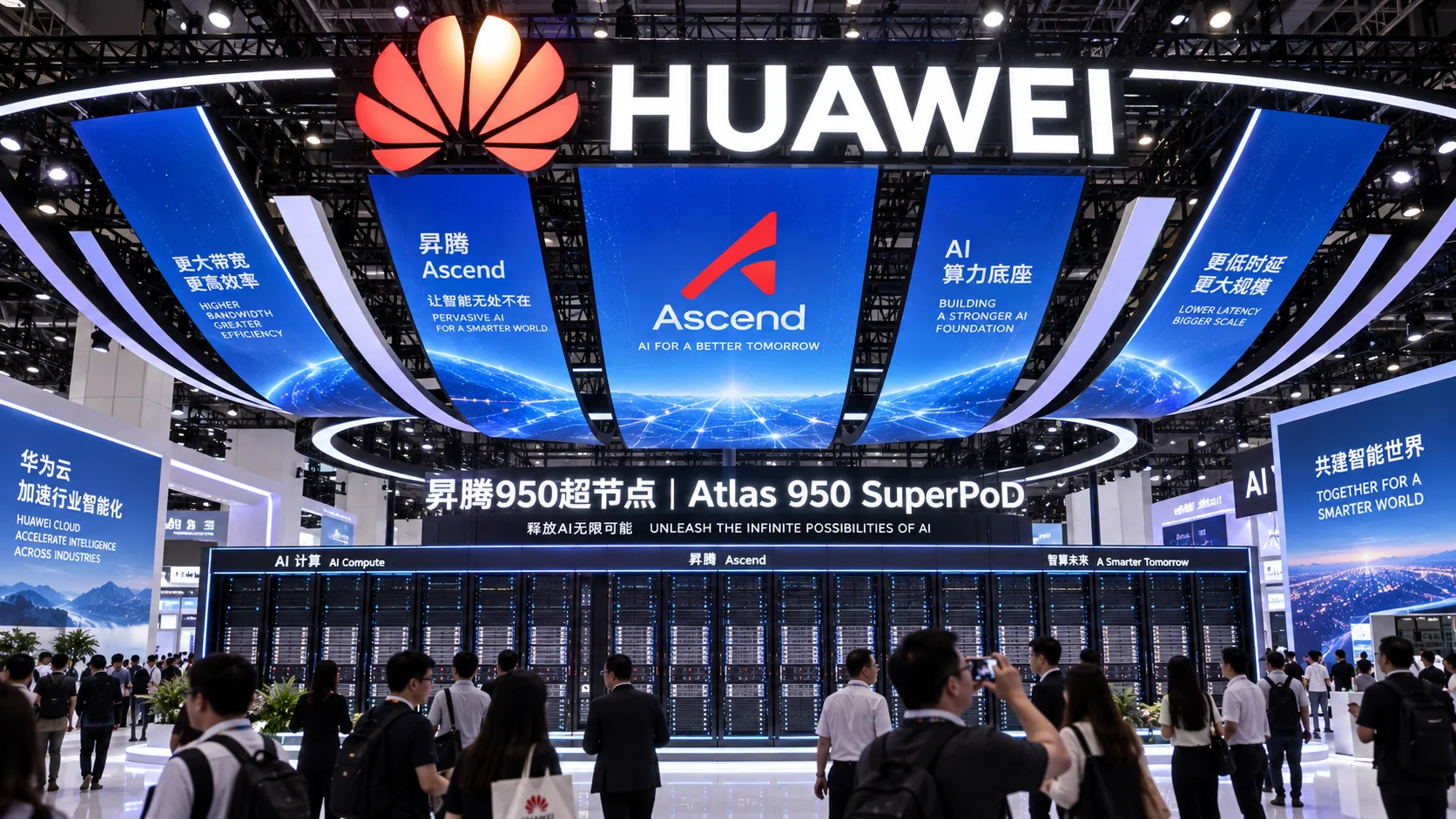
Instead of prioritizing the development of a large proprietary model, the company plans to provide infrastructure so that customers can run different AI systems using Ascendchips, Kunpeng processors and its computing clusters.
Huawei also expects to apply agents in areas where it already has large volumes of data, such as smartphones and intelligent driving. The strategy keeps the company focused on its current businesses while preparing its infrastructure for a market in which autonomous software is expected to account for a growing share of computing demand.