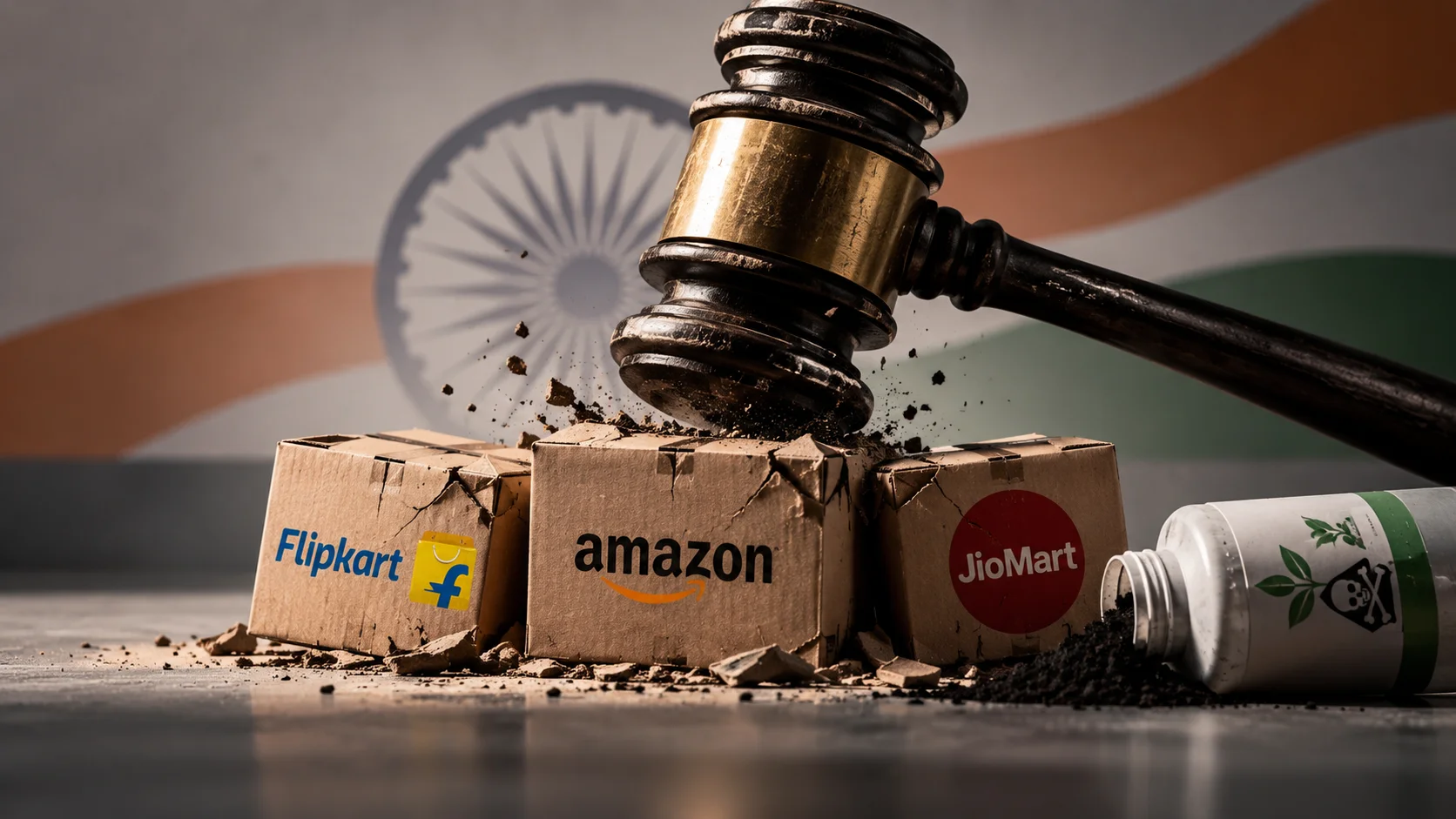
India's consumer protection authority fined Amazon and Flipkart 1 million rupees each and JioMart 500,000 rupees for the sale and advertising of an unregistered herbicide. In addition to the penalties, the regulator ordered the removal of the product and required the platforms to review their control mechanisms for items offered by third-party sellers.
The orders from the Central Consumer Protection Authority, the CCPA, were issued on September 22 and involve the product marketed as Cyclosinone Herbicide. According to information presented by India's Ministry of Agriculture during the investigation, no substance called Cyclosinone is listed in the legislation that regulates insecticides in the country. The listings also did not adequately identify the active ingredient or its composition.
The case gained scale especially on Amazon. The authority recorded 38,410 orders and 43,634 units sold, which accounted for approximately 9.64 million rupees. The figures were cited by the regulator to gauge consumers' exposure to the product.
The investigation began after a complaint from the Crop Care Federation of India forwarded by the Ministry of Agriculture. In May, Amazon, Flipkart, Meesho and JioMart had already removed listings for the herbicide after receiving notifications from the CCPA. At that time, the authority decided to deepen the investigation into the procedures used by the platforms to verify products and sellers.
Seller declaration does not replace platform verification
The most relevant part of the decisions is the rejection of the argument that responsibility for compliance with the rules would rest only with the sellers who list the products.
The CCPA stated that private contracts between marketplaces and sellers do not eliminate the legal obligations of the platforms themselves. For the authority, requiring a declaration from the seller is not enough when the platform needs to verify whether a regulated product can legally be sold.
The regulator pointed to flaws in procedures for seller onboarding, product verification and content moderation, considering the exclusive reliance on information provided by the merchants themselves to be inadequate. Indian rules for the online sale of insecticides also require verification of sellers' licenses before these products are published.
The decision increases pressure on marketplaces that operate extensive catalogs in categories subject to specific rules. The problem is no longer just removing a listing after a complaint and now involves controls capable of preventing certain products from being published without the required documentation.
Amazon, Flipkart and JioMart will also have to carry out internal audits to identify offers that violate the legislation or pose a risk to consumer safety. The companies have 15 days from the orders to submit compliance reports to the authority.