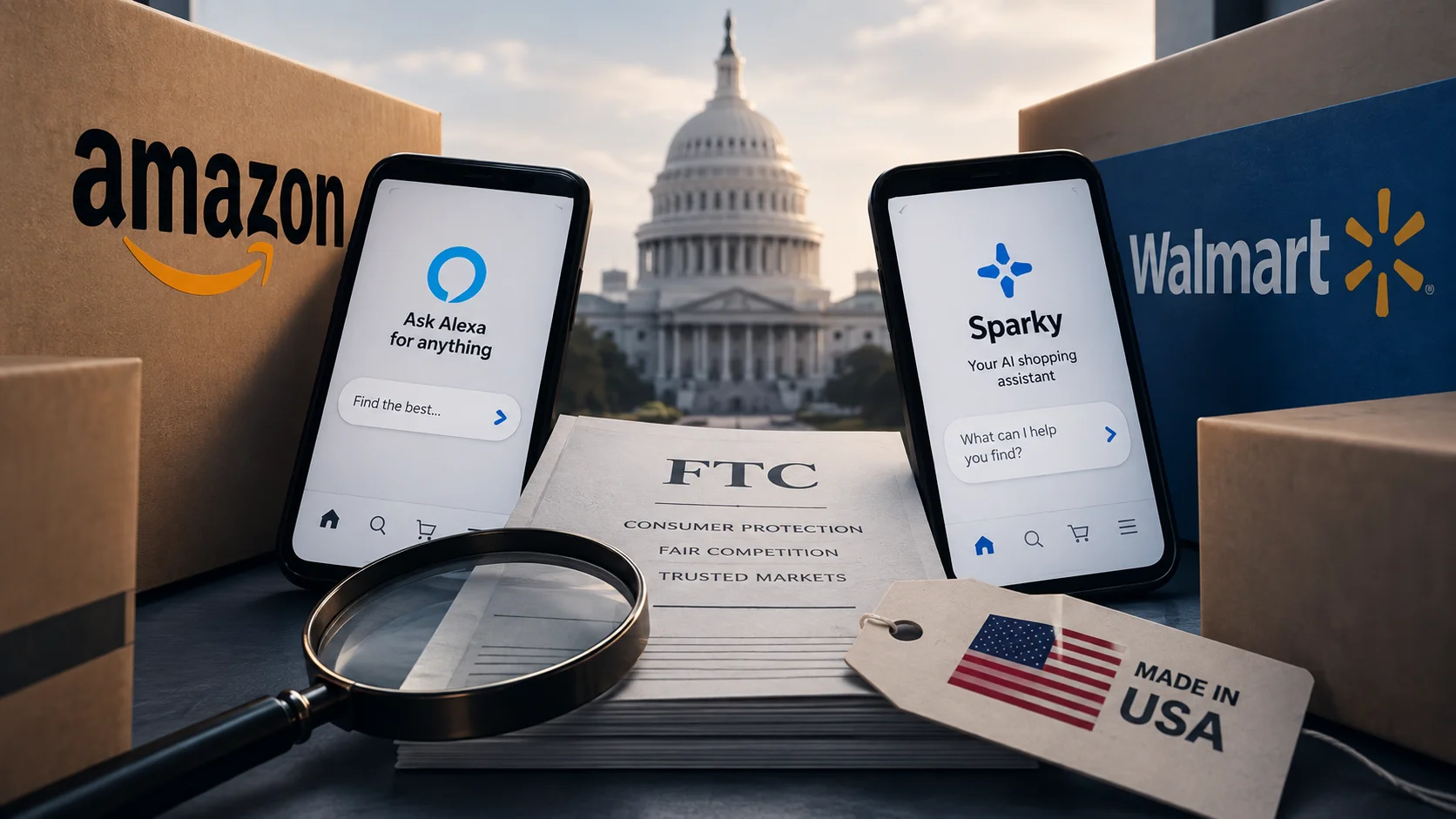
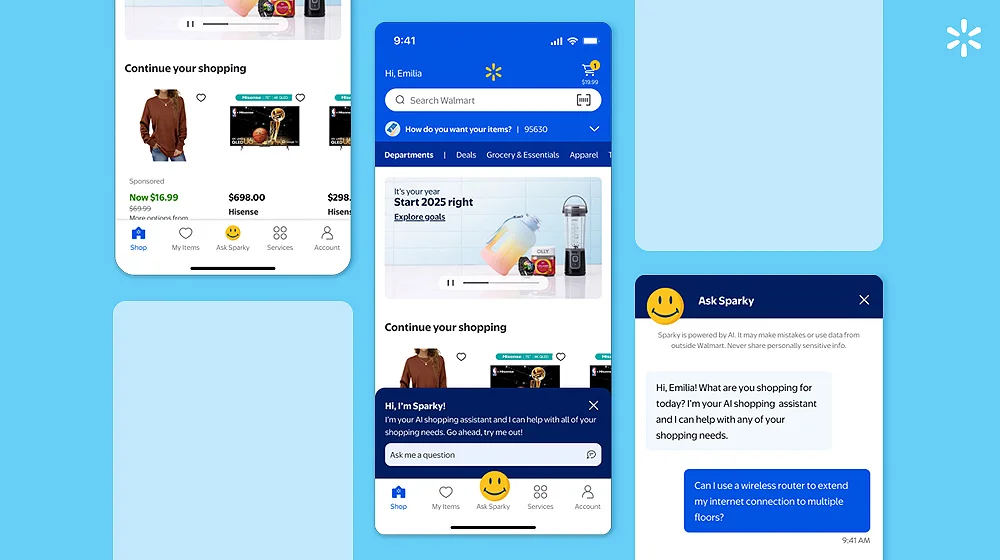
Two U.S. senators asked the Federal Trade Commission (FTC) to investigate Amazon and Walmart after a study found that their AI shopping assistants make searches for “Made in USA” products harder and can identify possible false labels without proactively flagging them. The request, sent by Tammy Baldwin and Rick Scott on September 17, involves Amazon's Alexa for Shopping and Walmart's Sparky.
The issue raised by the case goes beyond the origin of the products. If the FTC decides to move forward, it will have to deal with an increasingly relevant problem in e-commerce: to what extent a platform can be held accountable not only for the information present in a listing, but also for how its own AI selects, hides, interprets and recommends that information to the consumer.
The problem is no longer just the label
The American rule for “Made in USA” is already relatively clear. For an unqualified claim, the FTC requires that final assembly and relevant processing occur in the United States and that all or virtually all components be of American origin.
Amazon and Walmart are also not receiving their first warning on the subject. In July 2025, the FTC sent letters to the two companies after identifying third-party sellers making potentially misleading claims about product origin. In the document to Amazon, the agency asked the marketplace to monitor, identify and take corrective action against these sellers. At the same time, it made explicit that the letter did not represent a conclusion that Amazon itself had violated the law.
The new pressure expands the problem. Baldwin and Scott ask the FTC to investigate not only the listings, but the functioning of the AI assistants and a possible suppression of American products. The letter arrives at a time when the agency has already intensified enforcement of origin rules: in April, the FTC announced three actions involving false “Made in USA” claims, including a US$ 625,000 settlement for consumer refunds in one of the cases.
This creates an important distinction. The legislation already reaches misleading information about products; the point that is still less established is how to treat an AI interface that reorganizes this information before presenting it to the buyer.
Chatbots already influence purchases at scale
This discussion gains weight because the assistants are no longer experimental features.
Walmart stated in February that customers who used Sparky had an average order value about 35% higher than other consumers. In May, the company said the number of weekly active users of the assistant had more than doubled in just one quarter.
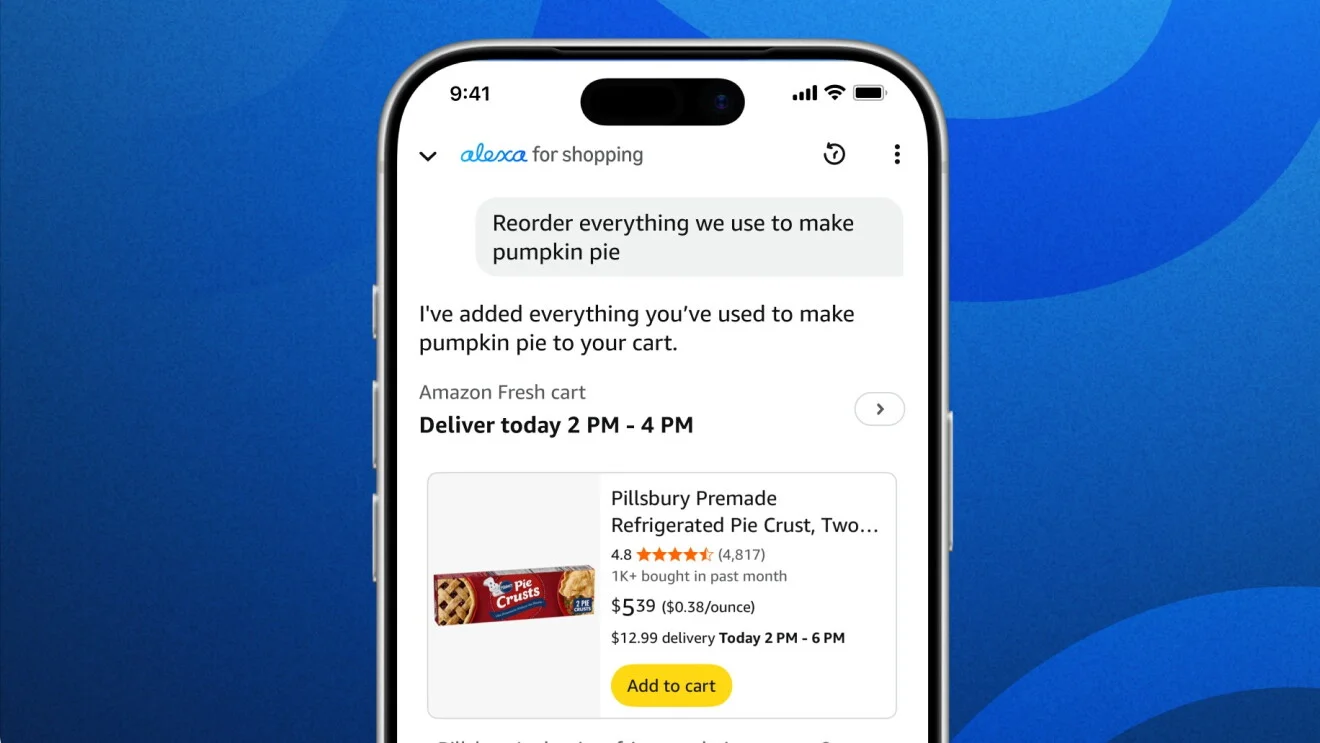
At Amazon, more than 350 million customers had used Alexa for Shopping in the 12 months prior to the second quarter of 2026, according to the company itself. Amazon also previously reported that Rufus, the predecessor incorporated into the current Alexa for Shopping, helped generate nearly US$ 12 billion in incremental annualized sales in 2025.
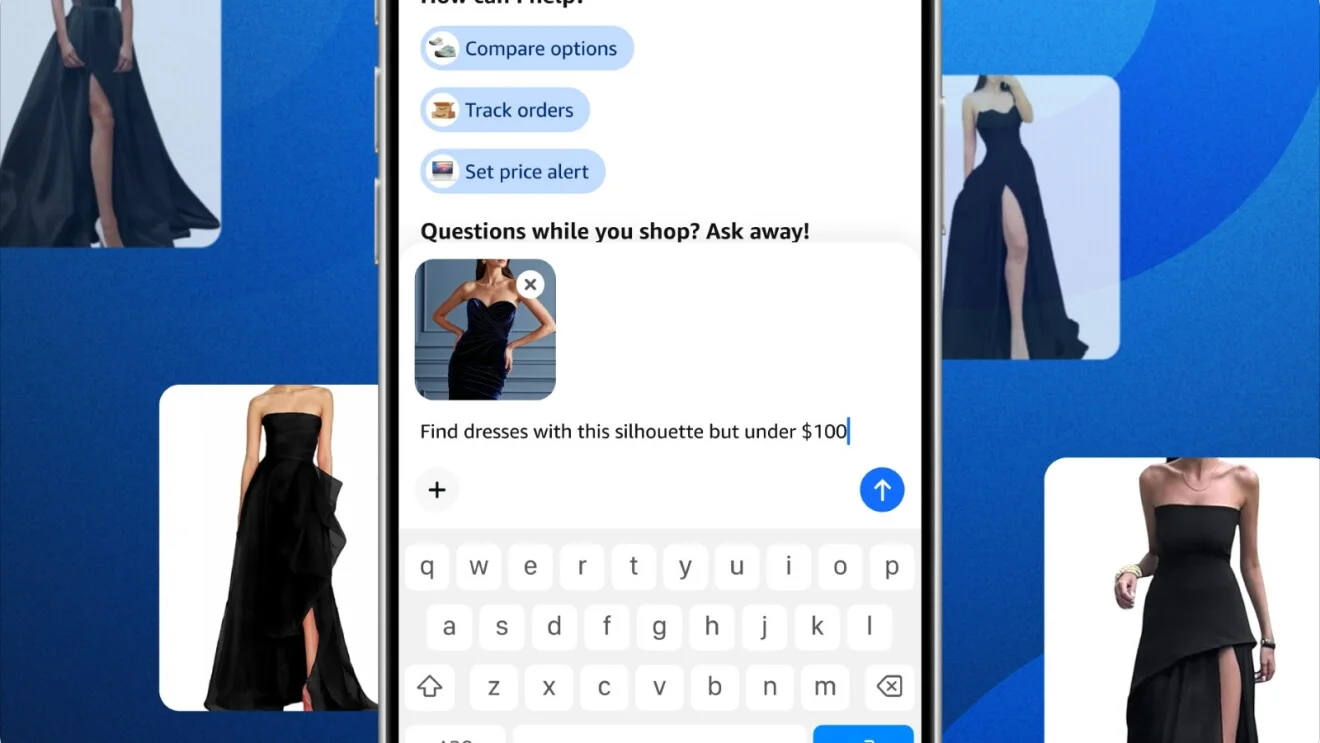
When an interface with this reach recommends products, compares alternatives and can even automate purchases, the way it accesses and presents attributes is no longer just a design decision. It gains concrete ability to alter which sellers and products reach the consumer.
Study points to technical capability, but intent is still a point in dispute
The senators' request relies on a report published in July by the Center for Law and the Economy at Columbia Law School.
The researchers made equivalent queries about American and foreign products and changed small parts of the prompts when the chatbots refused to answer. According to the study, Alexa for Shopping initially did not present results for certain searches with the phrase “Made in USA,” but produced recommendations when the wording was modified. The authors also claim to have found dozens of products with possible inconsistencies between claims of American manufacturing and data indicating foreign origin.
There is, however, a relevant limitation for the analysis. The report cites responses from the chatbots themselves attributing part of the behavior to business decisions, but an explanation produced by a generative model is not equivalent to internal documentation proving a corporate policy. The study itself acknowledges that there is no official or public explanation from Amazon as to why certain queries would present different behaviors.
Amazon rejected the claim that it deliberately omits information about origin. The company told Reuters that it directs questions about country of manufacture to product pages to prioritize accuracy and said that Alexa for Shopping continues to be improved. Walmart had not commented and the FTC declined to comment when contacted by Reuters.
An investigation could turn compliance into a requirement for the AI itself
The most relevant effect of the case will depend on how the FTC frames the problem, if it opens an investigation.
A narrow approach could keep the focus on sellers that use false labels. In this scenario, Amazon and Walmart would remain primarily as platforms responsible for applying their own policies and responding to identified problematic products.
A broader investigation could examine whether responses, recommendations and filtering mechanisms produced by the platforms' own systems also fall within the scope of rules against deceptive or unfair practices. The senators' letter also asks the FTC to examine possible anticompetitive practices, but no regulatory conclusion has been reached so far.
If this second path advances, the potential effect would go beyond Amazon and Walmart. Marketplaces that are incorporating AI agents could face pressure to maintain audit trails, verify which data feeds the recommendations and demonstrate why certain products appear or disappear from responses.
The next concrete signal will be the FTC's reaction. A formal opening of an investigation, requests for information from the companies or specific guidance on how consumer protection rules apply to shopping assistants would indicate that enforcement is advancing from the product page to the AI layer that decides what the consumer sees.