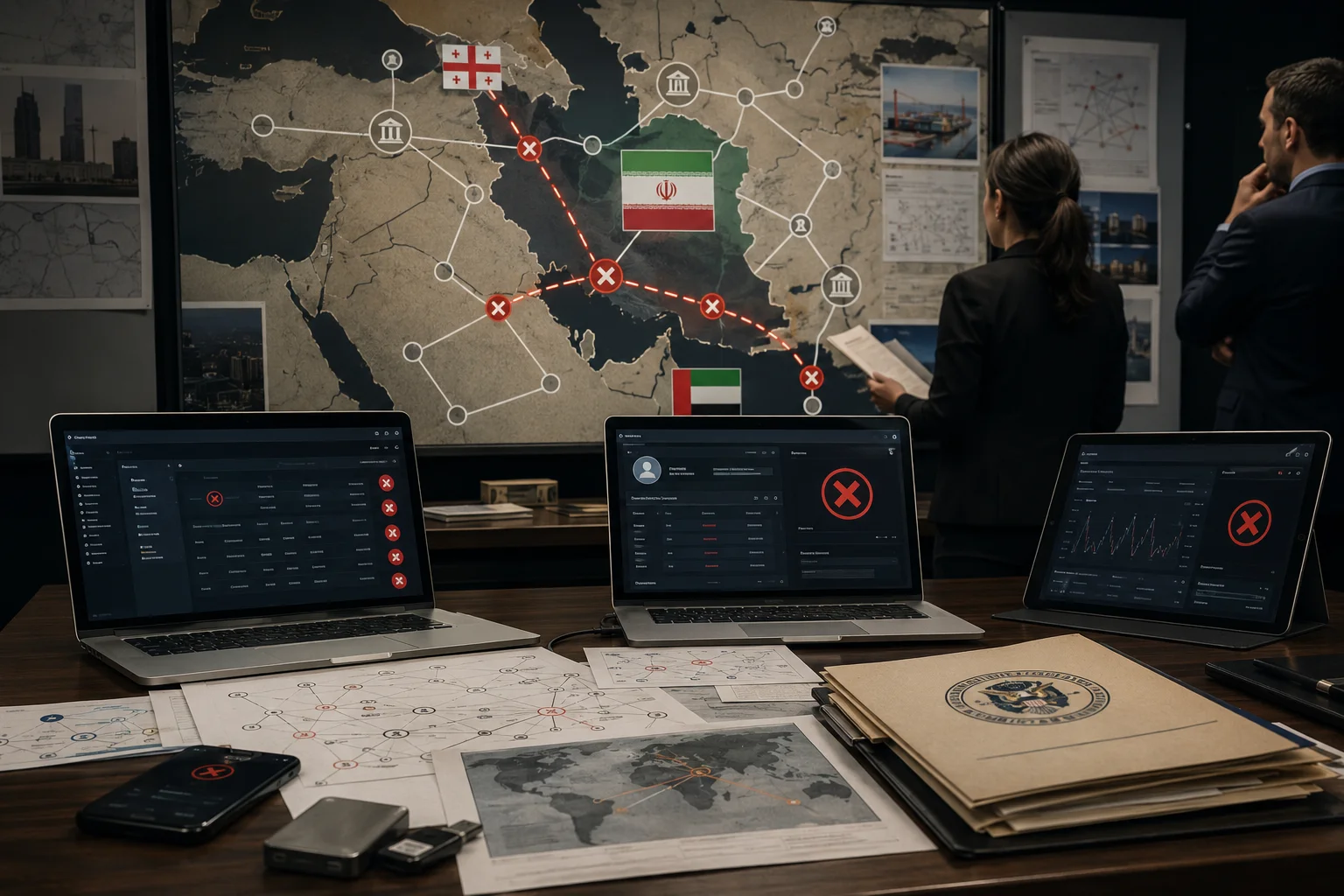
The US Treasury Department sanctioned two cryptocurrency brokerages on August 7, accused of laundering millions of dollars for Iran's Islamic Revolutionary Guard Corps. The action is part of the "Economic Fury" campaign and also included an operator who ran the scheme from Georgia and the United Arab Emirates.
The Office of Foreign Assets Control (OFAC) designated Shelbit Exchange and Aban Tether, both accused of moving funds for the Iranian armed forces and for previously sanctioned Iranian brokerages. Treasury Secretary Scott Bessent said the Iranian regime's reliance on digital assets and parallel banking networks is evidence that the "Economic Fury" campaign is working.
International operation
The main figure is Siavash Kayvanpour, born in Iran, with citizenship of Dominica and Afghanistan, who operated a network in several countries from the UAE and Georgia. Through his Georgian company SHPS Shelbit, he controlled Shelbit Exchange. The Treasury said that wallets linked to the Iranian armed forces sent more than US$ 1 million in cryptoassets to the brokerage, which returned more than US$ 2 million to Iranian wallets.
In addition, Shelbit sent another US$ 2 million to Nobitex, an Iranian brokerage already sanctioned for terrorism financing. The Treasury also alleges that Shelbit laundered tens of millions of dollars from a Persian-language online betting network.
The UAE's virtual asset regulator (VARA) took action against Shelbit General Trading in January 2025 and again in July 2026, but the brokerage continued operating. Kayvanpour also controlled Shelbit Technologies in Poland and the companies Crypto Home and NFT Home DMCC in the UAE, all included in the sanctions.
Blacklist and reward
Aban Tether, the second sanctioned brokerage, processed millions of dollars in transactions with already designated Iranian platforms, such as Nobitex, Wallex, Bitpin, and Ramzinex. Both were placed on the Specially Designated Nationals List (SDN List), which blocks assets and prohibits access to the US financial system. Foreign companies that continue to do business with them may also face secondary sanctions.
In a parallel action, the State Department announced a reward of up to US$ 15 million for information that disrupts the financial mechanisms of Iran's Revolutionary Guard. The freezing of cryptoassets is part of an ongoing effort: in May, the US froze US$ 131 million in crypto linked to Iran and, according to Bessent, has already seized about US$ 1 billion in Iranian cryptoassets since the start of the campaign.