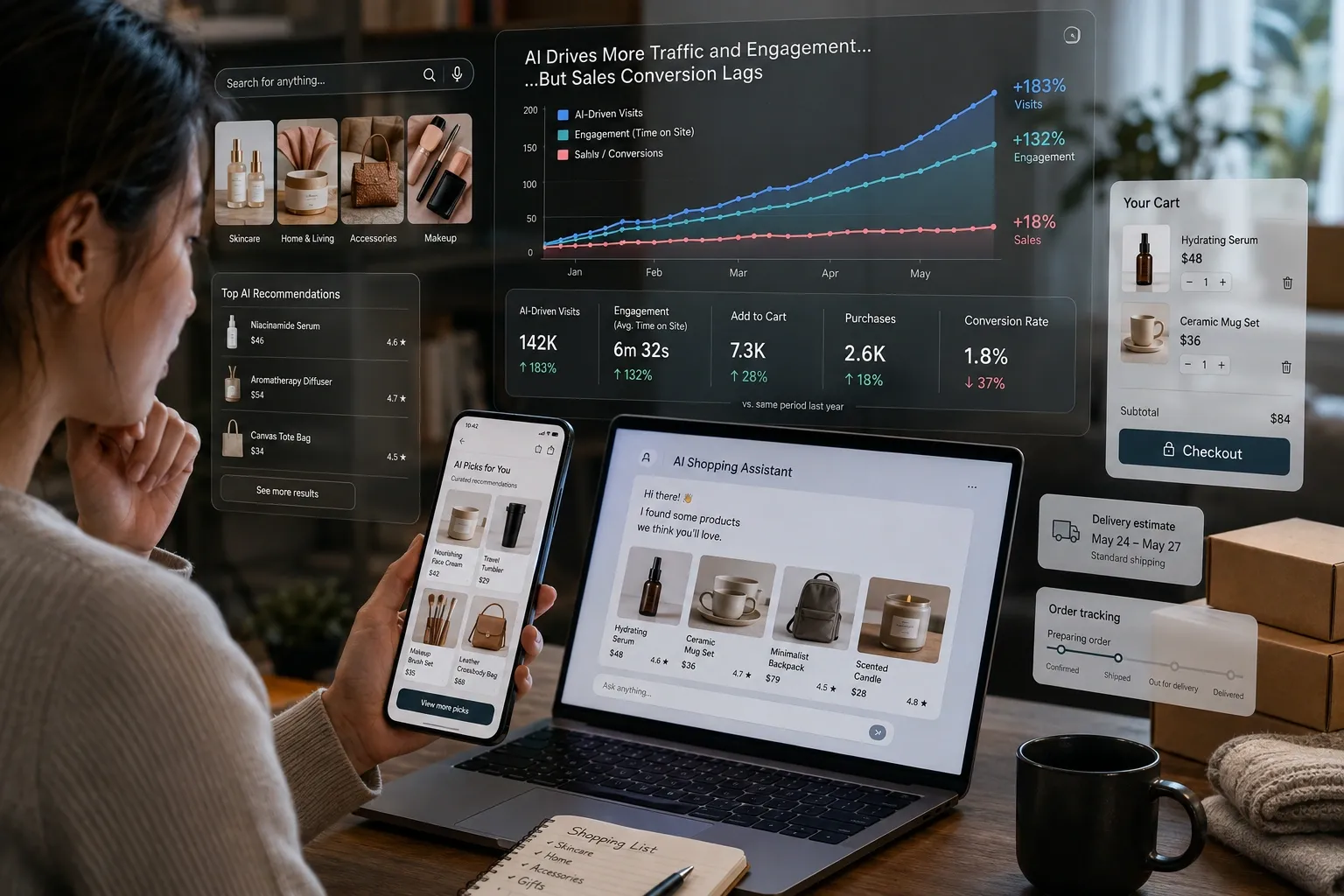
Executives at Etsy, DoorDash and Shopify said in second-quarter earnings calls that artificial intelligence (AI) is drawing consumers to online stores, but conversion into sales is still small. Ulta Beauty told Reuters it is adapting its operations to Google Gemini because consumers find its products on the tool.
At Etsy, CEO Kruti Patel Goyal said traffic from AI agent platforms accounts for less than 1% of the company's total, though it converts at a higher rate and generates a higher average ticket. The executive divided the company's strategy into personalization, product discovery and conversational tools for the next generation of shopping.
Tony Xu, DoorDash's CEO, said third-party AI order volume remains low across the industry. He attributed the lag to AI platforms focusing on corporate customers and programming tools, rather than physical delivery. Xu said the handoff from the assistant to a human to check inventory, forward the order and assemble the bag has yet to be resolved.
Josh Friedman, senior vice president of digital and e-commerce at Ulta Beauty, said the company is integrating shopping carts and its loyalty program into Google Gemini. According to him, the initiative is in its early stages, although consumers already find the retailer's products on the tool.
Market data
Adobe data, based on direct transactions from more than 1 trillion visits to US retail sites, shows a 393% increase in traffic from AI in the first quarter of 2026 compared with a year earlier. By March, revenue per visit from AI was 37% higher than from non-AI traffic. AI visitors spent 48% more time on the page and browsed 13% more pages per visit.
At Shopify, traffic from AI tripled year over year in the second quarter, as did orders placed through those channels, said CEO Harley Finkelstein. New customer orders from AI come in at a rate almost double that of other channels.
Consumer surveys
A PYMNTS Intelligence survey shows that 48% of online consumers used AI to research their most recent purchase. Another study by the same firm shows that 70% of consumers are interested in AI agents for planning trips, and 71% for health and wellness. Only 49% would let an agent complete a purchase, and trust drops to 3% among those who do not use AI regularly.
The data indicate that consumers accept AI for finding products, but still avoid letting it complete the purchase. The limit appears both in survey responses and in company reports.