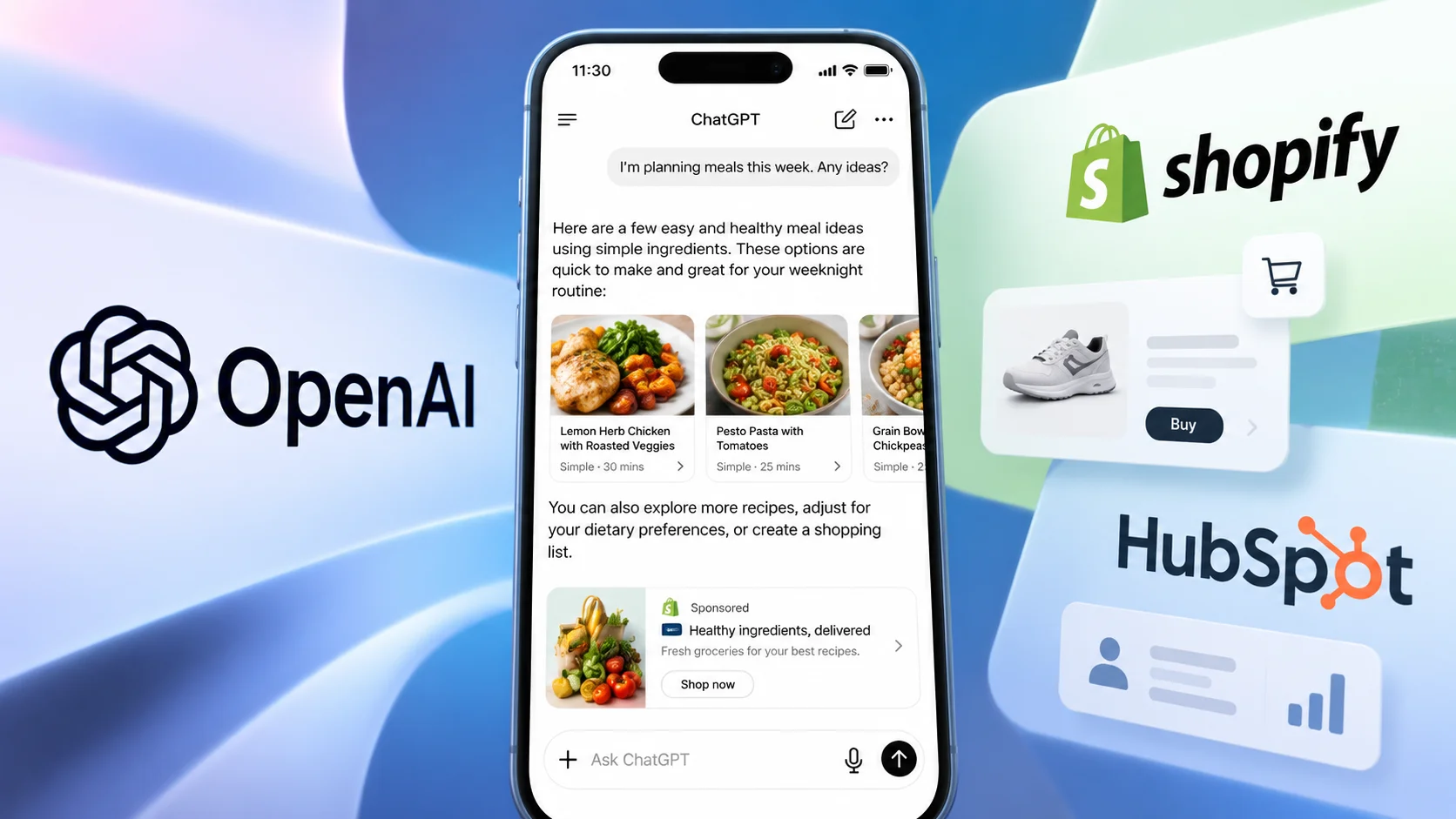
Commerce carried out by artificial intelligence agents still accounts for less than 1% of global e-commerce activity, despite the advance of tools capable of searching for products and completing purchases on behalf of users. The estimate appears in an analysis by Bernstein released on Saturday (12), amid new launches by Meta and Anthropic.
A separate measurement from Mastercard points to an even smaller share when only transactions effectively mediated by agents are considered: about 0.4% of global e-commerce by volume and 0.2% by value. The difference shows that much of the current use of AI in retail remains concentrated in product search, comparison and recommendation, before the payment stage.
Traffic coming from AI systems already carries more weight at some retailers. Data cited by Bernstein indicate that AI-generated referrals came to represent 39% of Wayfair's referral traffic, 28% of Walmart's and 25% of Target's in August. Even in these cases, however, this source accounts for only 1% to 2% of total traffic of the platforms.
Meta and Anthropic expand tools for AI shopping
The Meta launched Muse on September 8, a personal agent capable of browsing the internet, filling out forms and performing tasks on behalf of the user. For shopping, the system can use Stripe's Link, which generates a single-use card, while integration with Shop Pay is expected to be added later.
The Anthropic, in turn, presented this month a set of tools for companies to create commerce agents based on Claude. The package includes reference implementations for agents aimed at both consumers and merchants in sectors such as retail, travel and telecommunications. The company says that clients already using shopping agents built with Claude recorded carts up to 35% larger and a likelihood of completing a purchase up to 60% higher.
Adoption still faces a trust barrier. A Mastercard report published this year points out that only one in ten consumers is willing to allow an agent to complete a purchase autonomously. The company identifies identity, authorization and control mechanisms as necessary elements to expand the use of these systems in payments.
For payments companies, the expansion of this market may increase demand for tokenized cards and other mechanisms that allow agents to make purchases without receiving direct access to the user's financial credentials. Bernstein assesses that Visa, Mastercard and processors such as Adyen may benefit from this change as agents move from recommendation to the execution of transactions.