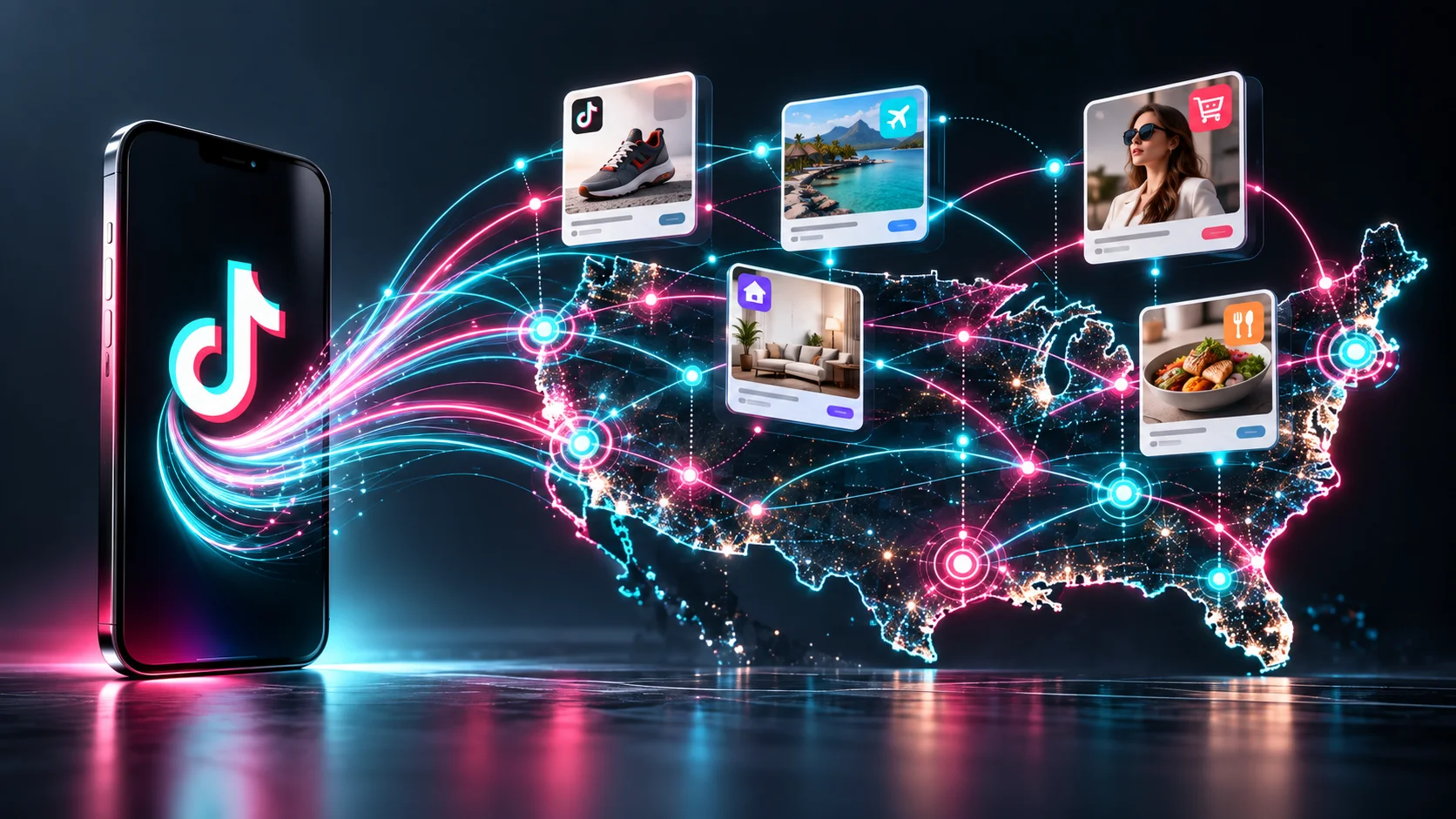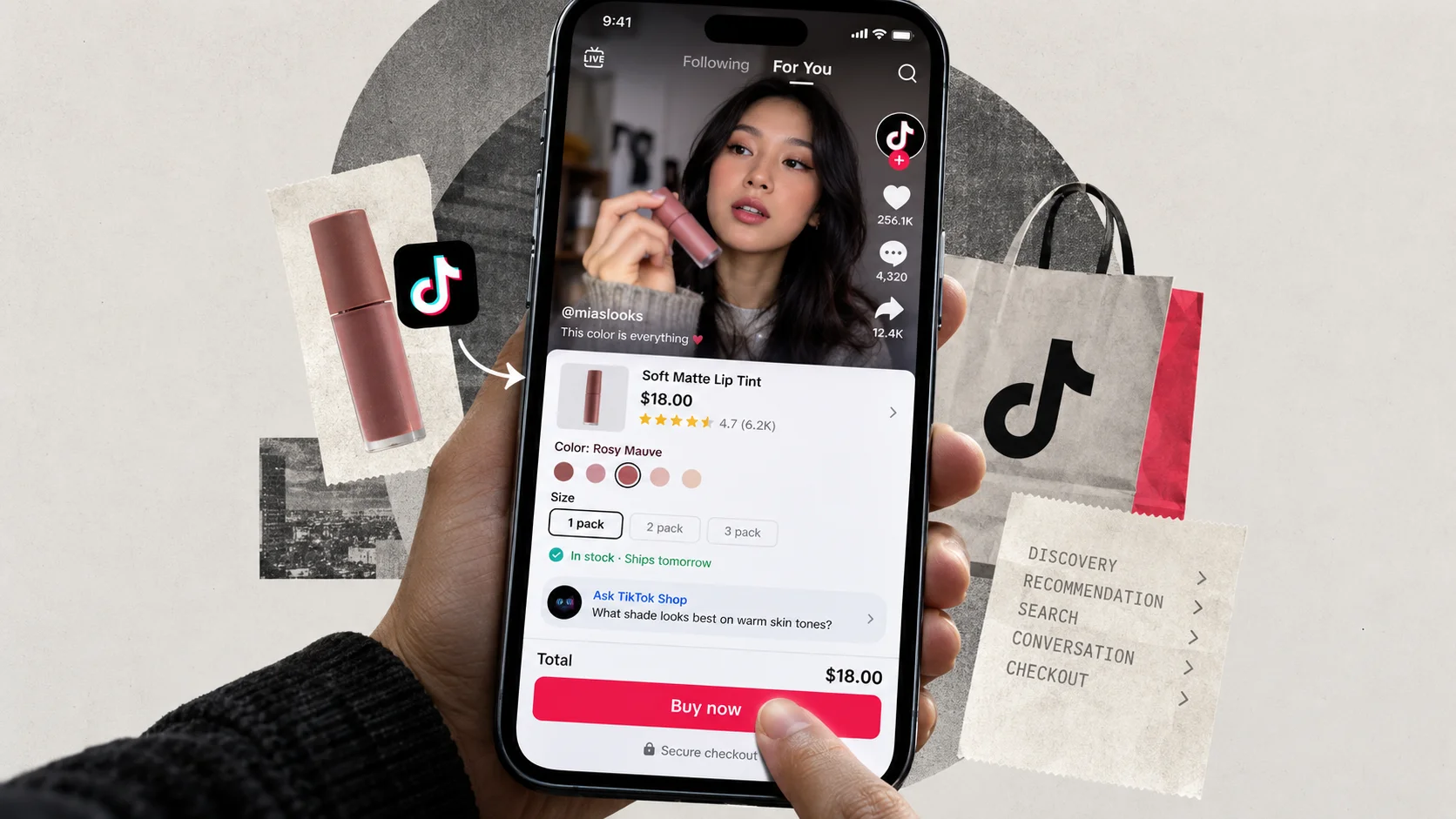
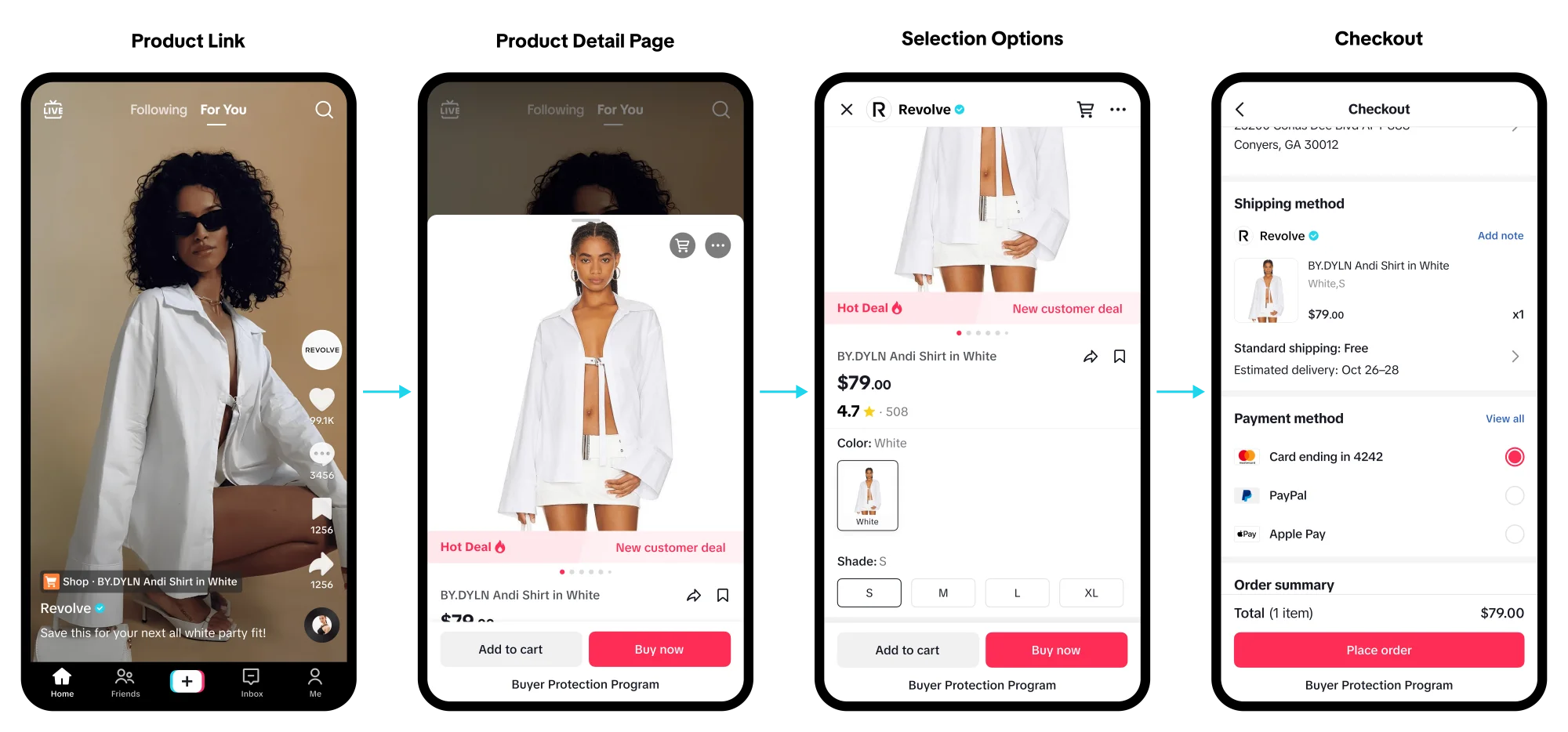
TikTok is taking the transaction into the same environment in which purchase intent is born. The platform introduced Buy Direct, which allows completing purchases from brands without leaving the app, including directly from For You, and the Shopping Assistant, an agent capable of chatting about products, sizes, inventory, delivery, and purchase. Salesforce, Shopify, Shoplazza, and Stripe are part of the infrastructure.
The change expands a dispute that already involves ChatGPT, Google, Meta, Microsoft, and major commerce platforms. The most valuable asset may cease to be the store where the transaction ends and become the interface that understands intent before the consumer decides what to buy.
TikTok can control discovery and conversion in the same interface
TikTok already occupied an unusual position in e-commerce because it can generate demand before an explicit search even exists. Videos appear in For You based on the recommendation system and can turn entertainment into commercial interest.
With Buy Direct and Shopping Assistant, the platform is trying to remove the following steps. Instead of discovering a product, researching details, visiting a store, and completing the purchase in another environment, the consumer can remain within the same interface.
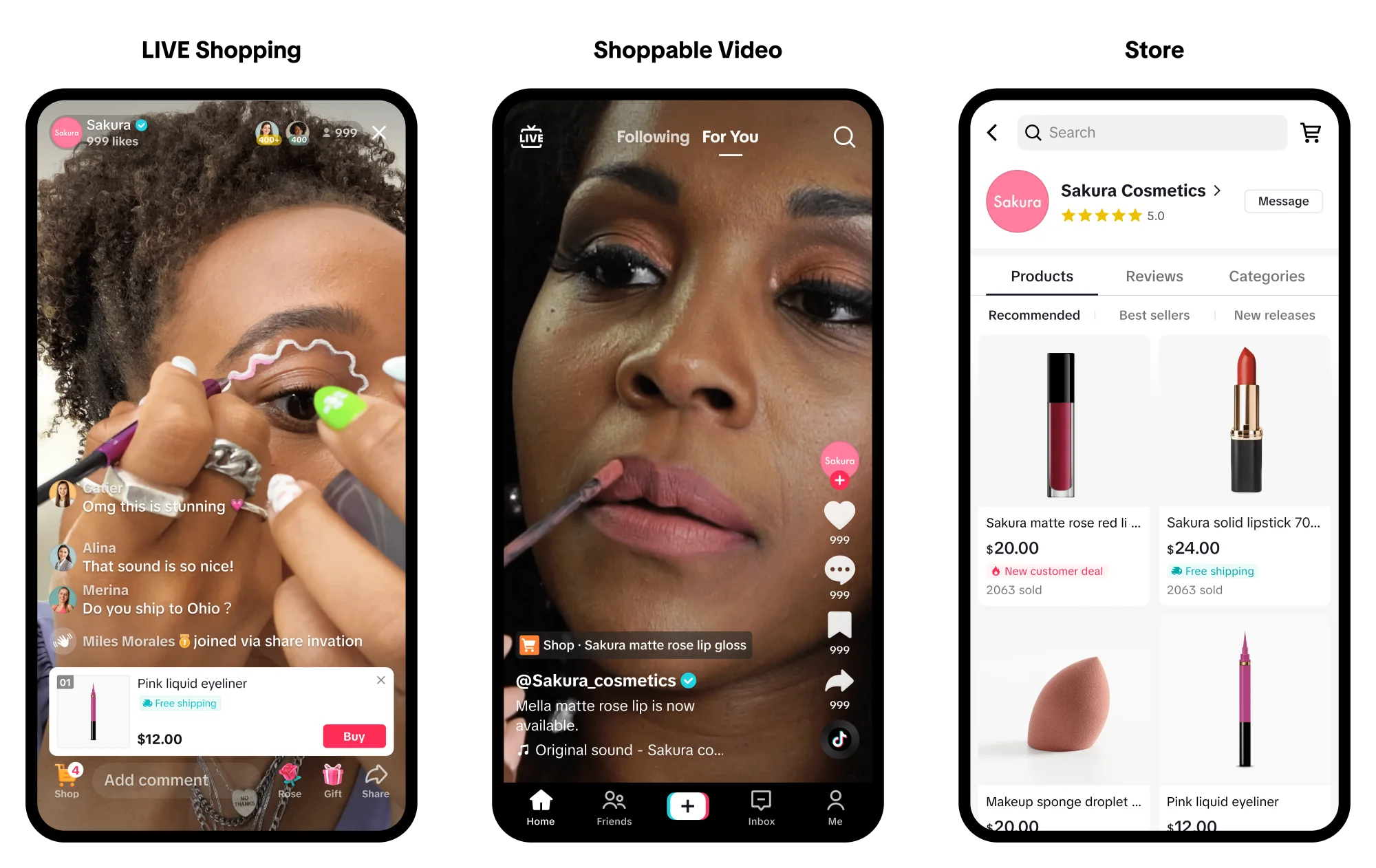
This difference matters when compared with agents such as ChatGPT. While a chatbot normally receives an intent formulated by the user, TikTok also controls the environment capable of producing that intent. Then, the Shopping Assistant can refine it and Buy Direct can capture the conversion.
The move also expands the strategy beyond TikTok Shop. Buy Direct allows buying directly from brands within the app, bringing For You closer to a distribution layer for external stores and not just a closed marketplace.
The brand's website may cease to be the center of the funnel
This model does not mean that first-party stores will disappear. It means that a larger part of the journey can happen before the consumer has any reason to visit them.
This mainly changes control over merchandising, discovery, and acquisition. On its own site, the retailer defines navigation, related products, order of information, content, offers, and paths to checkout. Within an agent or feed, part of these decisions is mediated by the platform.
The result may be increasingly distributed commerce. Shopify has already structured its Agentic Storefronts to place merchants' products inside ChatGPT, Google AI Mode, Gemini, Copilot, and other environments. Its Universal Commerce Protocol, developed with Google, creates a common infrastructure for discovery, cart, and checkout in agents.
OpenAI also has its own specification for agentic checkout that allows completing transactions within ChatGPT while orders, payments, and obligations remain connected to the merchant's infrastructure.
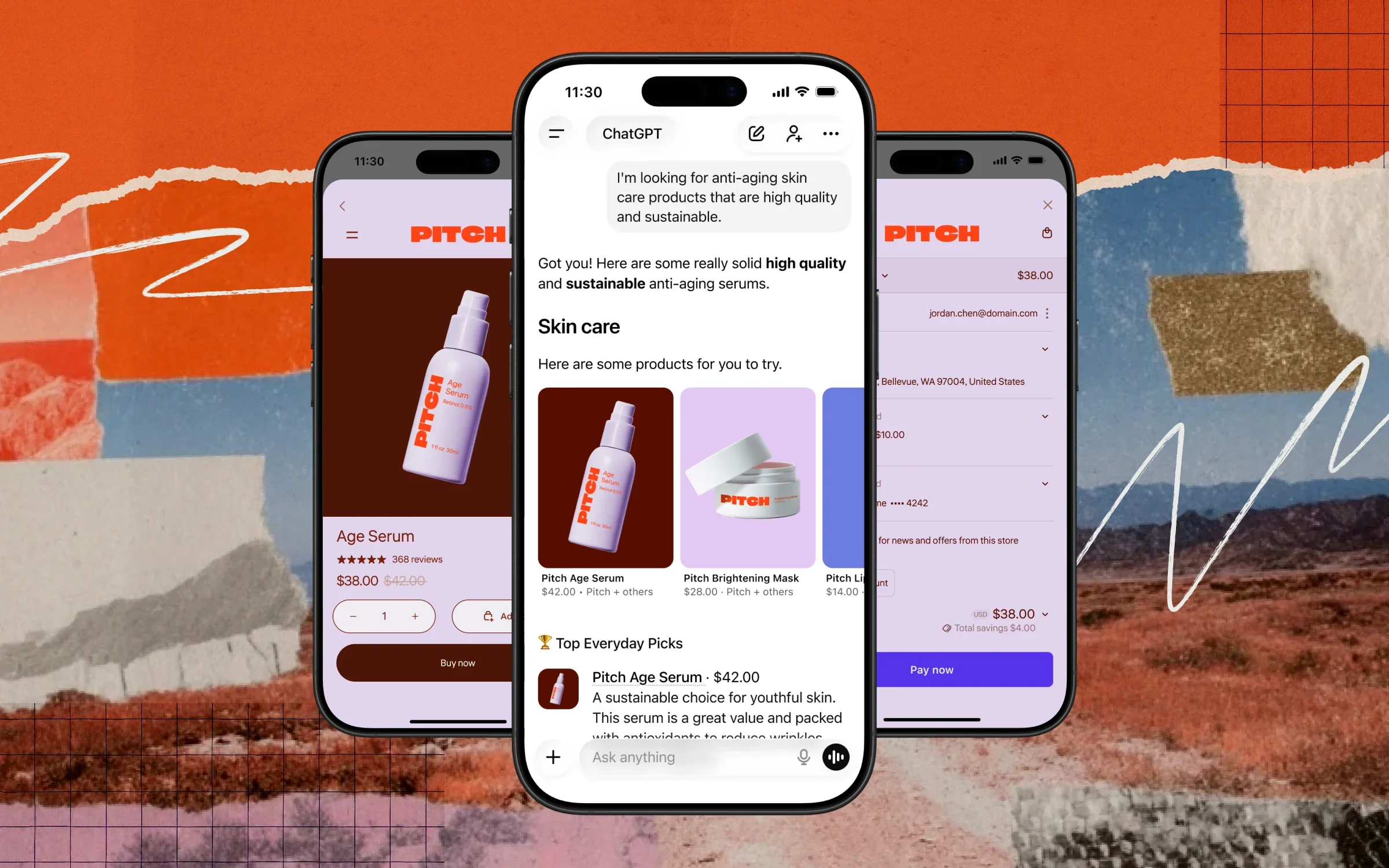
The store, therefore, can continue to exist technically while ceasing to be the main commercial interface for some consumers.
Losing the interface does not necessarily mean losing the customer
There is an important distinction. The advance of agents does not automatically imply that platforms will come to own the entire commercial relationship.
Shopify states that orders placed through its agentic channels continue to arrive in the merchant's admin and that the merchant keeps the data and the relationship with the customer. This reduces one of the most obvious risks of selling outside one's own store.
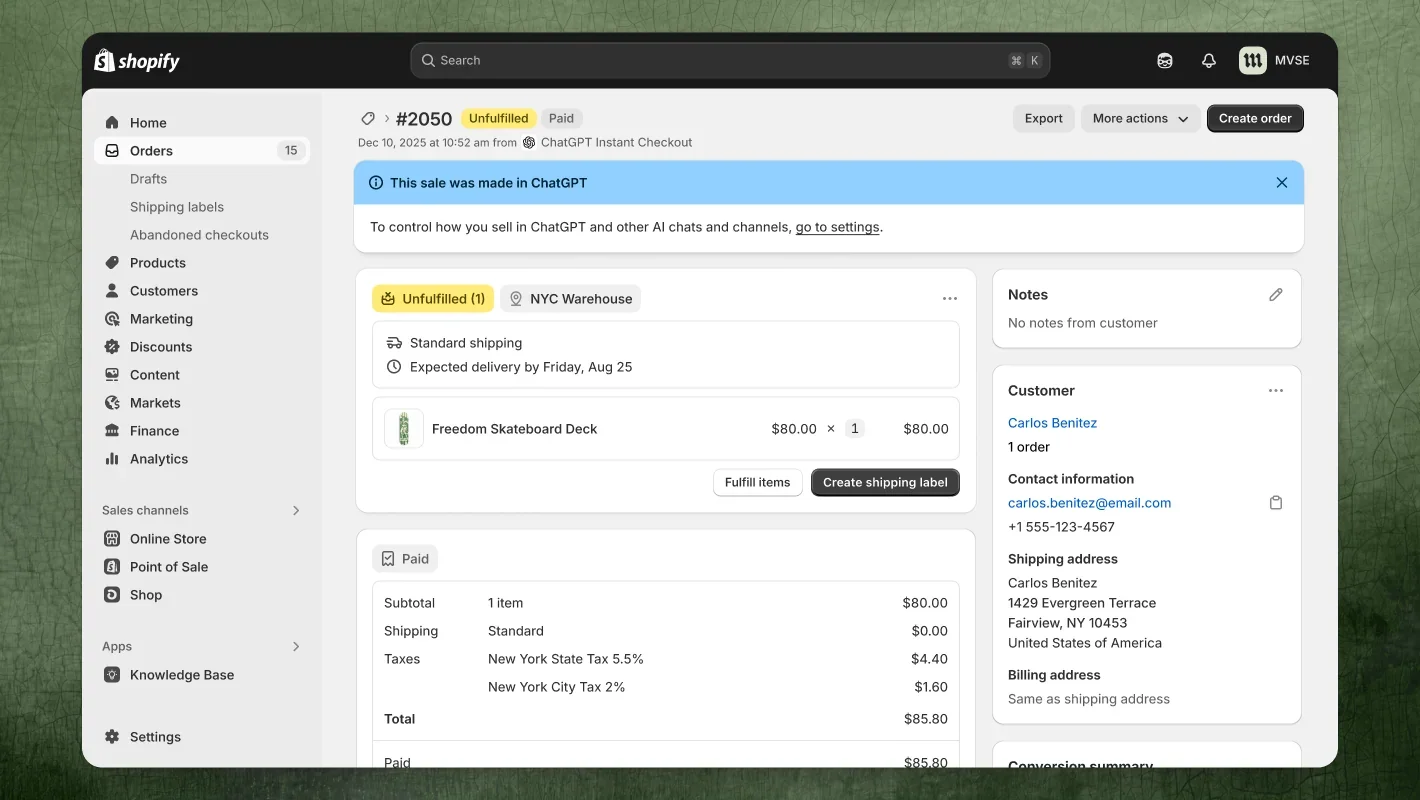
But the layer before purchase is different.
If the consumer discovers a product in For You, chats with the Shopping Assistant, and completes the purchase there, TikTok then begins to observe a particularly valuable part of the journey: which content sparked interest, which questions came up, which products were considered, and what led to the transaction.
The merchant may continue to receive the order and the data needed to fulfill it, but does not necessarily control the entire experience that produced that decision.
This difference can make traditional metrics such as site visits less representative. An increase in sales originating in agents can occur without a proportional increase in store sessions.
The first numbers show that the behavior is beginning to appear
Shopify is already beginning to observe signs of this change. CFO Jeff Hoffmeister told the Wall Street Journal that traffic and orders associated with AI experiences tripled in a year, while AI-assisted shoppers also show higher levels of spending.
It is still early to turn these numbers into a conclusion about all of retail. The market itself remains divided over how much control to give to agents. Companies such as Amazon, Kohl's, and other retailers have already imposed restrictions on certain agents over concerns involving data, security, and customer experience.
It also remains for TikTok to demonstrate how much the new flow actually improves conversion.
The next battle is over who becomes the gateway to commerce
TikTok's entry makes this competition broader because it adds to agentic commerce a platform that already controls algorithmic content distribution at enormous scale.
ChatGPT and Gemini want to turn questions into purchases. Shopify wants to ensure that its merchants can sell regardless of where the question occurs. Meta is incorporating purchasing capability into its agents. TikTok is trying to do something different: connect algorithmic discovery, conversation, and checkout within the same feed.
For retailers, this creates a trade-off. Being present in these interfaces can increase reach and reduce drop-off between discovery and purchase. At the same time, it increases dependence on external systems to decide which products appear and in what context.
The decisive test of Buy Direct, therefore, will not be just how many purchases TikTok can process. It will be how much of the commercial journey brands can continue to see and control when the consumer no longer needs to visit their store to buy.
The next concrete signals will be the adoption by large merchants, the conversion data disclosed by TikTok, the expansion of Buy Direct beyond the initial launch in the United States, and, above all, the rules on attribution, data access, and product placement within the Shopping Assistant. These elements will show whether TikTok is merely eliminating a few clicks or building a new gateway to e-commerce.