Large technology companies are using financial guarantees to support a new layer of financing for artificial intelligence infrastructure, allowing data centers and equipment to be financed by outside investors while a relevant portion of the debt remains off their balance sheets. A survey by the Financial Times estimates at up to US$ 300 billion the potential exposure associated with these guarantees, in a structure that reduces the need for immediate disbursement but does not eliminate economic risk.
The move responds to an increasingly visible problem in AI expansion: building computing capacity requires hundreds of billions of dollars before AI labs and services have generated enough cash to finance it. The solution is to transfer ownership of the assets and a large part of the debt to external vehicles, while companies such as Nvidia, Broadcom and Meta offer guarantees that make these investments financeable.
The main consequence is a change in the way the risk of the AI race appears in the financial system. The debt can stay off the technology company's balance sheet, but part of it becomes an economic responsibility of these companies again if customers stop paying or if the assets lose value.
Guarantees turn Big Tech credit into infrastructure
The most striking example is Nvidia. In August, the company agreed to offer up to US$ 105 billion in residual value guarantees to support construction of the PORTS-Pike Technology Campus in Ohio, where an OpenAI affiliate will be the tenant.
The commitment initially covers about 4.25 gigawatts of IT load. Nvidia's obligation only comes into existence as the project phases become ready for operation, with an expected start in fiscal year 2029, and can be triggered in certain cases of OpenAI default or insolvency.
This means that the US$ 105 billion is not an immediate investment by Nvidia. It works as a backstop: if an event provided for in the contract occurs, the company may have to cover the difference between a guaranteed minimum value and what the owner can recover by reselling or re-leasing the assets.
In exchange, the campus will use Nvidia computing infrastructure, with limited exceptions. The company itself estimates that each technology generation installed in the project could represent between US$ 150 billion and US$ 200 billion in revenue for Nvidia.
The structure shows the economic incentive behind the guarantee. The manufacturer is not just financing a customer: it is using its own credit capacity to help make viable projects that, if built, also create long-term demand for its products.
Broadcom uses a similar model to close the labs' cash deficit
Broadcom has also started using guarantees to accelerate the deployment of infrastructure based on its custom accelerators.
In June, the company launched an AI financing platform with a first tranche of US$ 35 billion, backed by financial partners. Broadcom acknowledged in its quarterly report that the structure seeks to fill the gap between the cash currently generated by the main AI labs and the high upfront investments required.
In this agreement, investors finance the purchase of the racks and make them available to the customer through five-year contracts. Broadcom offers a backstop whose maximum potential value can reach US$ 29 billion.
If the customer fails to comply with the contract, the company's obligation corresponds to the difference between 85% of the protected balance and the value recovered from the equipment. As of the latest report released, no payment had been made under this guarantee.
The architecture allows external capital to finance, in advance, assets that the labs still cannot pay for with their own cash flow alone. At the same time, chip suppliers can sell larger volumes without necessarily directly granting all the credit the customers need.
Risk moves off the balance sheet but does not disappear
Meta already uses residual value guarantees in data center structures financed with external partners.
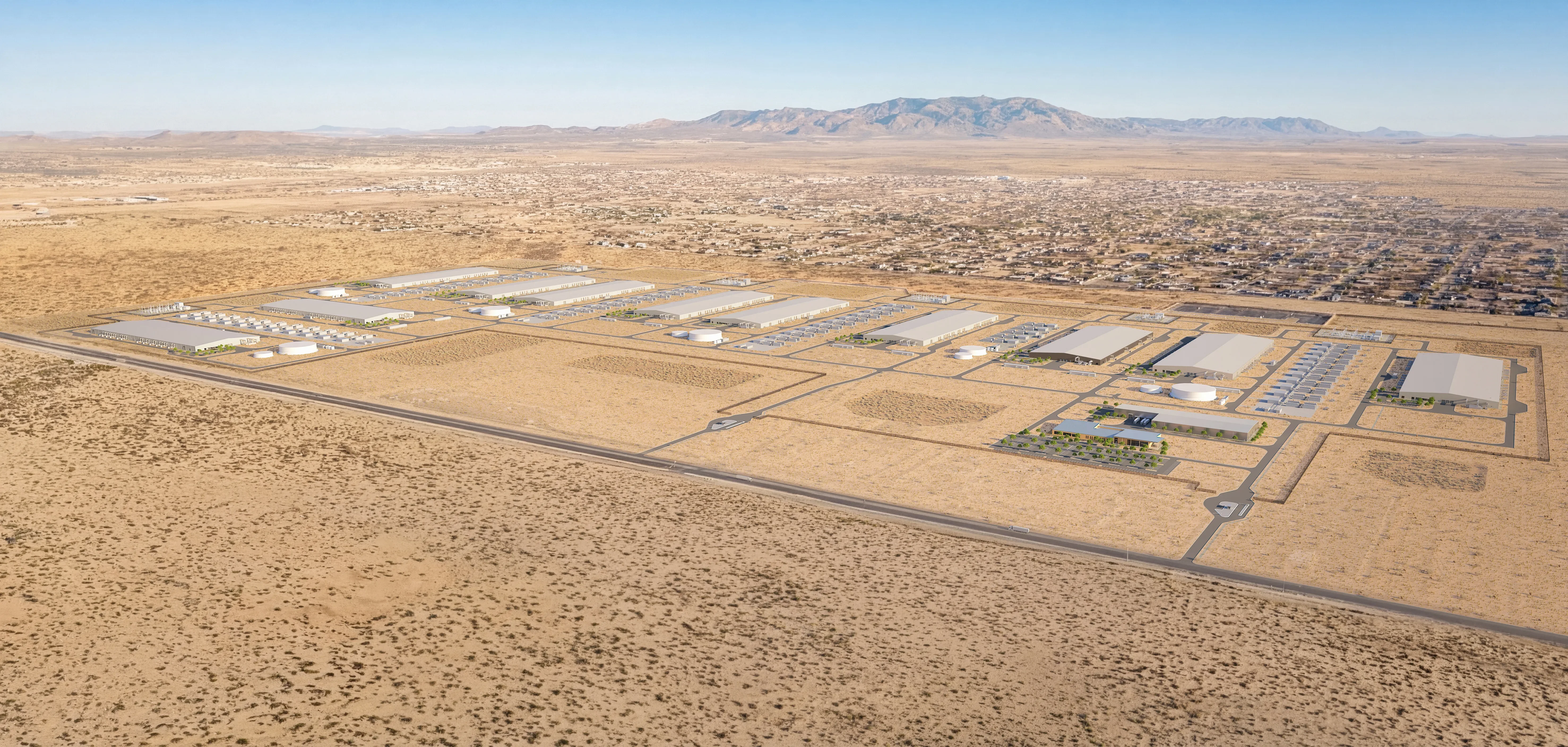
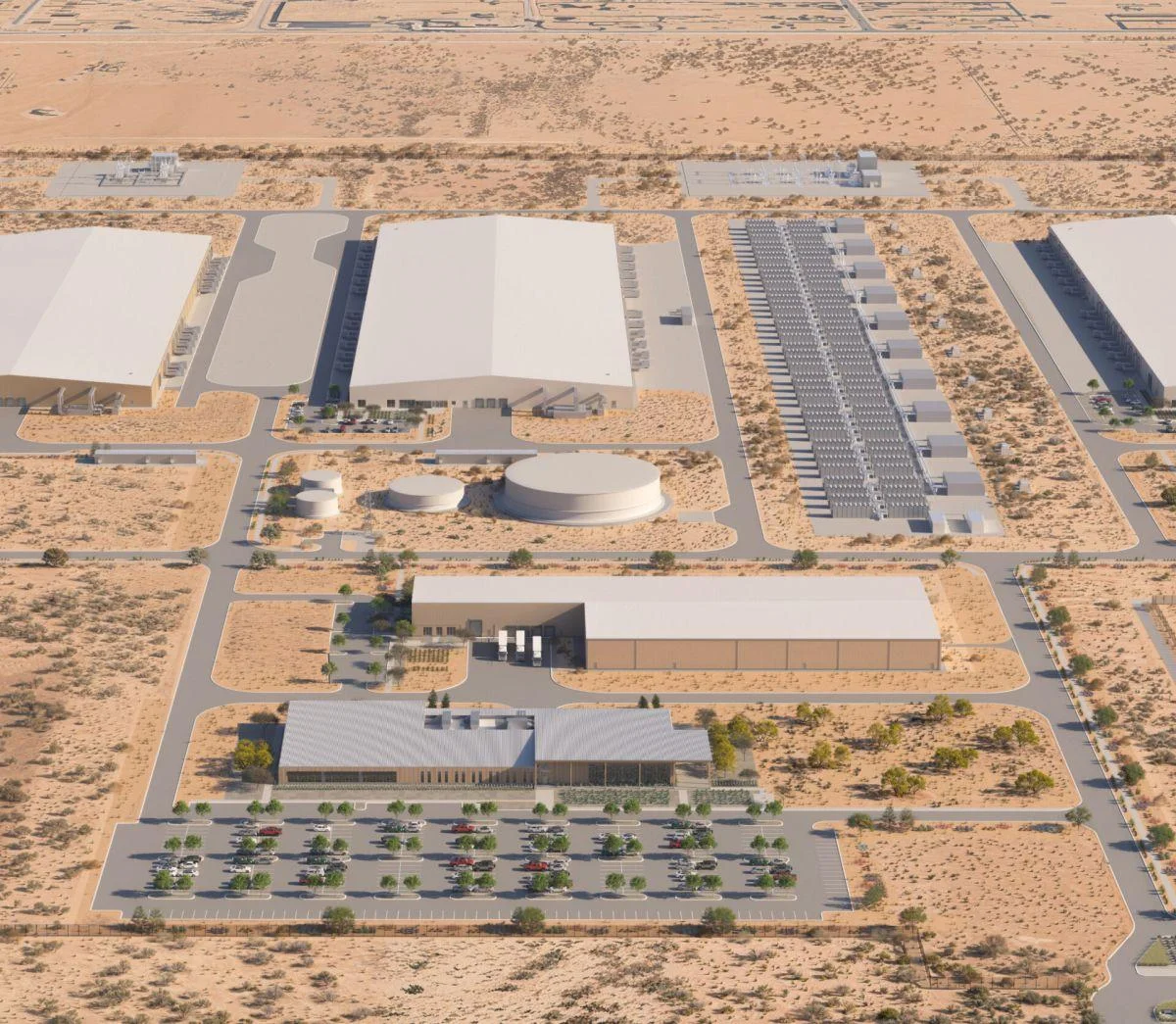
In one of its joint ventures, the company reported guarantees with an aggregate limit of approximately US$ 28 billion. In another project, developed with funds managed by BlackRock in El Paso, the limit is about US$ 13 billion and decreases over time.
The logic is similar: investors become responsible for a larger share of the capital needed to build the assets, while the technology company offers protection against certain losses in value.
Accounting-wise, this can reduce the amount of debt presented directly by the sponsoring company. Economically, however, the exposure remains relevant.
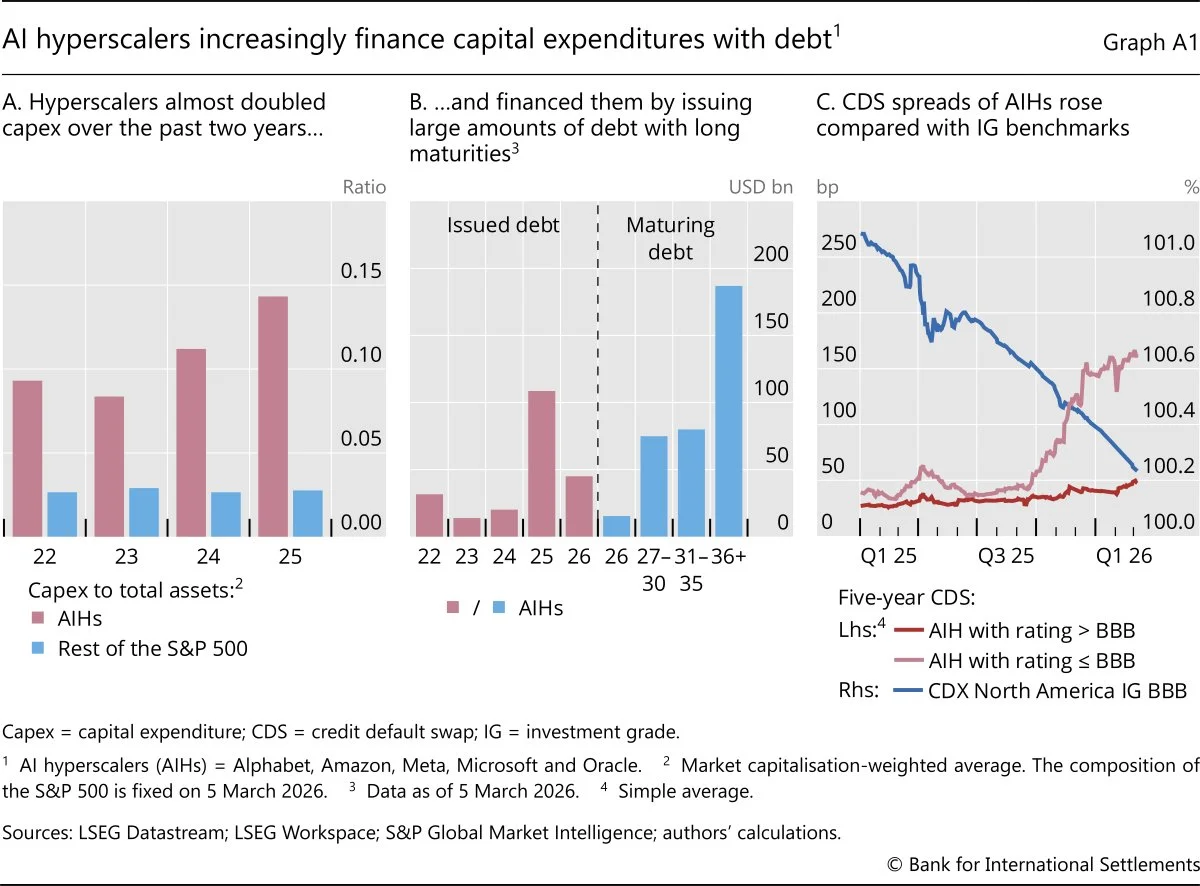
The Bank for International Settlements described structures of this type as a form of “shadow borrowing”, in which specific vehicles raise debt to finance data centers and receive long-term contracts, purchase commitments or guarantees from technology companies. The BIS warns that the model creates additional connections between hyperscalers, private credit funds, insurers and banks, opening new channels through which refinancing or default problems can spread.
Rating agencies are already starting to treat guarantees as debt
Keeping an obligation off the balance sheet also does not mean that credit analysts will ignore it.
S&P Global Ratings states that commitments such as joint ventures, special vehicles, supplier financing, backstops and residual value guarantees can be incorporated into leverage metrics when they have economic characteristics similar to those of debt.
When the guarantee protects a counterparty considered weaker, the agency can include part of the guaranteed value in adjusted debt, also taking into account the assets' recovery potential.
The issue gains importance because financing for AI expansion is changing rapidly. S&P projects that the combined capex of the large hyperscalers will surpass US$ 1.3 trillion by 2027 and expects negative free operating cash flow for the six largest groups analyzed in 2026 and 2027.
Separately, KBRA calculates that disclosed contractual commitments and maximum contingent support among Meta, Amazon, Alphabet, Microsoft, Nvidia, Broadcom and Oracle reached approximately US$ 3.2 trillion, compared with US$ 575 billion at the end of 2024. This number includes contracts, leases, purchases and other commitments, and therefore should not be confused with the US$ 300 billion in guarantees.
The test will come when the infrastructure has to pay for itself
For now, many of these guarantees remain contingent: they only produce a disbursement if specific conditions occur. This makes it incorrect to treat their maximum values as debt already due or money actually spent.
But the growth of these structures reveals a concrete change. The expansion of AI infrastructure has ceased to depend mainly on the cash of the largest technology companies and is now mobilizing the balance sheets of institutional investors, private funds and banks, with suppliers and hyperscalers offering protection to make projects financeable.
The decisive indicator will be the ability of AI labs and services to turn compute into sufficient revenue to honor long-term contracts. If this happens, a large part of the guarantees may never be triggered.
If monetization falls below what is necessary, however, the risk now distributed across external vehicles may return to the very groups that provided the backstops. The next stage of the race for AI infrastructure, therefore, will not be measured only in GPUs and gigawatts, but also by the ability of these financial structures to remain standing when payments begin to come due.