
DeepSeek is close to raising at least 80 billion yuan, about US$ 12 billion, in a new round led by investors that include Tencent and CATL, according to Bloomberg. Demand could take the final amount to close to 100 billion yuan. Reuters was unable to independently verify the information, and the three companies did not comment on the report.
If confirmed, the round marks an important shift in the logic that turned DeepSeek into one of China's leading AI labs. The company gained ground by demonstrating that architecture and efficiency could offset part of China's disadvantage in access to advanced chips. Now, the question is what happens when that same strategy starts operating with tens of billions of dollars in capital.
DeepSeek has already stopped relying solely on its own capital
For years, DeepSeek was funded mainly by High Flyer, Liang Wenfeng's hedge fund. That structure began to change in 2026, when the company opened the door to external investors to finance computing capacity, model development, and talent retention.

In June, Reuters reported that the 1st external round was expected to raise approximately 50 billion yuan, or US$ 7.4 billion. Liang was said to have committed 20 billion yuan, while Tencent and CATL would contribute 10 billion and 5 billion, respectively.
Later documents provided partial confirmation of that shift. A filing from Anhui Korrun showed that a fund in which the company invested acquired an indirect stake in DeepSeek at an implied valuation of approximately 350.9 billion yuan, or US$ 51.8 billion. Another investment disclosed by Jiuan Medical pointed to a similar range.
That makes the new fundraising less of an isolated break and more of an acceleration of a strategy begun months earlier: DeepSeek is moving from financing its technological advantage only with operational efficiency to building a capital base comparable to that of an AI infrastructure company.
More money does not mean abandoning efficiency
The capital expansion does not eliminate the characteristic that set DeepSeek apart.
DeepSeek V3, launched in 2024, was trained with 2.788 million H800 GPU hours, according to the company's technical documentation. Meanwhile, V4.1 Flash, presented in September, uses an architecture with 552 billion parameters but activates only 8 billion during input and 16 billion during generation. The company also says that the model reduces HBM memory usage by the cache to one quarter and SSD storage requirements to one eighth compared with the previous generation.
These choices show that efficiency remains part of the architecture, and not just a temporary response to a lack of money.
The additional capital could allow that efficiency to be applied to a much larger infrastructure. Training with more compute, reinforcement learning at scale, larger clusters for experimentation, inference for millions of users, and hiring researchers are expenses that keep growing even when each unit of computation is used better.
DeepSeek itself already signals that direction. When presenting V4.1 Flash, it mentioned deployment scenarios involving more than 2,000 GPUs and storage clusters.
The potential effect, therefore, is not to replace efficiency with brute force. It is to combine the two.
The main limit remains access to compute
Money, however, does not automatically solve DeepSeek's biggest obstacle.
U.S. restrictions limit Chinese companies' access to the most advanced chips used by laboratories in the United States. That difference helps explain why even a US$ 12 billion round does not automatically put DeepSeek in the same position as American competitors with direct access to large clusters of Nvidia GPUs.
The company's response is beginning to appear in its own technology stack. In September, DeepSeek announced a partnership with Huawei to develop software optimized for Ascend chips, including compute and communication libraries. The two companies also worked on a configuration based on 128 Ascend 950 chips, while DeepSeek opened part of the infrastructure developed for that ecosystem.
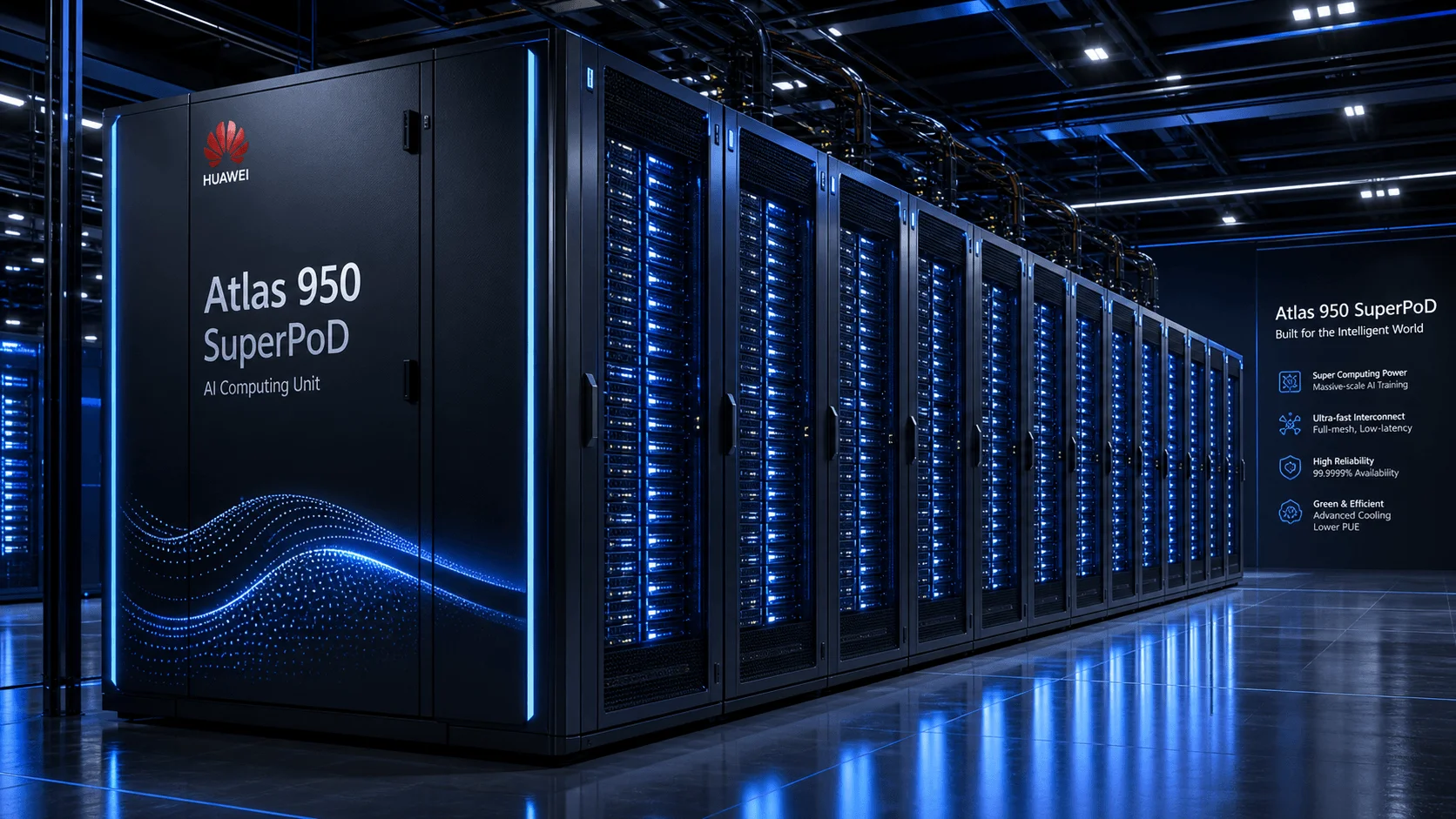
That changes the role of capital. Part of the advantage of a round this size may not lie in buying the same hardware used by American competitors, but in financing the construction of a Chinese alternative capable of bringing hardware, software, models, and data centers closer together.
The challenge is that this process requires execution across several layers at the same time. Capital reduces the financial constraint, but it does not eliminate bottlenecks in semiconductors, chip yield, software, energy, or cluster availability.
Tencent and CATL point to something bigger than a financial round
The composition of the investors also deserves attention.
Tencent is one of China's largest digital platforms and develops its own Hunyuan models. CATL, in turn, has been expanding its role in energy infrastructure for AI data centers. In DeepSeek's 1st round, both already appeared as the largest external investors.
That does not mean there is a formal consortium to turn DeepSeek into a national champion. No structure of that kind has been announced, and the terms of the new round remain unknown.
But the alignment is relevant. A foundation model company financed simultaneously by large technology, industrial, and infrastructure groups may have access to resources that go beyond money, from computing capacity and distribution channels to energy and enterprise deployment.
The difference between financial investment and strategic integration will be one of the most important points to watch. Equity stakes alone do not guarantee that DeepSeek will be incorporated into Tencent's products or infrastructure linked to CATL.
The IPO will be the next test for the new DeepSeek
The expansion of the round comes as the company also moves closer to the public market.
In September, Reuters reported that DeepSeek hired CITIC Securities to prepare a possible listing on the STAR Market in Shanghai. The size, valuation, and timing of the operation have not yet been defined. At that time, the company was already seeking capital for compute, model development, and researcher retention.
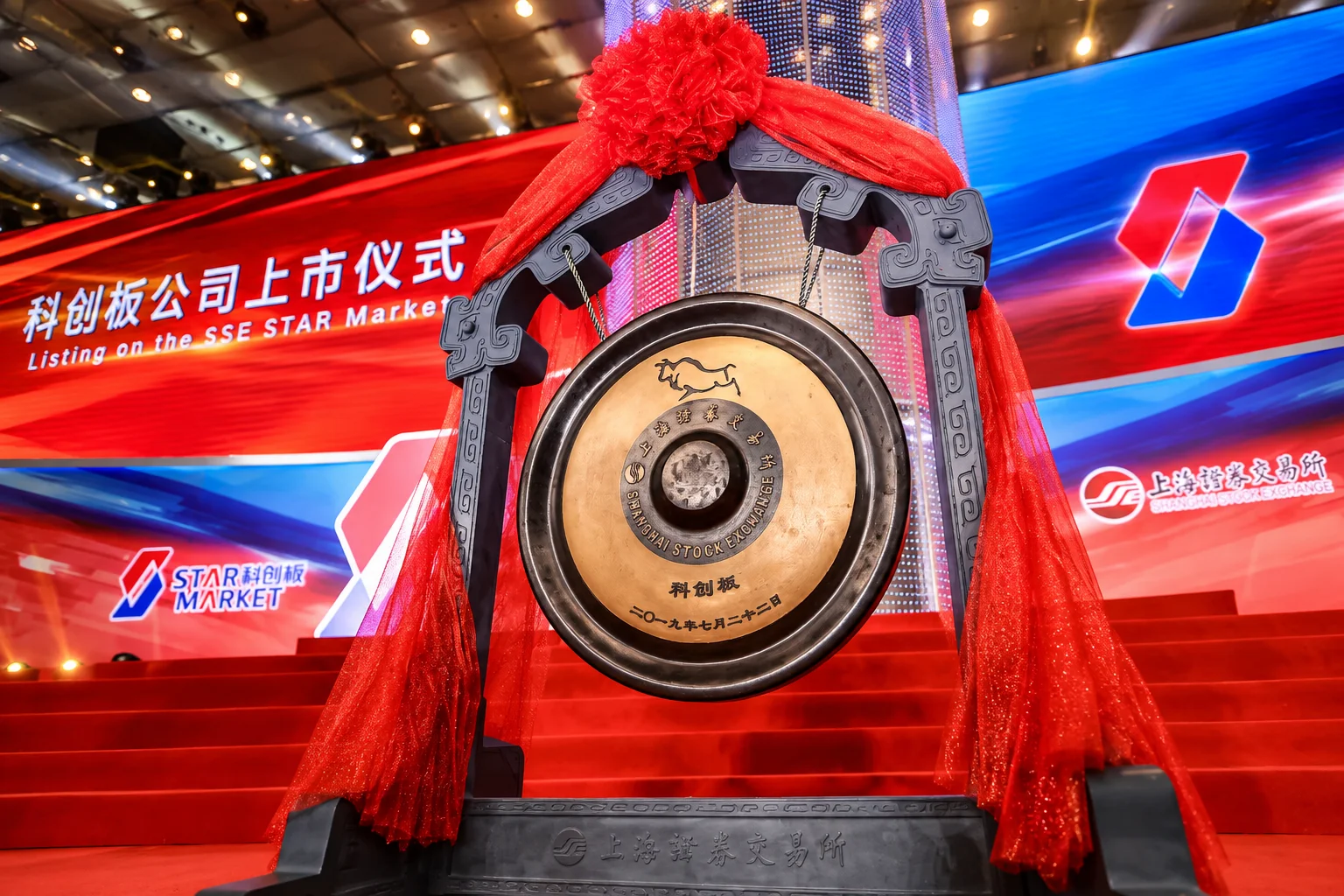
Even a round close to US$ 12 billion would still be below the recent raises attributed to some major American labs. The most relevant point, however, is the change within DeepSeek itself.
The company built its position by demonstrating that less compute could produce competitive results. Now it will have to show whether that efficiency remains an advantage when budget stops being the main constraint.
The concrete signals will come from the final size of the round, the valuation assigned to the company, the rights received by new investors, investment in Chinese clusters and chips, and the next models in the V4.1 family. A possible IPO filing should also provide a much clearer view of costs, revenue, and actual capital needs.
If these moves advance, DeepSeek's transformation will not simply be from an efficient lab to a lab that spends more. It will be the test of a more ambitious thesis: whether architectural efficiency combined with capital at scale can reduce part of the infrastructure advantage that still separates China from the largest American labs.