
European authorities have opened nine investigations against companies such as Riot Games, Ubisoft, Supercell, Mojang and King over practices linked to virtual currencies and in-game purchases. The move takes to the enforcement phase a discussion that, until now, was advancing mainly through guidelines and negotiations with the industry.
The most relevant point goes beyond loot boxes or isolated cases involving minors. Europe is questioning the layer that separates the price of an item from the money actually spent to buy it. If this interpretation prevails in the cases now under investigation, part of the monetization experience of free-to-play and live service games will have to come much closer to a conventional store.
The euro could return inside the game store
The basis for this change was already in place since March 2025. In the principles published by the European network of consumer protection authorities, the CPC, items and services sold through virtual currencies purchasable with money must have their price in real currency presented clearly and visibly. The requirement also covers situations in which one virtual currency is bought using another virtual currency acquired with money.
In practice, an item advertised for 1,500 gems, coins or credits should not require the player to do a mental conversion to find out what that represents in euros. The regulators' interpretation is that the intermediate currency does not eliminate the obligation to make the economic cost of the transaction understandable.
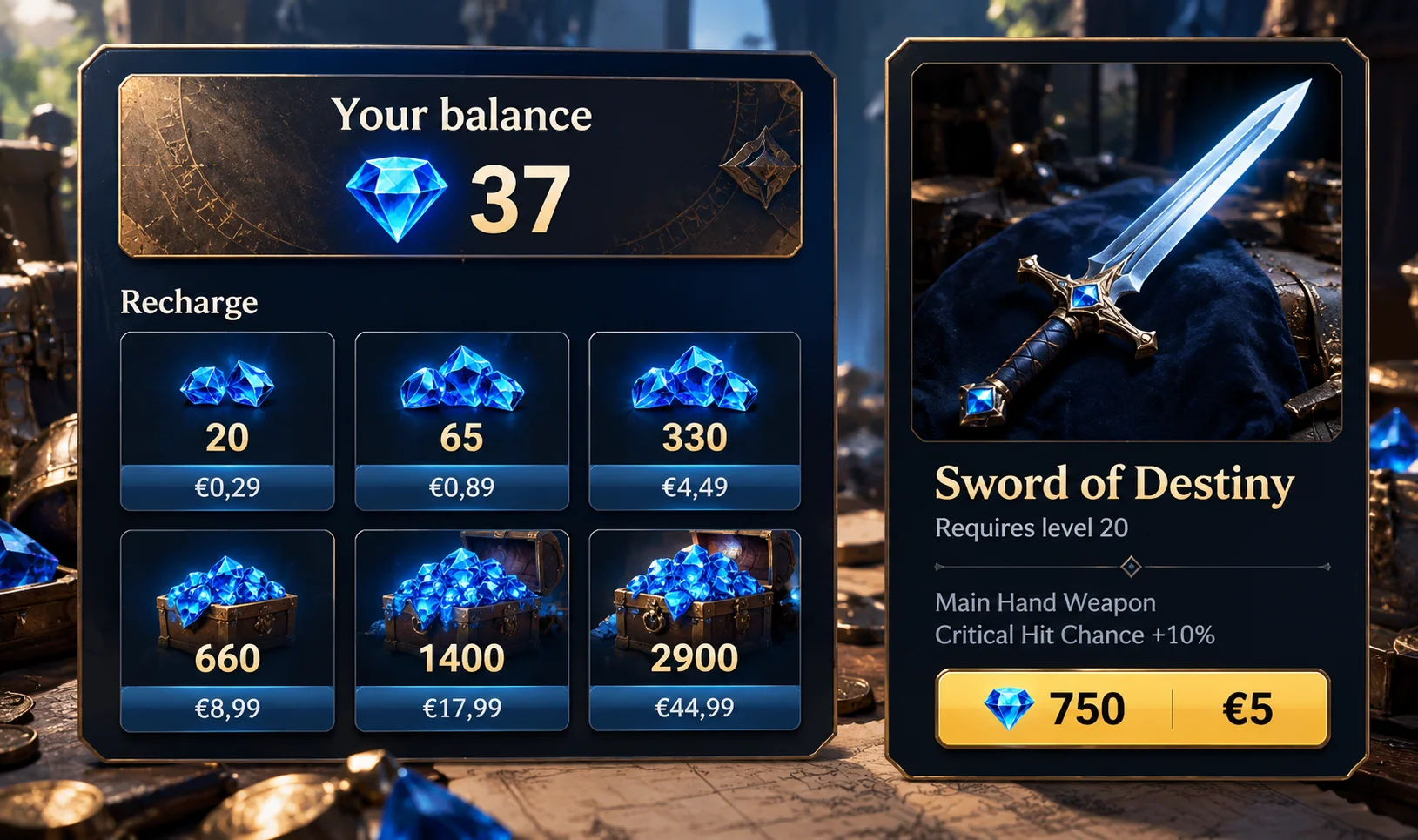
This hits a central feature of the design of these stores. A proprietary currency allows the game to visually distance the spending from its original monetary reference. After the user buys the credits, each new transaction takes place within a unit created by the game itself.
The CPC considers precisely this additional layer capable of hindering the assessment of the real cost. Its principles say that the use of these currencies can make the consequences of a purchase decision less clear and that practices that hide the price should be avoided.
There is, however, an important limitation. The principles published in 2025 are not a new law that automatically makes any non-compliance illegal. The document itself states that only competent authorities and courts can definitively determine the legality of a practice. The investigations opened now are important precisely because they begin to test this interpretation of European law on concrete companies and products.
Currency bundles also take center stage in the dispute
The second pressure is potentially more structural. Many games do not allow buying exactly the amount of currency needed for a given item.
A product may cost 800 units while the available bundles offer 500 or 1,000. The player has to buy more than they intend to use and ends the transaction with a leftover balance in the account.
For European regulators, this design can influence further purchases. The CPC recommends avoiding both bundles that do not match product prices and systems that prevent the consumer from choosing the specific amount of currency they want to acquire. The ACM states that remaining balances can stimulate additional spending later.
This point threatens not only the presentation of the price, but the economic architecture of the store.
A stricter regulatory response could lead developers to bring bundles closer to item prices, allow purchases of exact amounts or create direct payment alternatives. None of these changes has been imposed on the industry in general at this moment, but they show why the investigations have consequences greater than simply adding a euro symbol to the interface.
The pressure now reaches different monetization models
The actions involve Crytek, InnoGames, King, Mojang, Plarium, Playrix, Riot Games, Supercell and Ubisoft. Among the games cited by the authorities are Candy Crush Saga, Clash of Clans, Forge of Empires, For Honor, Gardenscapes, Hunt Showdown 1896, Mech Arena, Minecraft and Valorant. Investigations involving Call of Duty Mobile, Diablo Immortal and Star Stable were already underway.
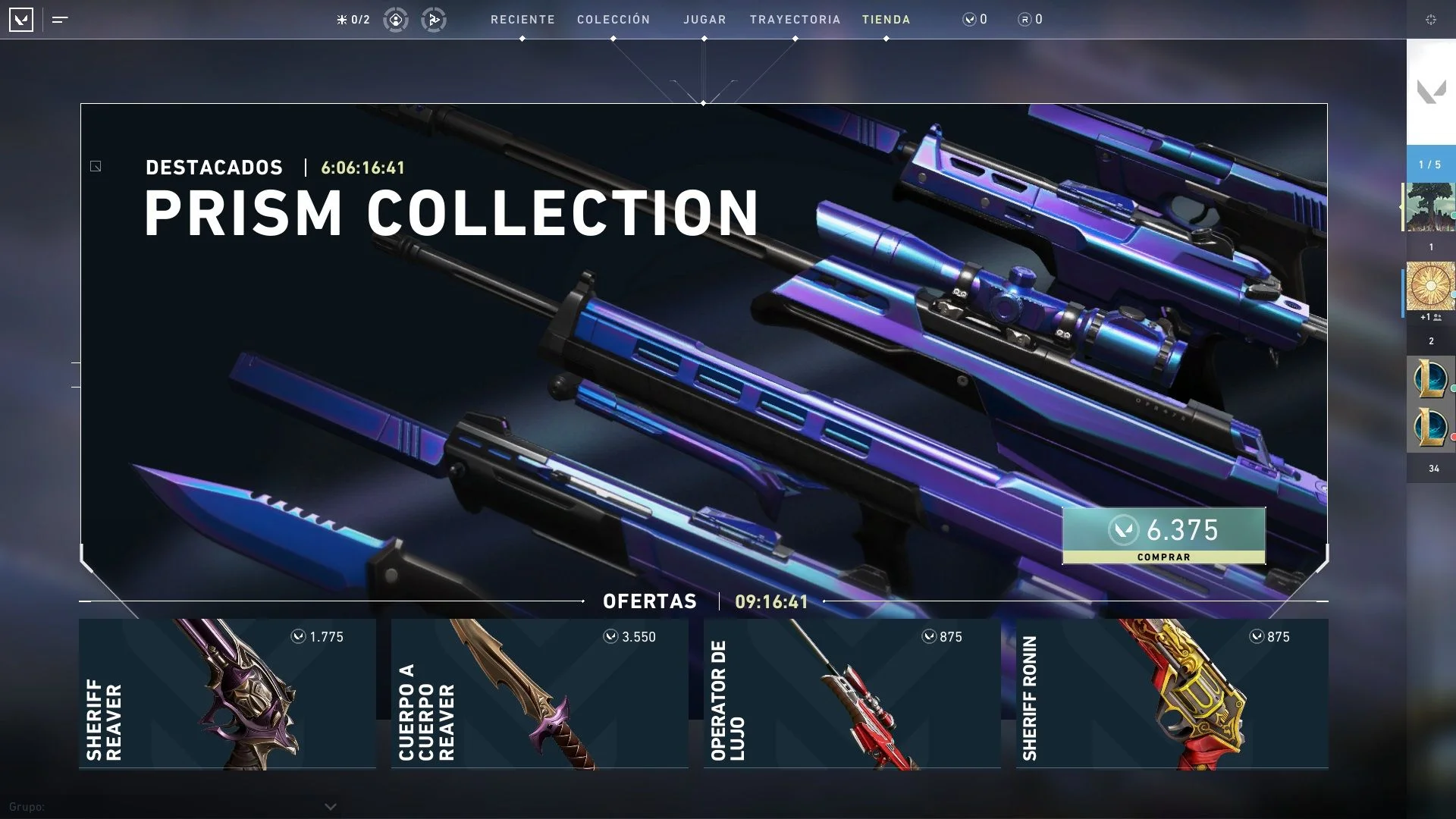
This variety matters. The problem is no longer restricted to a specific mechanic or a single genre and now reaches mobile, shooters, strategy games and major properties from international publishers.
There is also a relevant economic dimension. Data from Video Games Europe itself point to revenue of €29.7 billion in the market analyzed in 2025, with 91% of turnover already coming from digital. In a document sent to the discussion on the Digital Fairness Act, the entity estimated that European consumers spend between €10 billion and €11 billion per year on optional in-game purchases, a category in which virtual currencies carry great weight.
The industry contests the regulators' reading. Video Games Europe and the European Game Developers Federation argued that virtual currencies are optional, widely known by players and that some interpretations proposed by the CPC could harm business models and the user experience.
This counterpoint helps delimit what is really at stake. Europe has not banned virtual currencies. The current confrontation is about how far they can continue to function as their own layer of pricing and payment without reproducing all the transparency required in a conventional transaction.
Transparency does not necessarily mean the end of virtual currencies
Even a broad application of the CPC's position would not automatically eliminate all currencies used within games.
The principles deal specifically with currencies that can be purchased with real money and then used to acquire content or services. Currencies obtained exclusively through gameplay and that cannot be bought with money fall outside this scope.
This leaves room for virtual economies tied to progression, crafting, rewards and other in-game mechanics. The pressure is greater when the currency functions essentially as a representation of real money.
The possible outcome is a hybrid model. Gems, coins, points and credits can continue to exist as game elements, but consumers would begin to see the corresponding monetary value alongside them more frequently.
In this scenario, the virtual currency would continue to fulfill design and internal economy functions, but would lose part of its ability to abstract the cost of the purchase.
The investigations may anticipate the next regulatory stage
The timing also matters because the European Commission is preparing the Digital Fairness Act for the fourth quarter of 2026. The initiative is expected to address practices such as dark patterns, addictive design, price marketing and protection of vulnerable consumers, especially minors.
The ACM advocates an even stricter approach and has already proposed that future legislation consider bans on loot boxes and virtual currencies, especially in games used by minors. This is a position of the Dutch regulator and not a rule approved by the European Union.
That is why the nine investigations will be an important test even before the next legislation. The CPC network has already stated that it may move to national enforcement measures if companies do not respond adequately to the concerns raised. The European consumer protection system also allows, in certain cross-border infringements, sanctions whose minimum ceiling can reach 4% of turnover in the member states involved.
The most important signals now will be concrete: commitments made by the nine companies, changes in price presentation, changes in currency bundles and possible measures by national authorities.
If these modifications begin to appear simultaneously in games from different publishers, the consequence will be greater than a series of individual cases: the real-money reference could become a permanent layer of European virtual stores, reducing precisely the abstraction that made in-game currencies so useful for game monetization.