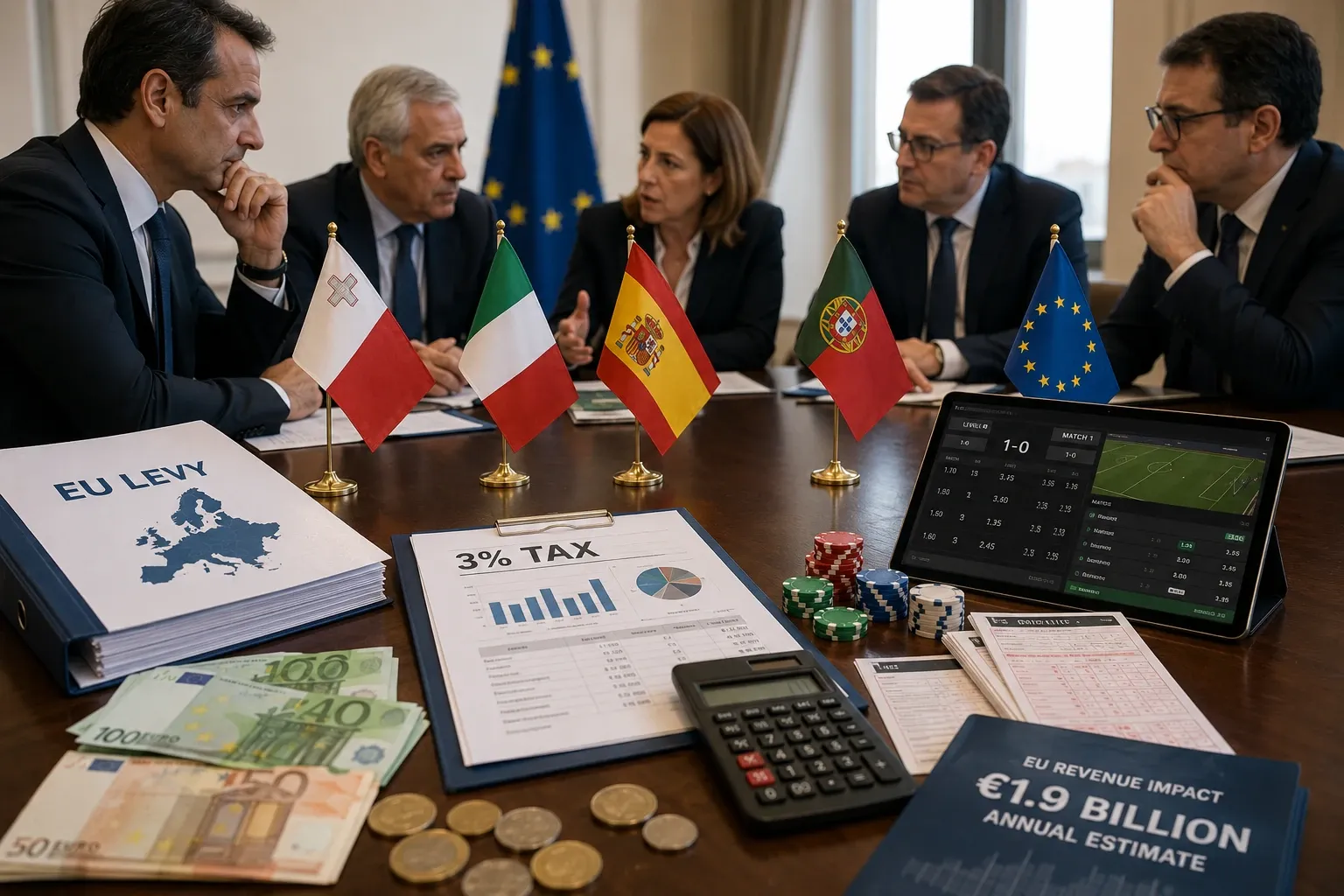
Malta has joined Italy, Spain, and Portugal in opposing the creation of an EU-wide tax on online betting. The effort was reported by Politico this Wednesday (5), based on information from four diplomats involved in the discussions.
The measure has not yet become a formal proposal. Since new sources of revenue for the bloc require unanimous approval from the 27 member states, any government can block its progress.
Malta would face an annual charge of €165 million
Estimates from the European Commission indicate that Malta would pay about €165 million per year. The amount exceeds the €133 million projected for Italy, despite the difference in population and the size of the two economies.
Spain would have the largest share among the countries mentioned, with approximately €414 million per year. The amount represents almost a quarter of the expected revenue.
The calculation considers a 3% tax on the net revenue of the online betting market. The charge could generate €1.9 billion per year between 2028 and 2034, or €13.3 billion over the period.
The initiative is part of a set of possible funding sources that also includes digital services and crypto-assets. According to the Commission, the full package could raise about €11 billion annually.
Licenses broaden Malta's exposure
The share attributed to Malta is related to the number of operators licensed by the Malta Gaming Authority, the MGA. Companies based in different countries use this authorization to operate in the European market.
The gaming sector directly accounted for 6.7% of Malta's economy in 2024, according to the regulator's annual report. Including indirect activities, the share reached 10.1%.
The licensing structure also serves platforms that operate with crypto-assets. Therefore, a charge calculated on companies authorized by the MGA could reach part of the cryptocurrency casino market.
Government cites tax autonomy
In a statement to the Maltese Parliament on June 22, Prime Minister Robert Abela said the country would not accept European taxes intended to finance the bloc's expenses.
The head of government focused his remarks on the member states' fiscal autonomy and did not detail the sectors that could receive the new charges.
The European Union also does not have a common definition for gambling nor a harmonized model for taxing the activity. Each country maintains its own rules for licensing, oversight, and taxes.
Industry contests proposal
Representatives of betting companies argue that the increased tax burden could drive consumers to unlicensed platforms.
Maarten Haijer, secretary-general of the European Gaming and Betting Association, told Politico that higher taxes could reduce the conditions offered to bettors and favor the unregulated market.
The initial proposal came from Romanian MEP Victor Negrescu and provided for a 1% charge on the sector's gross revenue. Lawmakers from different political groups supported the discussion.
The 3% scenario prepared by the Commission uses a different calculation basis. The projections are still part of the debates over the EU's next long-term budget.
Negotiations should advance at the end of the year
Talks on the European budget are expected to resume during the European Council in October. A special meeting is scheduled for November, with an attempt to reach an agreement in December.
Ireland will preside over the negotiations until December 31. For Malta, the estimated annual charge of €165 million would correspond to about 12% of the value added directly by the gaming sector to the country's economy in 2024.