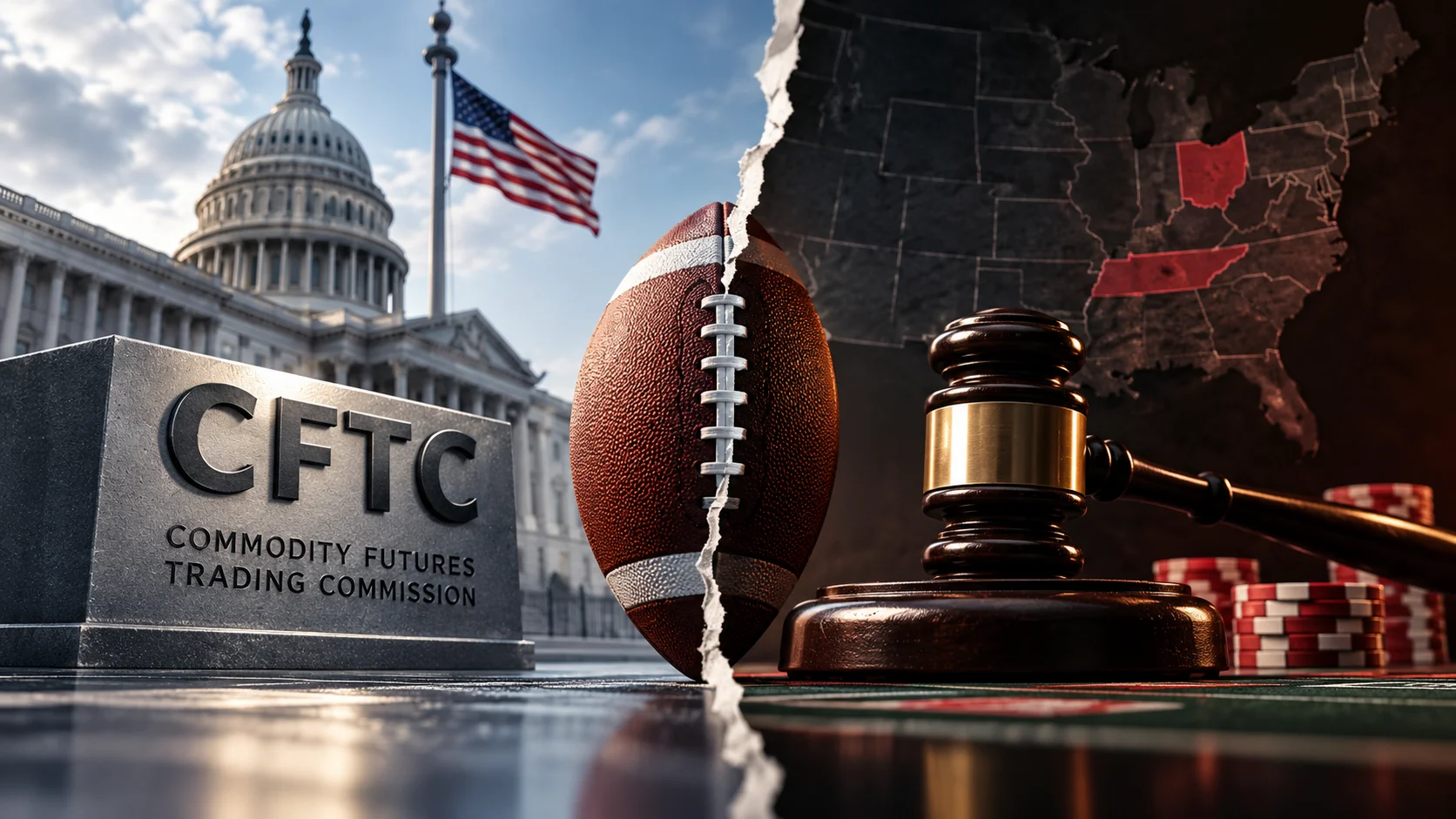
The attempt by prediction markets to treat sports contracts as a national financial product suffered a new setback. The Sixth Circuit unanimously ruled that Kalshi did not demonstrate that its sports-linked contracts are swaps protected by the exclusive jurisdiction of the Commodity Futures Trading Commission, allowing Ohio and Tennessee to apply their own sports betting rules.
The impact goes beyond these two states. With differing decisions among federal courts, the market now faces a question that directly affects its operating model: is a sports contract traded on a CFTC-regulated exchange necessarily a federal derivative, or can it continue to be treated by states as a bet?
The answer will determine whether platforms like Kalshi can maintain a national market or will have to contend with licenses, restrictions and geographic blocks state by state.
The event contract label does not resolve the legal classification
An event contract is, in simple terms, a contract whose payment depends on the outcome of a given event. The CFTC itself explains that these products are often structured as swaps and can be used both for speculation and for protection against economic risks.
But event contract and swap are not automatically synonymous.
The Commodity Exchange Act includes in the definition of swap certain contracts dependent on an event or contingency associated with a possible financial, economic or commercial consequence. The dispute lies precisely in the meaning of that association.
It is this difference that legally separates a financial contract from something a state can classify as a wager, or bet.
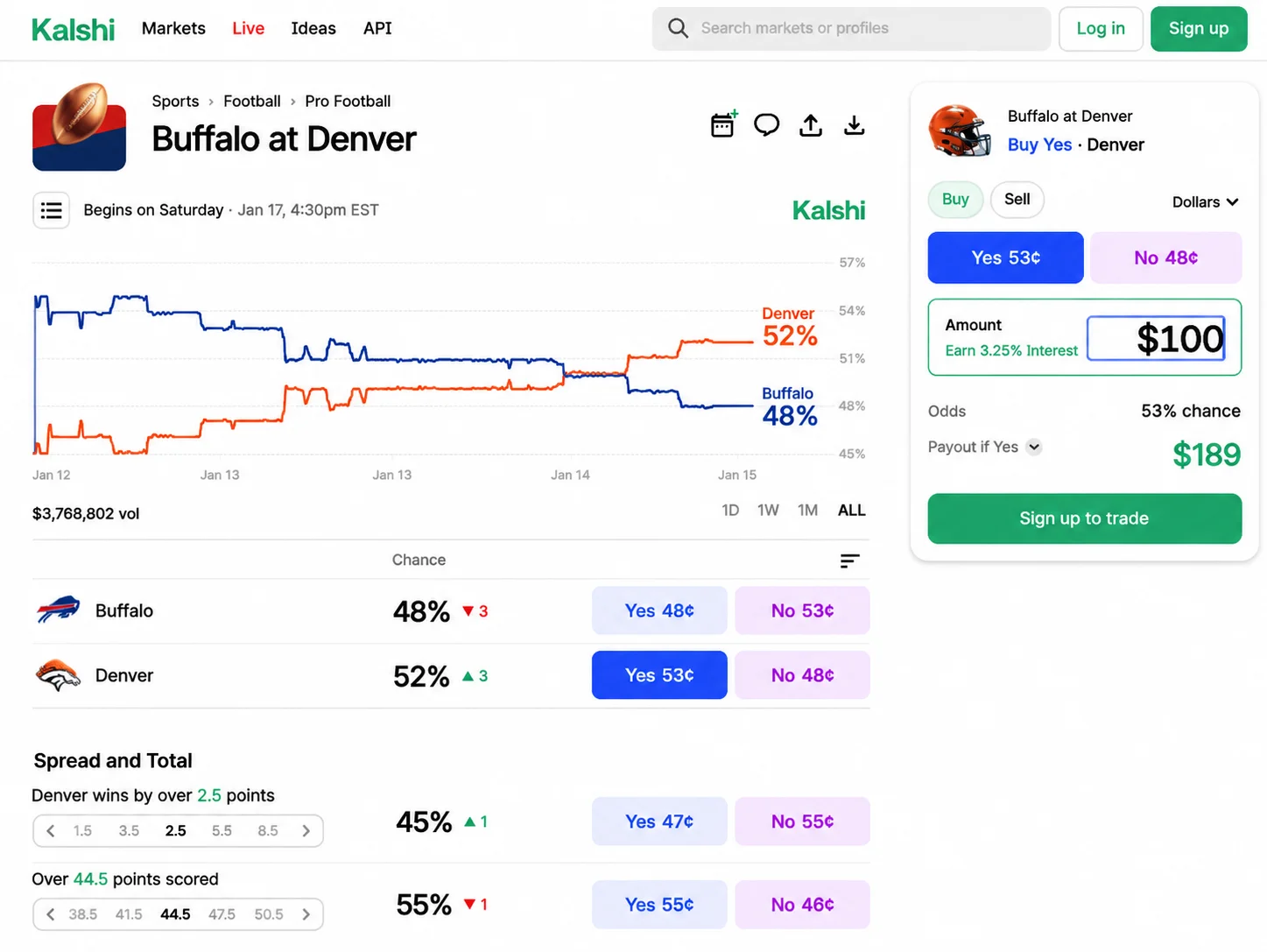
For Kalshi, contracts on sports outcomes fall under the federal regime because they are traded on a Designated Contract Market registered with the CFTC and because sports events are related to economic activities such as advertising, broadcast rights and sponsorships.
The Sixth Circuit adopted a narrower reading.
For the Sixth Circuit, the economic consequence must be in the event itself
The court held that it is not enough to demonstrate that a game affects advertisers, broadcasters or sponsors. The event underlying the contract must have a sufficiently direct financial, economic or commercial consequence.
This distinction becomes especially important when the contract no longer asks only who will win a match and begins to cover occurrences such as the number of corners, specific events within a game or combinations similar to parlays.
According to the court, these events may generate indirect economic effects, but that does not necessarily turn them into instruments intended to transfer financial risk or produce price information in the way traditionally associated with derivatives markets.
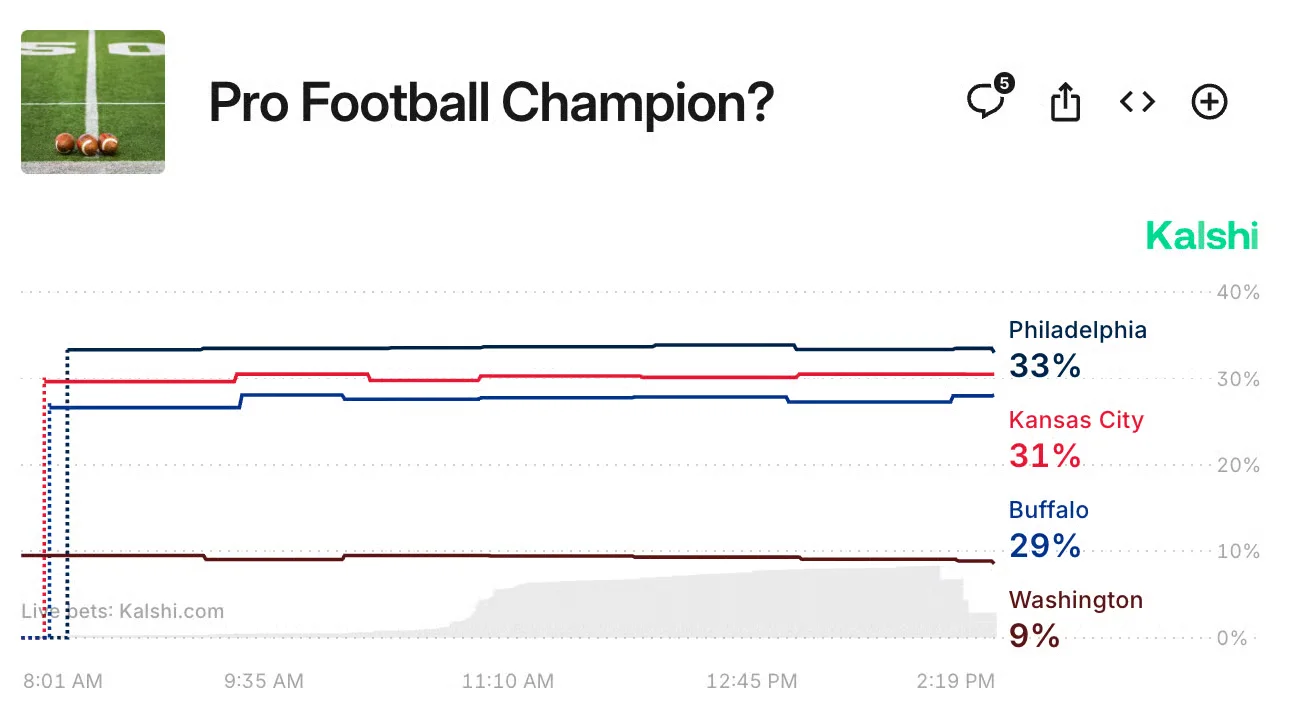
The decision also revived an important structural difference. In contracts linked to interest rates, commodities or economic conditions, there is normally an identifiable financial risk that participants may try to hedge. In the sports contracts examined, the court found that this link was much weaker.
This places the economic function of the contract at the center of legal classification, and not just its technical architecture or where it is traded.
The problem is that another federal court reached the opposite conclusion
The interpretation is not uniform.
In April, the Third Circuit upheld a decision favorable to Kalshi in the case involving New Jersey. The court found that the language of the Commodity Exchange Act was broad enough to encompass the company's sports contracts as swaps.
Under that view, sports outcomes can be associated with economic consequences because they affect franchises, sponsors, advertisers, broadcasters and other commercial activities. Because the contracts are traded on a registered DCM, the Third Circuit concluded that federal jurisdiction could prevent the application of state rules.
In August, the Ninth Circuit took the opposite path in a dispute with Nevada. The court concluded that Kalshi had not demonstrated that its sports contracts were swaps protected from state regulation and left open the possibility of applying Nevada's gambling rules.
With the Sixth Circuit now following a similar interpretation, the same product can receive different legal treatment depending on the federal jurisdiction in which the dispute occurs.
This is the point at which the discussion stops being only about Kalshi.
The CFTC's jurisdiction is also at the center of the dispute
Even assuming that sports contracts were classified as swaps, the Sixth Circuit presented a second relevant conclusion: the CFTC's exclusive jurisdiction does not necessarily eliminate all state laws that have some effect on products traded on a DCM.
For the court, this exclusivity mainly protects the core of federal regulation of derivatives markets, including licensing, operation of exchanges, market integrity, access and oversight of transactions.
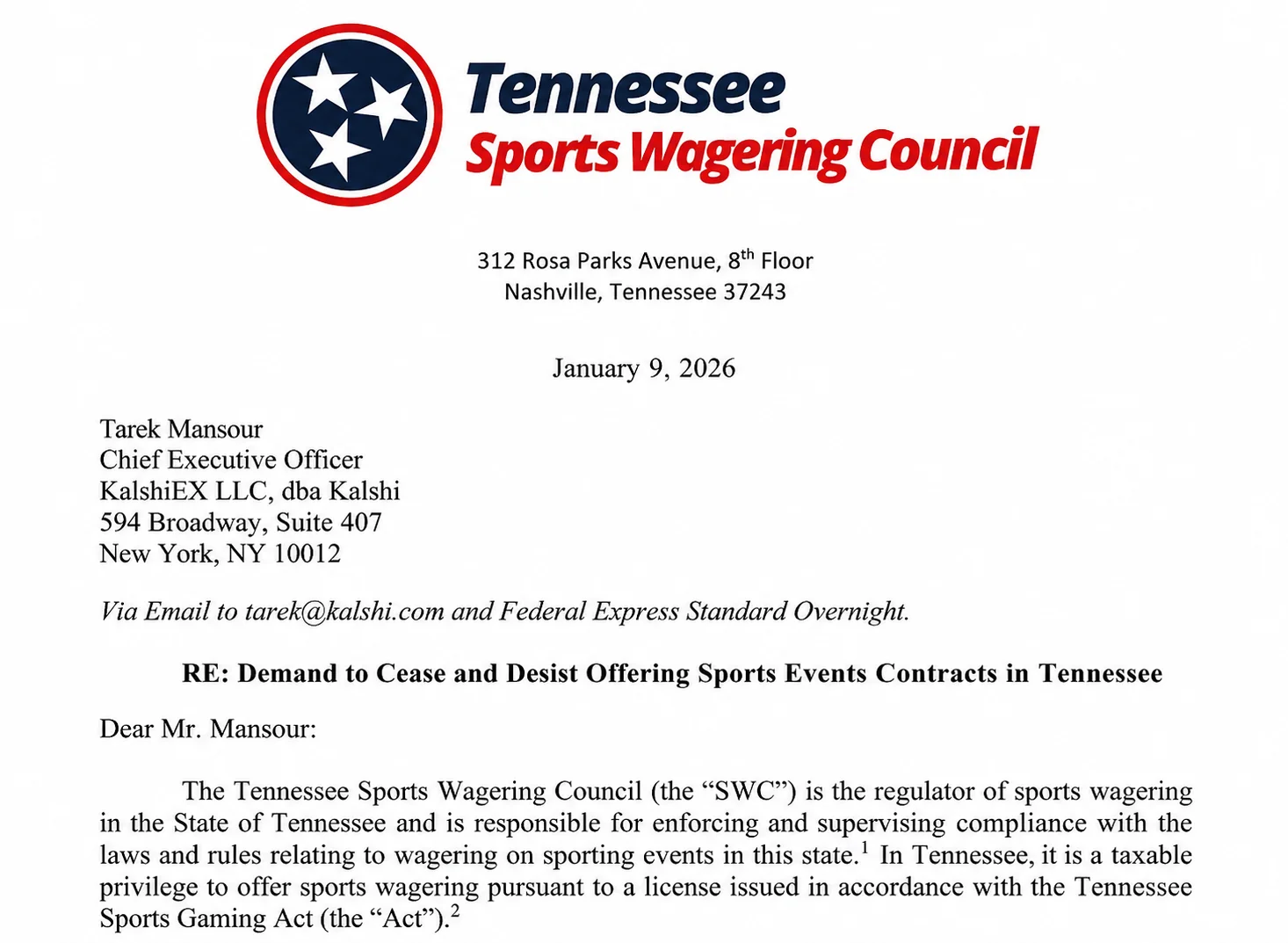
The laws of Ohio and Tennessee, however, have another object: regulating sports betting within their territories. The fact that these rules affect Kalshi would not be sufficient, according to the court, to consider them automatically superseded by the Commodity Exchange Act.
This interpretation weakens one of the main strategic advantages of the model advocated by prediction markets: offering a single national product under a single federal regulatory framework.
Geofencing may become part of the market's architecture
The practical consequence already appears in the ruling itself.
Kalshi argued that limiting sports contracts in certain states would conflict with federal rules requiring impartial access to a DCM's markets. The Sixth Circuit rejected that interpretation.
According to the court, these rules guarantee impartial treatment to participants in a market that the exchange decided to offer, but do not require a DCM to make each market available in all states.
The court also noted that other companies use geofencing to restrict products according to jurisdiction. Kalshi stated that this model would be technically complex, time-consuming and expensive. The court's response was that cost and difficulty do not amount to legal impossibility.
If this interpretation prevails nationally, sports prediction markets may continue to exist, but the promise of a uniform market may be replaced by a structure much closer to traditional gambling, with products available or blocked depending on the state.
The CFTC itself has not yet ended the discussion
The judicial fragmentation occurs while the CFTC also redefines its approach.
In February, the commission withdrew a previous proposal that sought to detail which event contracts involving gaming would be contrary to the public interest. The agency explicitly said it wanted to reconsider the matter in light of state disputes and lawsuits over federal jurisdiction, preemption and sports contracts.
At the same time, the CFTC has defended its federal authority more aggressively. In June, it sued New Mexico to prevent the state from applying its gaming laws against federally registered markets. The commission argued that the Commodity Exchange Act grants it exclusive authority over these markets.
Therefore, there is not only a conflict between Kalshi and state regulators. There is also an institutional divergence over where the federal derivatives market ends and the states' historical authority over gambling begins.
The next definition may need to come from above the circuits
The Sixth Circuit upheld the denial of an injunction for Kalshi in Ohio, overturned the injunction that protected the company in Tennessee and remanded the cases for further proceedings. The decision does not resolve the issue nationally.
But now there is a clear split among federal appellate courts. The Third Circuit accepted Kalshi's central argument, while the Ninth and Sixth Circuits reached incompatible conclusions on sports contracts. New Jersey has already asked the Supreme Court to review the Third Circuit's decision.
It is this case, along with possible new appeals and any future regulatory action by the CFTC, that needs to be watched.
Until there is a uniform national interpretation, sports prediction markets remain trapped between two legal identities: derivatives traded on federal markets and products that states consider economically equivalent to sports betting.